Culture
A Life Spent Becoming Someone Else’s Ideal
12 October 2026





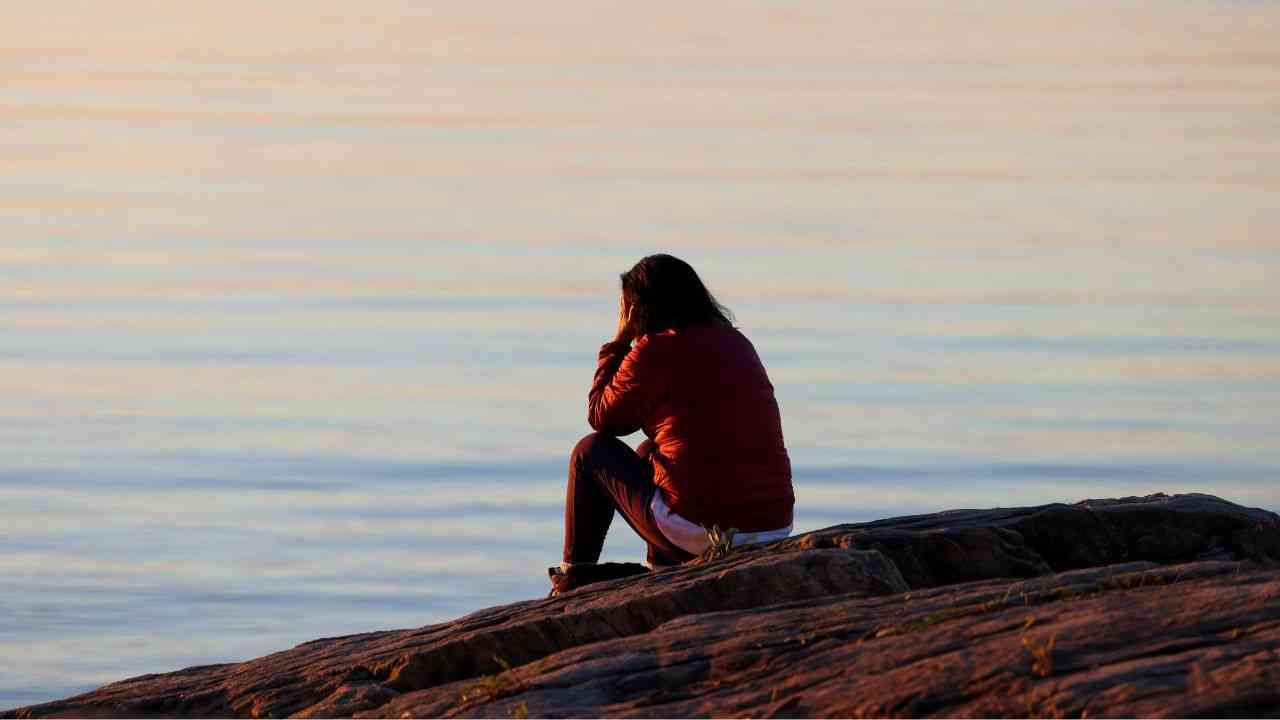
When someone we love dies, one question returns with brutal force: what happens after death? We look for answers in science, in faith, and in the stories of those who came to the edge of life. We do it for one deeply human reason: we do not want to believe this has to be the end.
In the rush of daily obligations, in the shock of a sudden event, at the bedside of a gravely ill relative, or at a friend’s funeral, one of the hardest questions returns: is this really the end? And then comes another, one so many of us wish we could answer: is there some kind of beyond?
The question comes back like a boomerang. Uncertainty, and the absence of any clear answer, awakens a fear each of us must face sooner or later. At the same time, it drives people to search for signs, stories, and hints — anything that might help us tame, if only slightly, what cannot be avoided.
For those who hunger for hope, the stories of people who have stood on the border between life and death carry unusual weight. One such account comes from Anke Evertz, who fought for her life for 9 days after a severe accident. In her book 9 Days in Infinity…, she describes experiences that, she says, completely changed the way she sees the world.
After a fireplace accident, the author suffered extensive burns. She was taken to hospital, where doctors fought for her life for several days. She describes that time as a singular state, a moment in which she felt separated from her body and able to look at her life from another perspective.
Her account contains images familiar from many similar stories, narratives that have long inspired fascination, criticism, and research alike: a life review, a sense of unity, and the feeling that something exists beyond the reality we know.
Stories like these have stirred enormous interest for years. Some people, especially those with deep religious or spiritual convictions, treat them as evidence that something more exists. Others explain them as the brain’s response to extreme conditions. But one thing deserves to be said plainly: whatever interpretation we choose, the popularity of these stories reveals how powerful the human need for hope remains. It also reveals how often we fear a final and irreversible ending.
This is hardly a new phenomenon. In Poland, Leszek Szuman’s book Life After Death drew major attention as early as the 1980s. It, too, took up the question of what may await a person after death, though it remains controversial to this day because of its unscientific language and the author’s overtly one-sided commitment to his claims.
In that sense, experiences like the one Evertz describes intersect with what is happening in Europe today. As we have noted in Holistic News, the continent is becoming increasingly divided when it comes to life expectancy.
A study published in Nature Communications made that clear. People in northern Italy, around Paris, and in Switzerland are living longer and longer. In Wallonia, northern England, eastern Germany, and some regions of France, that trend does not hold.
Life expectancy is no longer something obvious or evenly shared. More and more often, it depends on place, living conditions, and social status. And when we see that we do not fully control how much time we are given, we sometimes begin to look elsewhere for meaning.
Not everyone finds an answer in religion. Not everyone trusts scientific explanations. Many people remain somewhere in between, suspended in uncertainty. That is why stories like Evertz’s keep returning and keep finding readers. Not because they prove anything. Sometimes they simply help people live with fear.
A great many people would likely say: there is no proof that anything exists after death. Many others would add: but there is also no proof that everything ends absolutely and forever. What remains is a vast unknown.
And that is precisely why books like these still find readers. We may question them, criticise them, mock them, or accept them on faith, depending on our worldview, beliefs, and personal experience. But for many people, they also offer what they have been seeking. Not certainty, but hope — even if that hope is fragile, even if it rests partly on illusion — that this does not have to be the end.
Perhaps that is why we so badly want to know what happens after death. Not only out of curiosity. We want to know because hope, even uncertain hope, makes it easier to face what cannot be avoided.
Read this article in Polish: Wrócili z granicy życia. W tych relacjach wielu szuka nadziei

A graduate of journalism and social communication at the University of Rzeszów. She has been working in the media since 2019. She has collaborated with newsrooms and copywriting agencies. She has a strong background in psychology, especially cognitive psychology. She is also interested in social issues. She specializes in scientific discoveries and research that have a direct impact on human life.
Zmień tryb na ciemny