Education
What Does It Take to Keep a Child Curious?
28 September 2026





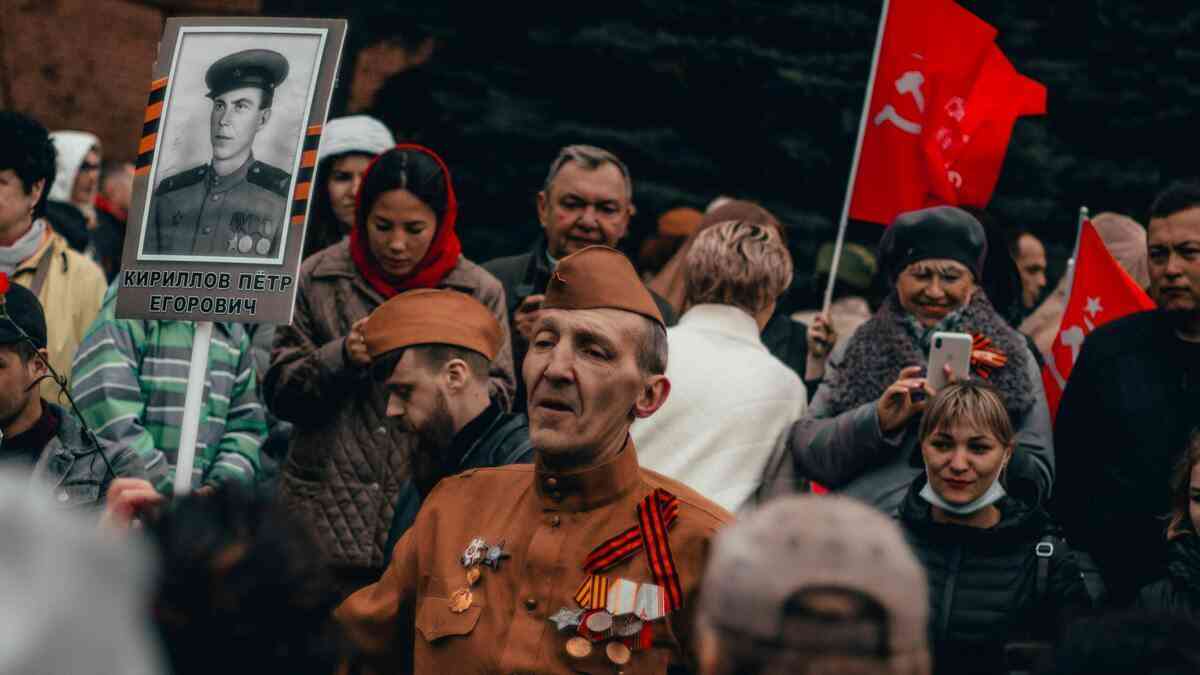
Is communism coming back? In Sean McMeekin’s history of communist ideas and practice, the question does not belong to a closed chapter. The American historian suggests that a system which ruined civilizations and millions of lives still shapes the modern world. Is his diagnosis right?
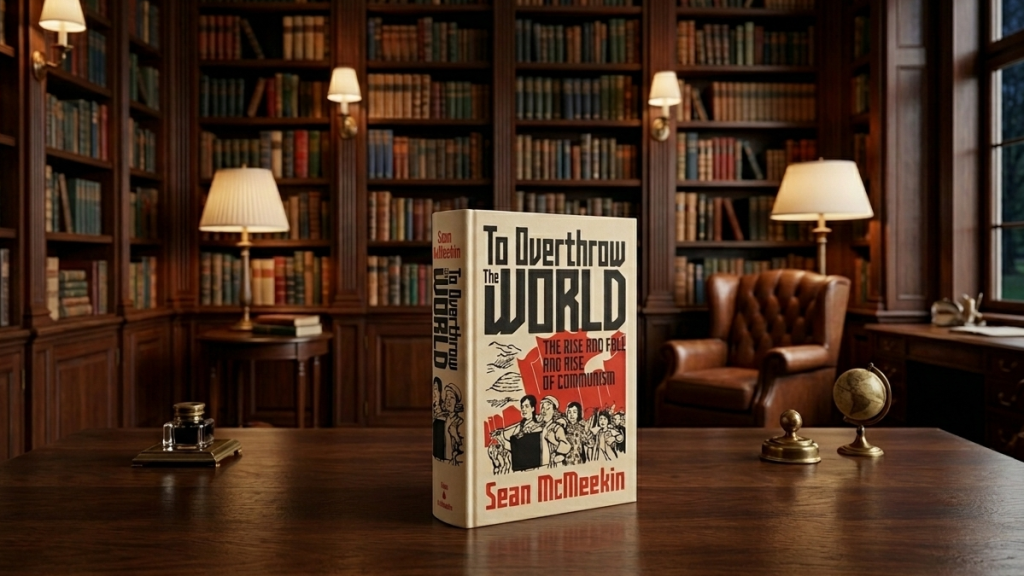
Sean McMeekin is an American historian whose books can also be found on Polish shelves. His latest, To Overthrow the World: The Rise and Fall and Rise of Communism, is probably still awaiting translation into Polish, but it is worth reading now. Not only to recall the basic facts of communist history, from revolutionary France to the Tiananmen Square massacre.
The supposed rebirth of communism suggested in the title does not occupy much space in the book. It amounts to only a few remarks in the epilogue. Yet this brief analysis gives a new dimension to world events at the turn of the 2nd and 3rd decades of our century.
McMeekin’s reputation rests not only on his undeniable talent as a writer. His approach to history is sometimes described as revisionist. In his case, this means that he tries to challenge certain settled assumptions, or simply offers his own interpretation of historical events, one that differs from the commonly accepted version. In today’s market, that is a frequent route to popularity.
When it comes to the history of the 20th century, World War II, and communism, McMeekin’s theses do not necessarily sound shocking to a Polish reader. At least not to one familiar with the works of Viktor Suvorov, the Mackiewicz brothers, or Piotr Zychowicz. On the American market, however, where the point of view shaped by the victors of Yalta still dominates, they may provoke controversy.
That was the case with his previous book, Stalin’s War, in which he described the background to American compliance toward the Soviet regime during World War II. He pointed to Stalin’s manipulation of the Roosevelt administration, Washington’s short-sighted policy toward the communist empire, technology transfers, and mistaken strategic decisions that allowed communists to seize power over half the world.
Even for some conservatives in the United States, the phrase “Stalin’s war” itself seemed revolutionary. In the American narrative, World War II was, after all, a clash between good and evil, with Nazi Germany on one side and the rest of the world, including the Soviet Union, on the other.
Yet such a black-and-white story has no room for Katyn, for the Red Army standing by during the Warsaw Uprising, for the suppression of anti-communist resistance in the years just after the war, or for Stalinist terror.
Of course, during the Cold War, part of the truth about communist rule was acknowledged in the West. But the myth of the war itself remained intact. So did the lingering belief in communism as a “noble, deeply humanistic idea,” whose successes in various countries supposedly resulted from the masses’ authentic desire to see it realized.
McMeekin rejects that myth and advances three essential claims. First, communism never took power democratically, but through war and conquest. Second, it did not peacefully surrender power, although the myth of the “Velvet Revolution” in Czechoslovakia or the Round Table in Poland sustains that image. And third, communism did not die at all. It persists, and even, as McMeekin argues, may only now be beginning to reveal its next face.
Although the idea of equality at the foundation of communist doctrine has been present in human thought since ancient times, serving as the basis for utopian projects and even some religious currents, the social and political order founded on Marxist doctrine never had enough support to win a majority in democratic elections. Not without reason.
The whole of Marxism rested on false premises. Its calls for the abolition of private property, the destruction of traditional institutions such as marriage and family, and finally the dictatorship of the proletariat as the ultimate form of government were especially repellent. This was never the vision of which the average worker dreamed.
Thinkers contemporary with Marx, such as Bakunin and Proudhon, already understood that Marxist ideology amounted, in essence, to replacing one form of oppression with another, even worse one. Later Marxist “revisionists” simply grasped that the practical implementation of this utopia was impossible and catastrophic in its consequences. Why, then, did this vision not die, but instead continue to gain importance until it triumphed in power?
War always came to communism’s aid. The Bolsheviks seized power in Russia after World War I. In Central and Eastern Europe and in Asia, communist rule was installed after World War II. This did not happen because local populations were ready for the new system or welcomed it. Communism was imposed everywhere by force, terror, and deception. Wars destroyed old structures, hierarchies, social systems, and, above all, economies capable of sustaining the population.
The Bolsheviks were a small, disciplined, armed group capable of anything. And, importantly, they enjoyed strong support from abroad. Lenin was, in effect, an instrument of German policy, intended to dismantle the tsarist army and make Russia incapable of continuing the war. Chinese communists, in turn, became a tool in Stalin’s hands as he played his Asian game, using every possible method.
Stalin did not hesitate to make a pact with Hitler, through the Molotov-Ribbentrop Pact, and later supported Japanese aggression against the United States while receiving billions in American technological and material aid under Lend-Lease. The goal was one: the ruthless monopoly of subordinate regimes, guaranteeing the durability of red power.
When the Eastern Bloc collapsed at the turn of the 1980s and 1990s, the West announced the “end of history,” believing that the system had been killed by empty shelves and a mass popular uprising. McMeekin sees it differently. He shows that Moscow lost power because, in 1991, Gorbachev — like Kerensky in 1917 — lost the loyalty of the army. When the military, including figures such as General Lebed, refused to shoot civilians, the sword with which the regime had ruled finally broke. It is worth remembering that the Bolsheviks seized Russia by force precisely because they lost the only honest elections, held in November 1917.
The American historian states this relationship bluntly:
Communists rarely surrendered power voluntarily; they usually lost it only when the organs of state security refused to shoot their own citizens.
Where that sword did not break, however, power held firm. The best example is China, which preserved the system in 1989 at Tiananmen Square by crushing dreams of freedom with the army.
Exactly the same mechanism of defending monopoly through violence worked in Cuba, North Korea, Vietnam, and Laos. These regimes survived the crisis at the turn of the century only because their leaders did not hesitate to use force against their own citizens. Communism did not end because its foundation is not an idea, but naked violence.
The American historian shows a strikingly similar model behind the rise of the USSR and the People’s Republic of China. As he writes, the Chinese development model “is not entirely new.” The communist economic utopia could never have sustained itself anywhere on its own. Every time the system stood on the edge of the abyss and faced total bankruptcy, the red elite had to loosen economic restrictions, admit elements of the free market, and, above all, draw on the resources and solutions of capitalist countries.
Both the Soviets during the first 5-year plans and the Chinese today built their industrial power on the same pragmatic scheme. McMeekin recalls that Stalin built Soviet infrastructure by importing Western technology on a massive scale, hiring American engineers and agronomists, including the creator of the “Wheat King” empire in Montana, while Soviet economic intelligence infiltrated leading American aviation firms in order to seize their patents. Beijing later used precisely the same mechanism, based on technology transfer and Washington’s political and business openness.
Both the old Kremlin and today’s Chinese regime made effective use of scale, civilizational catch-up, and full control over cheap labor, benefiting from the so-called rent of backwardness. In this way, they created the external illusion of the extraordinary internal efficiency of their system.
In reality, as McMeekin’s analysis strongly suggests, this was a specific kind of hybrid: a capitalist engine inserted into an authoritarian structure, steered by an apparatus of coercion controlled by one party.
Why, then, does McMeekin suggest in his title a great return of communism? He believes that contemporary totalitarianism has entered the West through the back door, using modern technologies and slogans about security or public health.
The American scholar takes aim at Western business elites, pointing to their conformity toward the Chinese model. From Silicon Valley to the NBA, global brands bend toward Beijing for profit. Yet a clear acceleration came during the COVID-19 pandemic. That was when, in McMeekin’s view, the West began openly imitating authoritarian patterns:
While Western commentators deplored Beijing’s authoritarianism, Western governments began implementing policies that strikingly resembled Chinese methods of social control.
Lockdowns, mandatory quarantines, certificates, and the systemic restriction of online debate, exposed in part by the Twitter Files, acquired a modern institutional form in the West. Examples included the Trudeau government freezing the bank accounts of Canadian truck drivers in 2022 and British politicians and journalists critical of the establishment being cut off from banking services through debanking.
Today, the system does not need to isolate the individual physically. It is enough to cut a person off digitally from their own money, block their accounts, and remove them from public space.
But is McMeekin right to throw all these phenomena into one bag labeled “communism”? Is what we are observing in the West today really proof that communism is coming back, along with Marxism? Or is it simply the natural effect of the evolution of democracy itself, which over the years has become deeply statist?
The Polish writer and émigré Andrzej Bobkowski, author of Szkice piórkiem (Wartime Notebooks: France, 1940–1944), had remarkably accurate intuitions about these matters. In the story Nekyia, one can find a reflection on the nature of political systems and the eternal tendency of rulers toward absolutism:
(…) Otóż co to jest komunizm? To powrót do stanu zdziczenia, wszyscy mężczyźni, wszystkie kobiety jedzący przy tym samym stole, bez grosza w kieszeni (…), z batem pracy, by zmusić leniwych i opornych do pracy…(…)Od roku 1815 nie robi się nic innego, jak tylko dyskutuje nad formą zewnętrzną, jaką należy nadać istocie fantastycznej i nienawistnej, zwanej Państwem. (…) Wspólnym ideałem wszystkich partii, od najbardziej rewolucyjnych do najbardziej konserwatywnych, jest zawsze absolutyzm Państwa. ETATYZM jest jedyną partią polityczną…(…)
This perspective casts the American historian’s diagnosis in a completely different light. The modern democratic state seeks to regulate ever larger spheres of our lives, from the economy to language and public debate. When we add advanced technology — algorithms, digital surveillance, artificial intelligence — to such omnipresent statism, we obtain an efficient instrument for disciplining society.
The bureaucracy in Washington, Brussels, or Ottawa does not need to draw inspiration from Lenin’s writings in order to seek expanded control. It does so because modern technical tools allow it to do so. What is more, citizens themselves often give up part of their freedom in exchange for a promise of stability and security.
The conclusion of McMeekin’s book remains valid at the general level: as a Western civilization, we need the acuity of a George Orwell today. We need someone able to diagnose soberly and name plainly the new technological threats to individual freedom.
But whether Sean McMeekin himself is that new Orwell is another question altogether. The American historian uses a proven template labeled “communism,” and therefore interprets every contemporary crisis of freedom through that single lens.
Paradoxically, the truth turns out to be more complex, and therefore demands greater conceptual precision. The main challenge does not come from the East under a red flag. It is taking shape here, as the result of modern technology placed in the hands of democratic statism. That may be why the question “is communism coming back?” matters less than another one: what name should we give to the new machinery of obedience?
Read this article in Polish: Komunizm wcale nie umarł? Świat potrzebuje nowego Orwella


A graduate of Journalism and Social Communication at the University of Warsaw (UW), specializing in culture, literature, and education. Professionally, they work with words: reading, writing, translating, and editing. Occasionally, they also speak publicly. Personally, they are a family man/woman (head of the family). They have professional experience working in media, public administration, PR, and communication, where their focus included educational and cultural projects. In their free time, they enjoy good literature and loud music (strong sounds).


Zmień tryb na ciemny