Science
If Minds Are Not Only Human, Where Do They Begin?
16 July 2026





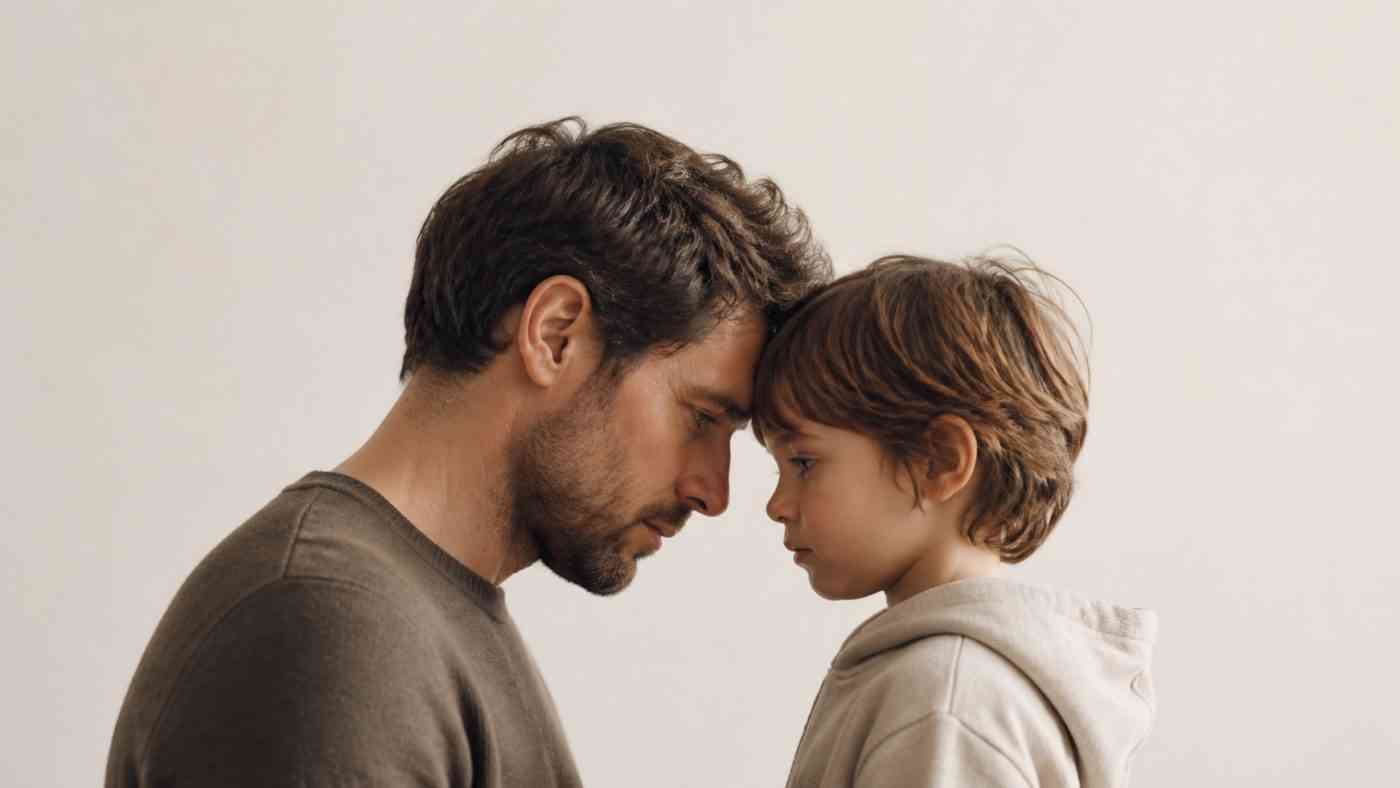
Contemporary culture rarely teaches men how to be a good father. For generations, it has demanded emotional distance and the role of family provider instead. Yet research shows that biology has equipped men with everything they need for tender care. The real barrier does not lie in the father’s nature, but in a social script that tells him to be ashamed of his own sensitivity.
For a long time, fatherhood was treated less as an intimate transformation than as a social function. A man was expected to provide, protect, remain steady, and keep a certain emotional distance. Care, especially the tender and repetitive care demanded by a small child, was placed elsewhere — on the side of the mother, the home, and the supposedly “natural” world of women.
Yet fatherhood does not leave the male body and mind untouched. A growing body of evidence suggests that a man’s nervous system can attune itself to a child through touch, voice, proximity, fatigue, and the daily rhythm of care. The father’s brain responds to ordinary contact by activating mechanisms of empathy, vigilance, attachment, and reward — processes that culture has too often imagined as almost exclusively maternal.
This means that fatherhood is not a decorative addition to masculinity, nor a secondary role performed after the “real” work of provision is done. It is one of the experiences capable of transforming masculine identity from within. It does not make a man less masculine. It can make his masculinity less defensive, less narrow, and more capable of love.
Research by Darby Saxbe, a psychologist and neuroscientist at the University of Southern California and author of Dad Brain: The New Science of Fatherhood, shows this clearly. Her team scanned men’s brains before and after the birth of a child.
It turned out that in fathers — as in mothers — the volume of gray matter in the cerebral cortex decreases. Researchers do not treat this as “damage,” but as a sign of neuroplasticity. The brain lets go of some old connections in order to process signals from the child more efficiently.
Saxbe shows that, in the brains of engaged fathers, activity increases in areas responsible for empathy, emotional regulation, and the reward system. Fathers also experience hormonal changes — less spectacular than pregnancy and birth, but measurable — that support caregiving, tenderness, and attachment.
The more fathers wanted to be involved in parenting, and the more involved they were, the more their brains changed,
– Saxbe emphasizes, suggesting that this is not an innate trait one either has or does not have. It is a skill that develops through practice.
Why, then, do we so stubbornly repeat that a father does not “manage” a child the way a mother does? Much suggests that this is not a matter of biology, but of culture. For generations, the culture of masculinity has defined a man through strength, emotional distance, and the role of “family provider.” Being a “real man” meant keeping one’s distance from everything soft, fragile, and in need of tenderness — which is exactly what an infant needs.
As a result, an ideal of masculinity based on strength, control, and emotional coolness encouraged men to cut themselves off from their own sensitivity. This included the sensitivity awakened by the arrival of a child.
A man wondering how to be a good father often stands between two contradictory beliefs. On one hand, he feels relief and calm when he holds the child close or lets the baby fall asleep on his chest. On the other, he hears a whole set of social commands in his head: “Don’t spoil the child,” “Don’t be soft,” “Child-rearing is the mother’s job.”
The result is that instead of entering more deeply into the relationship, many fathers retreat to its safe margins: logistics, earning money, being present “on special occasions.” Not because they cannot do more, but because they find themselves split between what their body tells them and what the script of masculinity demands.
Culture rewards men for control, competence, and certainty. Caring for a small child is everything except that: chaos, helplessness, crying at three in the morning. It is a field in which one must be able to say: “I don’t know,” “I’m afraid,” “I’m learning.” Men are rarely socialized into such a posture. Dad Brain shows that the problem does not lie in a lack of “paternal instinct,” but in the fact that many men are still ashamed of their own tenderness.
When a father crosses that shame and enters the daily, often tedious work of care, something important begins to happen. Not only for the child, but for the father himself. The research cited by Saxbe suggests that active involvement — feeding, changing diapers, putting a child to sleep, talking, playing — is linked in men with greater empathy, better emotional regulation, a lower risk of depression, and a stronger sense of meaning.
Fatherhood becomes a form of training in attentiveness to another human being: someone who constantly requires attunement, flexibility, and the surrender of one’s own plan. This is not a romantic illusion. It is a neurobiological change that translates into everyday life: less impulsiveness, greater presence, deeper relationships. A man who learns to be a tender father is also learning to be a more human human being.
When we overlook this potential, we lose men who could become better partners, fathers, and citizens. By maintaining a rigid division between the “world of women” and the “world of men,” we lose the chance to build a society in which care is not the domain of one gender, but a shared human experience.
Children lose out, growing up in a world where the father is physically present but emotionally absent. Men lose out too, depriving themselves of the chance to experience themselves in a way that is not filtered through competition and productivity.
Marek admits today that in the past he thought fatherhood was mainly a duty. Now, after two years as a father, he feels it may be the most meaningful thing he has ever done. He did not suddenly become an ideal. He still had worse days. He still had to fight old habits. But something in him changed. For the better.
The answer to the question “how to be a good father” may be simpler than it seems. It does not have to mean fighting one’s own nature, but unlocking it. It does not have to mean rejecting masculinity, but widening it. Science suggests that the male brain is ready for this. The question is whether we — as a society and as individual men — are ready for what may follow.
Read this article in Polish: Ojcostwo zmienia mężczyznę. Ale jest coś, co go blokuje

A Journalism and Social Communication graduate with 15 years of experience in the media industry. He has worked for titles such as "Dziennik Łódzki," "Super Express," and "Eska" radio. In parallel, he has collaborated with advertising agencies and worked as a film translator. A passionate fan of good cinema, fantasy literature, and sports. He credits his physical and mental well-being to his Samoyed, Jaskier.



Zmień tryb na ciemny