Truth & Goodness
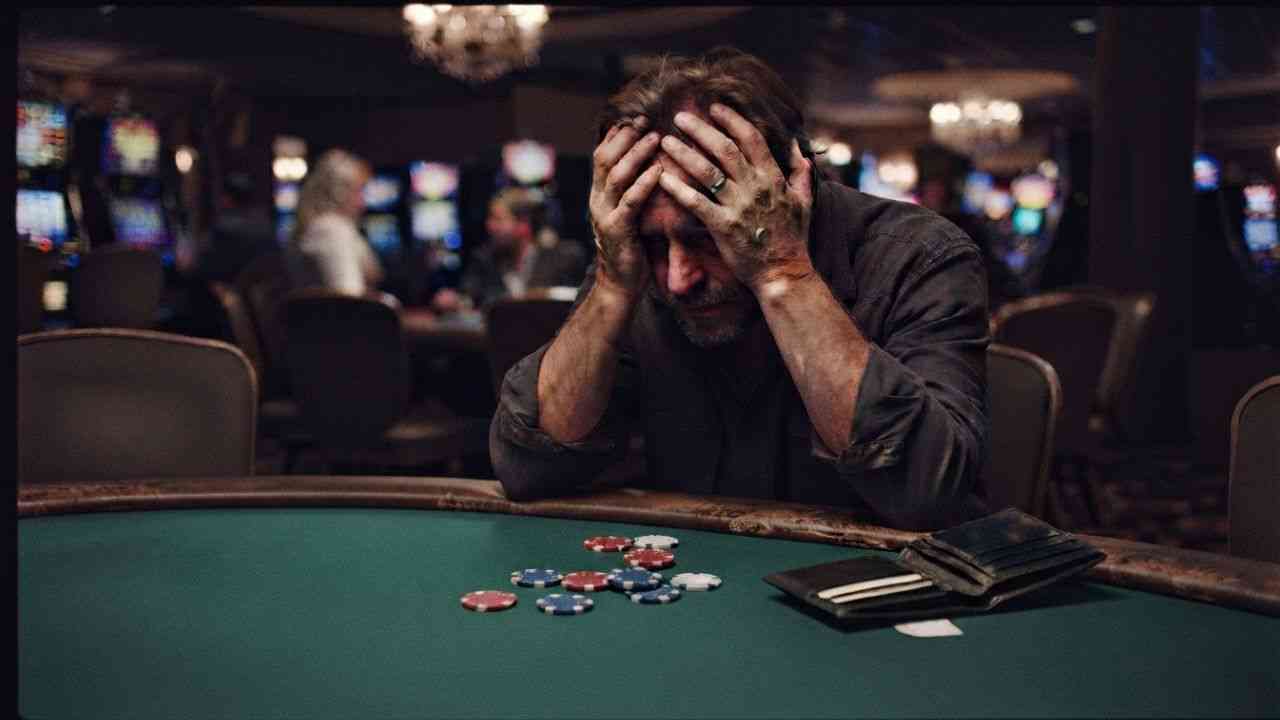
Played for Money. Gambling Addiction Was Taking a Life
13 September 2026





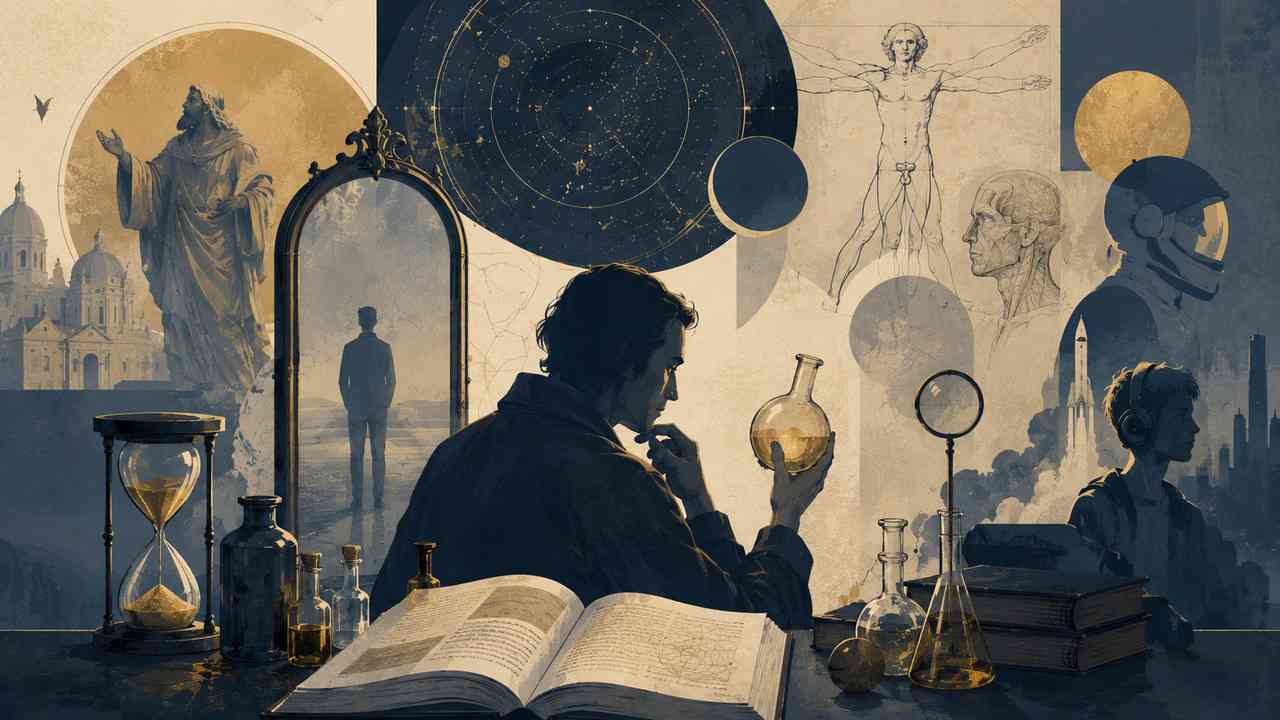
Who wants to live forever? Queen asked the question in the song that became the theme of Highlander, the film starring Christopher Lambert that launched an entire cycle of movies and television productions. At first glance, the answer seems almost embarrassingly simple: everyone. But as Jacek Piekara shows through myth, religion, and pop culture, the price of immortality can be very high indeed.
The desire for a long life, or even immortality, the dream of life without ailments, disease, and death, has accompanied our civilization from the beginning. In myths and religious beliefs, gods are either immortal, able to rise from the dead, or at least very difficult to kill. What matters is that these gods can often share the secret of immortality with ordinary people.
Lost longevity appears as an object of regret, as it does in the Bible, where we learn that the closest descendants of Adam and Eve could still live for several hundred years. Only gradually, from generation to generation, did those abilities diminish. Noah, famous for saving the human race from the Flood, and a 9th-generation descendant of Adam and Eve, lived in health for as many as 950 years. Christians knew the Bible well, so it stirred in them an even greater longing for times that had passed and abilities that had been lost.
Ancient alchemists, and above all medieval, Renaissance, and Baroque alchemists, diligently pursued 2 secrets. Most often, of course, we speak of the philosopher’s stone, which would make it possible to turn lead, or any other metal of little value, into gold. But the masters of alchemy also sought a substance that could cure disease and ensure life that was, if not eternal, then at least very long.
Similar charlatans appeared at royal and princely courts, Count Cagliostro among them, claiming that they had discovered the secret of longevity and that they themselves could remember the days of ancient Egypt. In any case, the obsession with eternal life did not belong only to the European cultural sphere.
One of the most famous seekers of immortality was the Chinese emperor Qin Shi Huang, who not only employed dozens of sage-alchemists, but also sent out expeditions to find the Isles of Immortality. A similar idea guided the Spanish conquistador Ponce de León more than 15 centuries later, when he searched for the Fountain of Youth. Unfortunately, both men, the emperor and the conquistador, met tragic ends. The emperor died at 49, poisoned by mercury, while the conquistador died at a similar age from battle wounds he suffered while searching for the Fountain of Youth in Florida.
It is hard to be surprised by civilization’s drive to extend the life of the individual, since our existence seems both too short and too fragile. Wars, diseases, natural disasters, famine: all these catastrophes reaped so abundant a harvest of death that, for many eras, the sight of a human corpse was both common and ordinary.
And since people had little real way to defend themselves, they tried at least to defend themselves symbolically, inventing, in every culture, numerous stories about a trickster who deceived or defeated death itself, sometimes imprisoning it so it could no longer harm anyone else.
This is also how religious myths of “eternal life” arose, from the fact that, as a species, we cannot accept the idea that our existence ends at the stage of earthly life. Hence the notion that life on Earth is merely 1 stage, as in the theory of reincarnation, or the first, brief stage of true existence, as in Christianity, during which we will only then gain the possibility of fully experiencing intellectual, spiritual, and mystical life, and will live in happiness for all eternity.
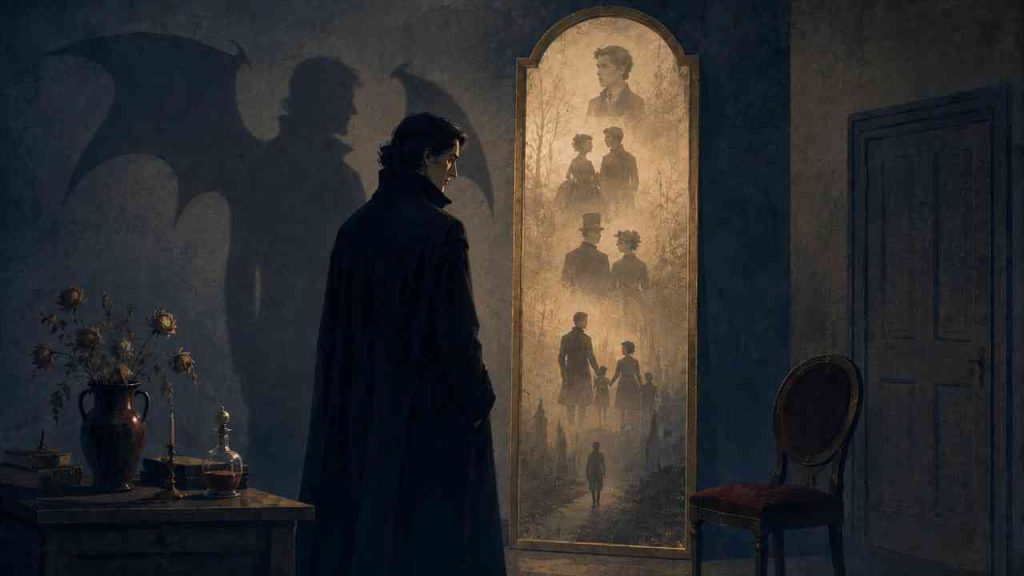
Immortality, which appeared first in myths and religions, was eagerly adopted and transformed by pop culture. When it comes to immortal beings, the vampire has undoubtedly had the greatest career. And although the idea of the vampire itself — a repulsive, demonic, half-living, half-dead creature that sucks blood from humans — had been known for centuries, it gained worldwide fame thanks to the 1819 short story by the physician John Polidori, The Vampyre: A Tale. The work was inspired by an idea and sketch by Lord Byron. After that came more short stories and novels by authors from all corners of the world, including, of course, the most famous of them all: Bram Stoker’s Dracula.
Then came hundreds of films and series about vampires. They showed these beings both as entirely evil and possessed, devoid of empathy and ethical principles, no longer feeling any bond with the human species, which they regarded as game or livestock, and as unhappy, lost creatures afflicted by the curse of an eternal thirst for blood, yet still trying to fight that curse.
As Anne Rice also showed, the author of perhaps the most famous cycle of vampire novels, Interview with the Vampire and others, some of these creatures are already weary of, or bored by, their own existence. They willingly sink into a sleep resembling death, or even choose death itself.
A certain variation on the theme of vampirism as a source of immortality appeared in the figure of the succubus, a demon that feeds on sexual energy. Poland’s greatest writer of horror fiction, Stefan Grabiński, devoted a story to just such an almost immortal female vampire in W domu Sary.

Many creators have asked what price must be paid for immortality, and whether that price, over time, becomes a burden too difficult to carry. And we do not even need to go into questions connected with vampirism, with harming other people, or with securing one’s own comfort at the cost of their health and life.
It is enough to consider that a person granted immortality must watch those closest to him grow old and die: partners, children, grandchildren. He must also hide his extraordinary ability from the world and is therefore, in a sense, condemned to constant loneliness. Can long life compensate for the pain of loss, and if so, to what extent?
From the point of view of someone reading these words, someone who is 20 or 60 years old, the answer is probably yes: the reward is worth the cost. But is someone who is 600 or 6,000 still so interested in continually extending life? Or perhaps he ceases to be human in our understanding of the word, since his existence is infinite and unthreatened, and that inevitably affects his entire spiritual and mental structure, as well as his behavior.
Whatever we think about immortality, and about the price of immortality, I am convinced that it is an absolutely real prospect for our species. Certainly not for my generation, perhaps not yet for my child’s generation, but within 100 years we will either achieve it or come very close to it. And how we achieve that goal, since several methods are possible, is a subject for another text.
Read this article in Polish: Who Wants to Live Forever? – Jacek Piekara o cenie nieśmiertelności


Jacek Piekara: One of Poland's most popular fantasy writers, a journalist, and a columnist. He is the author of the widely acclaimed "Inquisitor Series" (Cykl Inkwizytorski), dozens of books, and numerous short stories. Piekara has also contributed to specialized and popular press, including the magazines Click! and Gambler. In addition to literature, he writes scenarios for computer games and works as a publicist.

Zmień tryb na ciemny