Science
Before There Are Planets, There Is Dust
16 October 2026





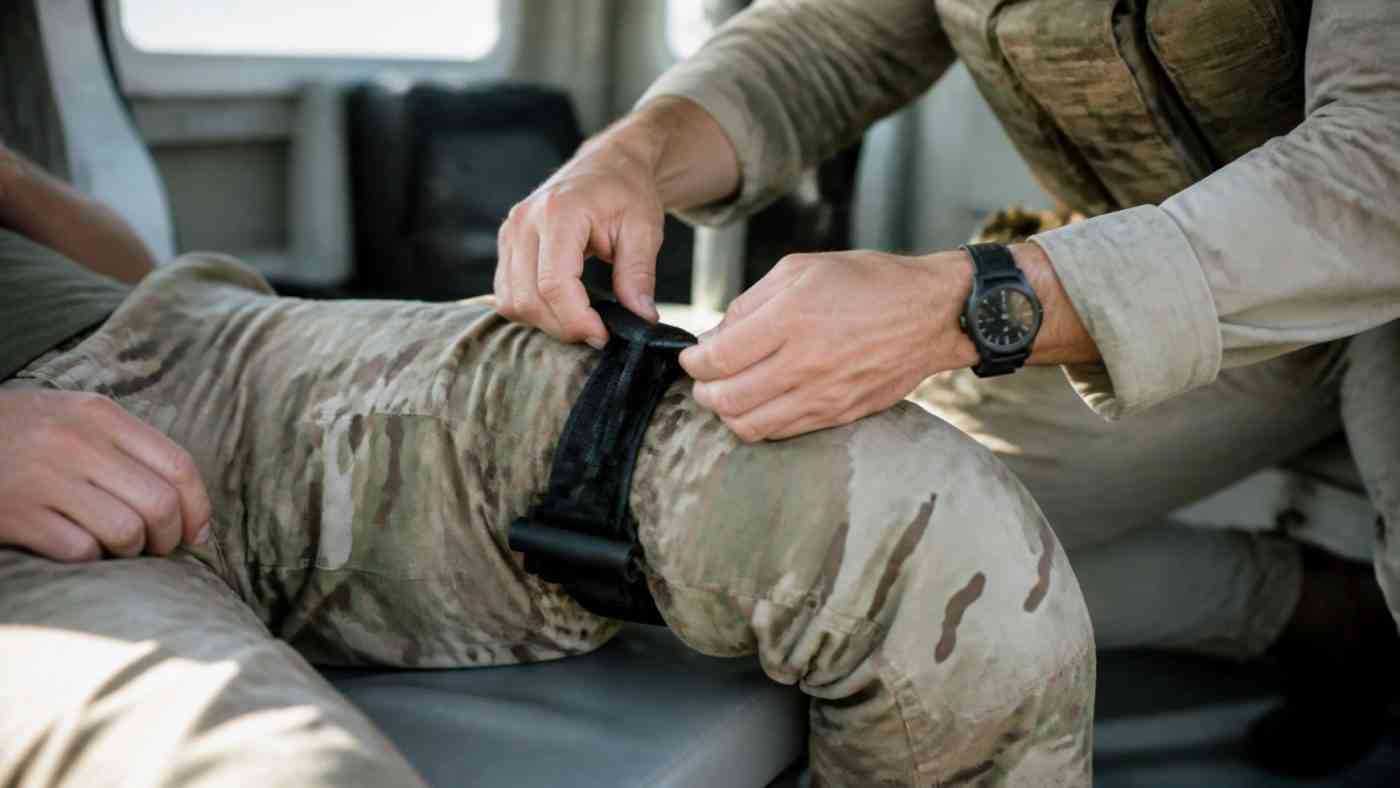
Life-saving technologies do not always emerge in hospital laboratories. Some are born where seconds decide whether a person lives or dies: on the battlefield. Solutions created for wounded soldiers later make their way into ambulances, hospitals, and first-aid kits, helping save patients far from the front.
The paradox of military medicine lies in the fact that it develops in an environment designed, by definition, to destroy. Even so, this is exactly where effective life-saving technologies often emerge. It happens regularly, and usually follows a similar pattern.
First comes a concrete problem: massive bleeding, burns, or the need to act fast in extreme conditions. Then comes a solution designed for the demands of the battlefield: simple, durable, and effective even when time and equipment run short. Over time, the same solution begins to move beyond the military context, into ambulances, hospitals, disaster zones, and everyday situations where life hangs in the balance.
One of the newest examples is AGCL powder, developed by researchers at the Korea Advanced Institute of Science and Technology. When sprayed onto a wound, the substance forms a gel barrier in about one second, helping stop the bleeding.
The powder absorbs more than seven times its own weight, adheres with a force above 40 kilopascals, and remains effective even after two years of storage in humid and fluctuating temperatures. In laboratory tests, it reduced blood loss more effectively than hemostatic agents already available on the market.
Researchers designed the powder with massive battlefield hemorrhage in mind, still one of the leading causes of death in armed conflict. At the same time, its creators point to potential uses in disasters, regions with limited medical infrastructure, and surgical procedures.
I began this research with a sense of mission: to save even one more soldier. I hope this technology will serve as a life-saving technology both in national defense and in civilian medicine,
emphasizes Major Kyusoon Park, who took part in the research.
QuikClot followed an almost identical path. As early as the 1980s, the American engineer Frank Hursey discovered the hemostatic properties of zeolite, but military tests in the early 21st century brought the product to the battlefields of Iraq and Afghanistan. Today, QuikClot mainly brings to mind its Combat Gauze and EMS versions, which use kaolin. Military personnel and civilian emergency responders use these dressings to control massive bleeding.
The Israeli bandage, or Emergency Bandage, took a similar route. Its creator, Bernard Bar-Natan, noticed during his service in the Israel Defense Forces that classic dressings for stopping bleeding looked almost the same as models used decades earlier. He designed an elastic bandage with a built-in pressure applicator, one that a wounded person could apply with one hand. At first, the armies of several countries adopted the solution. Later, it became a regular part of civilian trauma kits.
The history of the tactical tourniquet shows this shift even more clearly. For years, tourniquets met strong resistance in civilian medicine because doctors and rescuers associated them with the risk of limb loss. Only data from Iraq and Afghanistan showed that a properly applied tourniquet can save a life in cases of massive bleeding from an arm or leg. Over time, modern models entered emergency medical services and educational campaigns teaching people how to stop severe bleeding.
The same transfer involves not only materials, but entire procedures. Tactical Combat Casualty Care has become one of the most important military models for treating traumatic injury. Its logic is direct: stop the bleeding first, secure breathing next, and only then move on to further treatment. That sequence has also shaped civilian thinking about triage and emergency response in extreme conditions.
These solutions share one common source: the pressure of combat conditions. They must work quickly and simply, in moisture, dust, and situations where there are too few hands. Research funded or tested by the military provides data from extreme scenarios that civilian medicine rarely generates at such scale. Once a product proves itself in those conditions, the route into ambulances, hospitals, and first-aid kits opens.
In this sense, military medicine remains one of the main sources of life-saving technologies. Tools created for soldiers first face the harshest possible environment. Only later do they enter civilian emergency care, where they serve one purpose alone: saving patients.
Read this article in Polish: Narodziły się na froncie. Dziś ratują życie cywilom


A Journalism and Social Communication graduate with 15 years of experience in the media industry. He has worked for titles such as "Dziennik Łódzki," "Super Express," and "Eska" radio. In parallel, he has collaborated with advertising agencies and worked as a film translator. A passionate fan of good cinema, fantasy literature, and sports. He credits his physical and mental well-being to his Samoyed, Jaskier.



Zmień tryb na ciemny