Truth & Goodness
When the Machine Speaks Well but Still Does Not Know
09 September 2026





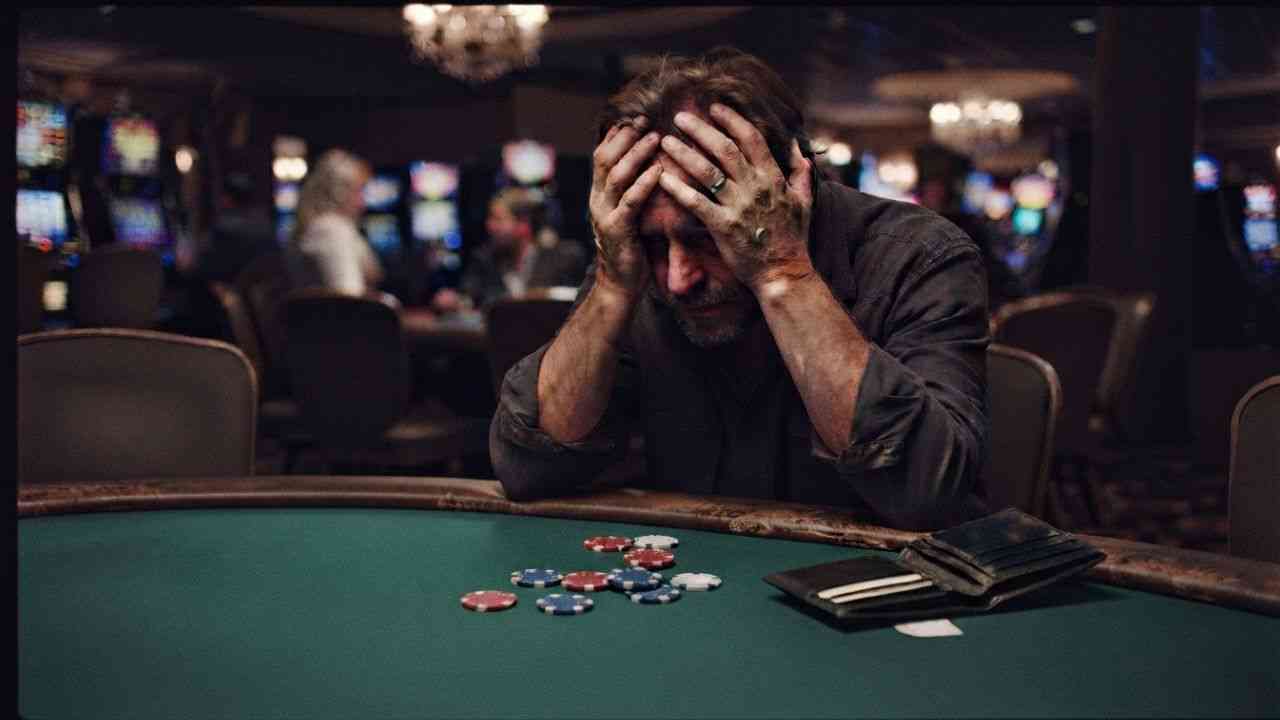
A first slot machine game came at 22: a moment of excitement, a way to unwind after work, a chance to earn extra money. Over the next 17 years, gambling spread to casinos, online platforms, and even the cab of a truck. Around PLN 1.5 million disappeared. In therapy for gambling addiction, Paweł tells Patrycja Krzeszowska that the hardest loss was not money, but the moment the truth had to be spoken at home.
Patrycja Krzeszowska: You have worked as a professional driver for many years. Before gambling appeared in your life, how did you cope with difficult emotions, pressure, stress, and being separated from your family?
Paweł*: When I started driving trucks in international transport, I began gambling almost immediately. I escaped into gambling. Some people look for the causes of their addiction in childhood or in their relationships with their parents. In my case, stress and tension connected with work, responsibility, and frequent separation from home and loved ones played a major role. Loneliness and constant routes made me start looking for a way to let off steam, and that is how I began gambling. A driver’s job is very demanding. It comes with chronic stress, so I looked to gambling as an escape and as a way to release everything that was building up inside me.
Together with my therapists, we came to the conclusion that some people in these situations turn to alcohol, others to drugs, for example, and I happened to like gambling. There is also another issue: what things were like at home, what your relationship with your parents was like. Whether there was alcohol or not. For example, my father was an alcoholic, but I do not believe someone inherits addiction in their genes. I think it is a very individual matter.
How did it happen? How did you start gambling?
I was 22. I was driving in a two-person crew with a colleague who liked playing slot machines. He played, and I watched. One time he ran out of money and said, “All right, Paweł, either play with me or lend me about €23.” He said that if he won, he would give me back what he had borrowed, plus half the winnings. It turned out he won several hundred euros. I do not remember exactly how much, but I was well ahead, and I liked it.
When I drove with him, both he and I played. He showed me how everything worked and taught me what to do. I started to find it exciting that you could win extra money. When I went on a route, I chose one that had slot machines along the way. Maybe if I had not played with him that day and had not won, everything would have turned out differently. I would not have got into it.
What did you feel when the machine paid out the winnings?
Euphoria and happiness, a surge of adrenaline and dopamine. A moment of cheerfulness and joy. I liked it very much.
At that point, I was not thinking that this would become a way to regulate my emotions or escape from anything. I was simply having fun. Sometimes I even thought it might be a pretty good way to earn extra income. But unfortunately…
What did you do with the extra money?
I had just got married. We were building our life together, so there was always something to buy: something for the house, or a new car if a bigger win came in. There were dreams and fantasies about big winnings.
Now, when I talk to therapists, I think those dreams appeared at the point when I was already addicted. In my case, it happened very quickly, maybe a year after I started gambling. After less than 5 years of gambling, all my attention focused only on finding a land-based casino, because I did not know about online ones yet.
Eventually, you won about €69,000. What did you feel then?
As if I had reached some mountain peak, or as if I held the world in my hands. A false sense that I could achieve nothing more, that I had everything I wanted. But it lasted for a very short time. I lost it all, and I got into debt at the same time. I took out 2 bank loans and then several payday loans. I lost the €69,000 and ended up around another €23,000 in the red.
How much did you lose in total?
Over those 17 years, around €347,000.
I did not know about gambling on the internet, and I had not planned to gamble there. Only when a colleague from work bragged that he had won a lot of money online did it inspire me. I felt a kind of excitement: “Damn, maybe I should try it after all.”
I tried it, and the addiction deepened sharply. My tolerance for spending money and for losing money in online casinos increased. That was the turning point. Problems began to pile up. During the first year, I won, but in the second year I started losing.
When I began losing, taking out bank loans and payday loans, I hit a wall. I had no money left to keep gambling, even though I desperately wanted to. You know, a gambler wants to win back the losses at any cost.
What did an ordinary day look like for you?
I drove 9 or 10 hours a day, and if there was a land-based casino somewhere, I went there after work. I played for a couple of hours and went back to the truck. But when I started gambling online, I played for 10 hours a day. I drove, the phone was on the holder, and I gambled. With breaks for lunch and the toilet, but by then it was practically all day long. I gambled that intensely for 2 years.
You placed bets while driving a truck, using cruise control. The machine may do a lot for us, supposedly, but even so, were you not afraid for your own safety and the safety of other people on the road?
I did not think at all about the fact that I could hurt someone and cause an accident. The truck has systems that brake on their own and warn against collisions, but one day those systems may not work.
A couple of times, I almost ended up in a ditch, because the system will brake, yes, but I still have to hold the steering wheel and control the vehicle. There were several such dangers. I could have caused a tragedy. It was extremely irresponsible.
Because of the long hours of gambling and the intense emotions, you slept only 2 hours a night. Were you not afraid that with such a short recovery time, you might be less focused on the road?
I was in a frenzy. The only thing that existed was the desire for the biggest possible win, so I could win back what I had lost.
You cannot stop it until you reach the goal. At that time, I was not thinking that I slept only 2 hours, and sometimes not at all.
When I truly had no strength left to drive, I pulled into a parking lot and took an hour-long nap. But my adrenaline and dopamine were so high that I did not even want to sleep. It was as if I were on drugs.

Did you have any other experiences connected with gambling that you could describe as “hardcore”?
The hardcore thing was when I unloaded in England and collected money there for a load I had overpaid for, for the freight. And then I lost that money in a casino.
Someone else’s money?
Someone else’s money. That was the one and only time. Of course, I gave it back. Before I returned to Poland and went to settle accounts with my boss, I had already got the money, because I borrowed it from a colleague. That happened about 7 years ago.
It was almost €9,250 in our money. Even then, I thought to myself: “Damn, Paweł, what are you doing? This is not the way.” But even that did not stop me.
I wonder what a person feels when, first, they lose money that does not belong to them, or when they lose their entire salary at once.
At first there is sadness, then regret, remorse, but it passes very quickly. The desire to win is so strong that all the bad emotions fall into oblivion very quickly.
You gambled for 17 years. When did you think, “Now it is time to stop, to free myself from this”?
2 years ago, shortly after I started gambling online. I won a little money there at first, then I lost it, and there was a moment. I stopped for about 3 weeks, but after that break I went back.
What changed in your addiction, and also in your life, when gambling moved online?
Above all, I devoted more time to it, because online gambling was available all the time, 24 hours a day. I also spent more money on it and lost more and more. In my case, the addiction developed when I moved online.
The algorithms in online casinos have been specially designed. Everything there is beautiful and colorful. The music is arranged in such a way that you feel as if you have entered some really great party and fit right in. And it becomes harder and harder to leave.
When I entered an online casino, I noticed that at the beginning I kept winning. These algorithms pull you in, stimulate you, and create the illusion that a person can win there. I won once, then a second time, a fifth time, a tenth time. For a long, long time, you keep winning in that casino. You lose very little when you have just logged in, like I had.
I did not get drawn into slot machines as strongly, because the winnings were not that high. Some were smaller, some bigger, but you lost a lot. An online casino poses a greater threat than a land-based one because it is more accessible. Every phone has the internet, and you can gamble at any time.
You used household savings and spent them on gambling. I wonder what you felt when you were no longer losing only your own money, but also the money of those closest to you.
I felt very bad afterward, not at the moment of gambling, because reflection comes later. Whatever way you look at it, it is stealing your own family’s savings.
My wife supposedly did not know until the very end that I was gambling, but she would ask, “You had so much money, what did you spend it on?” So a person lied: “I paid a fine here, I had to pay for some service there.” Lies flowed in a very wide stream. I made them up on the spot.
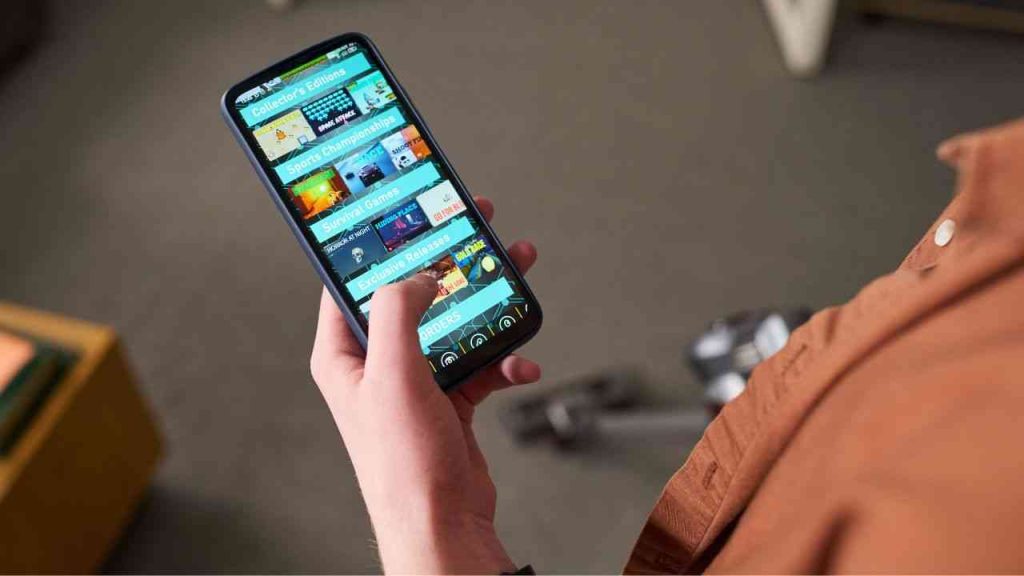
When you started gambling online, you could play almost anywhere and at any time. Did you ever gamble at home? If so, how did you hide it from your family?
When I went to the bathroom, the phone was already in my hand, and I gambled. When my wife went to sleep, I gambled. When I went out to the garage and had 10 minutes, I gambled.
In every free moment, wherever I was alone, I gambled. And when I could not gamble on my phone, because I also liked playing in person, standing face to face with the machine, Totalizator Sportowy in Poland has slot machines.
When I went into town somewhere, shopping for example, I usually stopped there and played on a machine for 10 or 15 minutes. Not too long, so no one would suspect that I had been somewhere for too long.
The hardest part was hiding the fact that the money was gone. I had my money, my wife had hers, but she knew how much of my salary I kept for myself and that it should have lasted me the whole month. Sometimes I had nothing left after 1 day, and I borrowed from colleagues, from my employer. Later he deducted it from my paycheck.
Was there a moment when you feared someone discovering the truth more than you feared falling into a destructive addiction?
I was not afraid of that, because I hid it very well, so the probability that it would come out was small. I made very sure no one noticed.
When I moved online, my tolerance for spending money increased, and the addiction progressed. I felt worse and worse about it mentally, and physically I was sometimes exhausted. Everyone at home was asleep, and I sat there gambling at night.
My wife already suspected that something was going on and kept asking questions, but I still did not admit it. It was not the moment yet. I was not ready to confess. For 17 years, I had hidden it, and no one knew anything was happening.
When did she realize?
One evening she asked me what was happening to me, why I was so nervous and impossible to talk to. I was in such a state then that I wanted to get it out of me. I said that I had been a gambling addict for more than a dozen years. And that was it. I said 1 sentence, and she did not say another word.
We came back to the conversation only the next day. Then I told her everything from the beginning: roughly when I had started gambling and what it had looked like. Of course, I admitted right away that I had been lying to her and deceiving her all those years. I felt enormous relief.
My wife said I had to sign up for therapy. I tried to convince her that maybe we could somehow manage on our own, sort it out, and that I would stop gambling. But after a few days, when she read forums, she decided I would not cope alone and had to get help. And that was exactly the right call.
What changed from the moment your wife found out that you were addicted to gambling? Did you introduce new rules at home?
My wife supported me very strongly in my recovery from addiction. But she lost trust in me, and we will have to rebuild that over time. She also feels resentment toward me.
I gave my wife control over the finances. I get pocket money like a child. When I go to the store, I get money for specific purchases, exactly what is needed, because there is a risk that I might spend the change on slot machines. Although for now I am in therapy and I am not gambling. I have thoughts that I will not gamble.
But there has to be control. I gave my wife all access, all passwords to the accounts I had, and to mObywatel. She changed them, restricted my PESEL, my Polish national identification number, so I could not take out a loan. Although I do not have access to the account now anyway; everything is blocked.
All the platforms I had have also been blocked, so for now I am protected.
You are not only a husband, but also a father of 3 children. How would you like your children to live in the future so they do not fall into the traps of addiction?
As a rule, addiction is not inherited, but you can inherit certain traits from a father who has an addiction, whether to alcohol or gambling, as in my case.
I notice certain similar traits in my younger son, and I worry that in the future he may also have a greater tendency toward similar behavior, for example a lack of brakes, and certainly vulgarity.
I spent my childhood much like my younger son does, outside with friends. You know how it is when you are a teenager. You try everything, including alcohol. Thankfully not drugs, but I have already caught him after drinking a few times. I see that he is trying things and has tendencies. I see in him the traits I had when I was a teenager.
You are just finishing the first stage of therapy. What happens to a person addicted to gambling during the first weeks of working with therapists?
Every day, I wanted to gamble, to look somewhere. Of course, I work through this with therapists during the sessions. For the first 2 weeks, there were many thoughts, gambling cravings, dreams about gambling, and a desire to return to the addiction. After all, for more than a dozen years, the brain had become used to receiving doses of adrenaline and dopamine. Suddenly all of that disappeared. It was no longer there, so the brain demanded it.
For 2 weeks, it was very hard, but over time it began to ease and weaken. This is only the beginning of treatment, and the whole program lasts 2 years. Today, these gambling cravings appear very rarely in my case, but they still come sometimes.
Recently, for example, I had a situation caused by a car breakdown, and something at home also broke. And I thought: “Right, money will have to be spent on the car, on something at home. My son is going to college soon, so we will need to start putting money aside for that too.”
In my case, gambling cravings were triggered because I thought to myself that I could gamble, make money very quickly, and plug that hole.
How do you deal with situations like that, both before and now?
When the first craving hit me, I went to the gym because I like it very much. That was a recommendation from my therapist: you have to find something you like, something that releases positive emotions in you, even adrenaline. If I could not go to the gym, I rode my bike, or I told my wife, “Listen, I have a craving, I need to talk to someone.” Talking also lowers the tension very quickly, because during a craving the tension and the desire to gamble rise instantly. You have to stop it by distracting yourself with something. The crisis passes after about 15 minutes.
What did you learn about yourself in therapy?
When I signed up for therapy, I still did not fully believe that I was addicted. I thought maybe things were not so bad with me, maybe I could manage to control it.
Only when a person realizes it for himself, when he sees concrete, hard evidence in those sessions, does he understand that he has a problem. But you have to be able to admit it to yourself and come to terms with it.
When it reached me, at first I felt regret toward myself, but later enormous relief came. It was as if I had been born again. Above all, I stopped lying, because lying had accompanied me every day.
I hope that after these 8 weeks I will join a relapse-prevention group, so I can go through all the topics connected with coping with relapses once again. After all, that is unavoidable.
Looking back at your 17 years of experience with gambling and your current therapy, what was the hardest moment in the whole story?
The biggest thing is probably shame, admitting it. It also takes a lot of courage to come to therapy, but the worst thing for me was admitting that I am an addicted person. That was the worst moment in my living through it. It is very hard to bear.
Now that you are returning to work, how do you plan to cope with stress and difficulties?
I have returned to training, because I used to be very active in sports, and later I gave that up. Sport does me good. It clears my head a little. The second thing is meetings, which will continue online in this group. The third is that I will try to come to Mława from time to time for individual conversations.
If a difficult moment comes and it becomes hard to carry during the day, I will have to call a friend, someone close, or a therapist. You have to turn your thoughts away very quickly from the idea that you want to gamble.
There will also be additional education, books. Now I will read Overcoming Addiction, which my therapist recommended to me.
But it is very important to have someone you can talk to, honestly and openly, without any, so to speak, nuances.
Do you have someone like that?
I can talk to my wife. I have a great deal of support from her. In my case, that is crucial. I have also had a very good friend for more than a dozen years. He knows about my addiction too, but I told him only recently. I had hidden it from him as well.
When did he find out about the addiction?
About 3 months ago. He reacted very painfully. He said, “We have known each other for so many years.” He felt terribly sorry. He said I could have told him earlier, that maybe he would have been able to help me. He added that he would kick my butt when he saw me. I saw him recently, and he said, “It is a shame you did not reach out earlier.” He had one brother addicted to drugs and another to alcohol, and he had been through these subjects. I knew that very well, but I did not admit it. I hid it from everyone.
You are already on a good path toward freeing yourself from gambling. But if you had to say something to a person who is still gambling, who still lacks that self-reflection and strong resolution — “All right, I am not gambling anymore” — what would you want to tell them, so they would try to get out of it?
It is hard to handle this on your own, and it is worth getting help from a therapist. The problem does not appear when you see that you are losing large amounts of money. By then you are already in it up to your ears. It starts when, every day, you think to yourself: maybe I should gamble today too.
Paweł* — a person addicted to gambling. For 17 years, he gambled, among other places, on machines, in casinos, and online. He is a professional driver who works international routes. Privately, he is a husband and father of 3 children.
THE INTERVIEW WAS CREATED AS PART OF A SCHOLARSHIP PROJECT RUN BY THE INSPIRATORNIA FOUNDATION THANKS TO FUNDING FROM THE GAMBLING PROBLEMS SOLVING FUND, COMMISSIONED BY THE NATIONAL CENTER FOR COUNTERACTING ADDICTIONS.
Read this article in Polish: Grał dla pieniędzy. Nie wiedział, że przegrywa życie

A graduate of journalism and social communication at the University of Rzeszów. She has been working in the media since 2019. She has collaborated with newsrooms and copywriting agencies. She has a strong background in psychology, especially cognitive psychology. She is also interested in social issues. She specializes in scientific discoveries and research that have a direct impact on human life.

Zmień tryb na ciemny