Truth & Goodness
The Zloty, the Euro, and the Politics of Waiting
14 September 2026





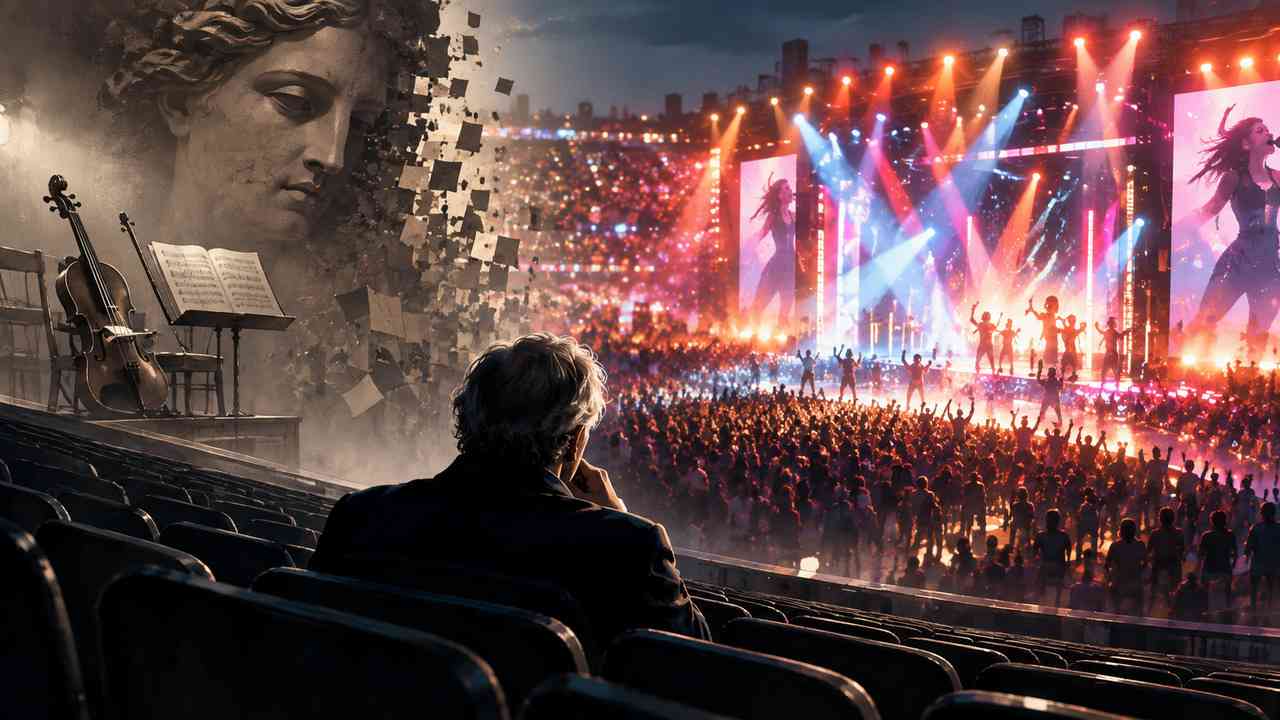
Should culture still make us stop, move us, and force us to think, or is it enough for it to be loud, spectacular, and widely accessible? Andrzej Kucybała, a renowned conductor, looks at Poland’s Capital of Culture and asks uncomfortable questions about the role of culture today.
The last month, along with my health problems (my heart), has taken away my ability to actively participate in social and cultural life. It has placed me on the margins, in the last row of the stadium called life. From there, one may see the entire scene and the gathered audience quite clearly, but the details begin to fade.
The actors who create social, professional, and cultural life become small figures, puppets, pulled by the strings of the “important people” of this world, who create the performance from above by moving the right threads. The action of this play, this spectacle, this concert may be dynamic, but it is increasingly detached from the idea of a theatre of life filled with peace and wisdom.
Of course, watching from a distance the stage of politics, culture, and social life, I can see that for the main actors – and above all for the directors and set designers of this performance – dynamic action has become the main objective. The content, the problems, and the characters that once formed the central theme of this theatre of life have become almost irrelevant.
What is happening around us today is beginning to resemble ancient Rome. The games and spectacles – gladiator fights, wild animal hunts, and similar events – were organized for the so-called citizens of Rome by emperors and Roman officials.What happens to a society when culture stops demanding effort, concentration, and sensitivity from human beings? Why do people want this – and even desire it?
Why do we choose loud, easy, and immediate pleasure? Should culture simply give people what they want because it is enjoyable, or should it also teach them something and make demands of them?
Personally, I have nothing against entertainment, pop culture, mass concerts, or street performances. In my youth, I actively participated in such events myself. The problem begins when this kind of entertainment replaces culture instead of existing alongside it.
People have the right to have fun, laugh, dance as they wish, and listen to music they enjoy – music that does not require great intellectual effort. Popular culture has always been and always will be part of our lives. The problem begins when it becomes the only option.
Sometimes it is worth asking: “What does this audience still not know? What have they not yet experienced? What could they still learn?”
Perhaps we live in a time when, having become accustomed to noise, we treat silence as boredom. Someone who is constantly given short, simple messages begins to see longer or deeper reflection as a waste of time.
And the danger does not lie in the existence of pop culture, nor in the fact that we organize huge concerts and street spectacles. The danger lies in the gradual disappearance of alternatives.
After all, culture should be a place where we encounter something we did not expect. Music we do not yet understand. A book that forces us to stop. A painting we cannot immediately name. Or theatre that leaves us with more questions than answers when we walk out.
This cannot be measured by the number of participants, decibel levels, the size of the stage, or the number of lights. Often, it is not even visible at first glance. Yet it is precisely through these seemingly small encounters with culture that something emerges which no mass event can produce: an individual human sensitivity.
And perhaps that is why, sitting in the last row of my stadium, I increasingly wonder whether I am truly watching a performance prepared by people — or a performance designed to prepare people to expect less and less from life.
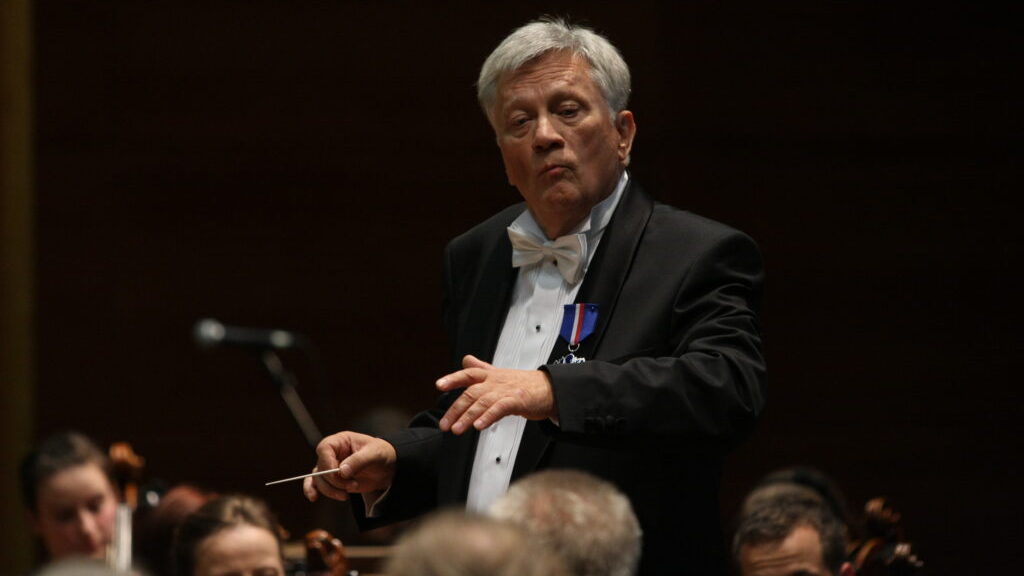
Today, we completely forget that social life is built on direct contact with another human being, that true culture requires concentration and silence in order to notice all those nuances that truly create drama in literature, film, and the music of outstanding artists.
The sensitivity and ability of great creators to transform the drama of life into the form of a novel, a short story, an essay, or a complex structure of sounds and rhythms can awaken within us sensitivity, nostalgia, and, above all, deeply move us.
Today, this seems to belong to the past.
The superficiality of pop culture – and sometimes even vulgarity or a simple lack of decency – is slowly becoming a model that teaches younger generations how to live. Dance? Forget it. It has been reduced to little more than movement for its own sake: shifting from one foot to another, energetic waving of arms, sometimes without rhythm or logic.
Reading has been reduced to consuming text, preferably as briefly as possible, without the need for analysis or understanding. Better still if the text comes with a funny image attached.
Unfortunately, after the political transformation, the education system was designed in such a way that the accumulation of theoretical knowledge – often already outdated – became the most important measure of the tasks of the modern Polish school. It is a model in which culture, music, and visual arts are completely neglected.
We educate cyborgs deprived of sensitivity to art and beauty, while teaching admiration for primitive songs (for example, the proverbial Skolim). We admire collective spectacles – preferably in stadiums or on huge squares – where thoughtless crowds gather for performances in which the power of sound, flashing lights, and bizarre figures moving across the stage become the highest measure of a successful show or concert. And everything else – content, social message, sensitivity – no longer seems to matter.
Other values count. Or rather, their absence.
An old saying goes: “A fish rots from the head.” Those who create this reality forget that social decay and the failure to teach sensitivity will eventually return like a boomerang and strike precisely those who built such a model of life, depriving them of the privileges they claimed for themselves.
“Dumb them down, divide them, and rule” has always had “short legs.” This is what the history of the world shows, and it contains no exceptions.
When reviewing the programme of the cultural event that was meant to become the first Poland’s Capital of Culture, I noticed a certain pattern.
In my view, Poland’s Capital of Culture is essentially the capital of street culture. It is easy to see that symphonic music and classical music appear in the programme either only marginally or in the form of classical crossover.
While creating the programme for this celebration of culture, the organizers forgot about classical music and the Cavatina Philharmonic Orchestra.
The publicly available “BB Poland Capital of Culture” programme presents various cultural events, but you will not find concerts by this orchestra there, nor other important artistic events proposed by Cavatina Hall. It turns out to be a kind of “lonely island” – an institution that exists, but does not belong to the favourites of the city authorities and even appears to have become something almost extraterritorial.
I see the same pattern in the programme of what was once a highly significant music festival for the city and the country: the Polish Composers’ Festival. For the people, for the people, for the people – but not for the development of so-called high musical culture. Of course, I see a certain idea behind this programme: presenting the public with works by composers connected with our city. It is a beautiful idea, but it should be accompanied by additions that raise the artistic status of the festival. At present, it resembles a dish containing many tasty ingredients, but the cook forgot to season it with “salt.”
It seems that this direction perfectly matches the model supported by those in power: pop culture, pop culture again, and nothing beyond that. High culture, even if forced underground, will somehow survive because it is created by idealists and dreamers. But from an electoral perspective, it will not bring votes to those who make decisions.
This is how contemporary politics destroys high culture.
I will return for a moment to my place in the last row of the stadium called “life.” From here, I can no longer hear every word spoken by the actors, and I cannot see every detail of the performance. Perhaps, however, it is precisely from this distance that it becomes easier to see the scenery. I see more and more lights, more and more noise, larger and larger crowds, and less and less space for reflection.
And only one question continues to trouble me:
Are we truly building culture for human beings, or are we building human beings for the sake of spectacle?
Because if the purpose of culture is simply to entertain us, then a stage, lights, and a powerful speaker are enough. But if culture is meant to shape us, it requires something far more difficult — silence, time, reflection, and sensitivity. And these things, as I observe from my last row, seem to be becoming increasingly rare.
Read this article in Polish: Kultura ma bawić czy wymagać? Ten spór wraca dziś ze zdwojoną siłą

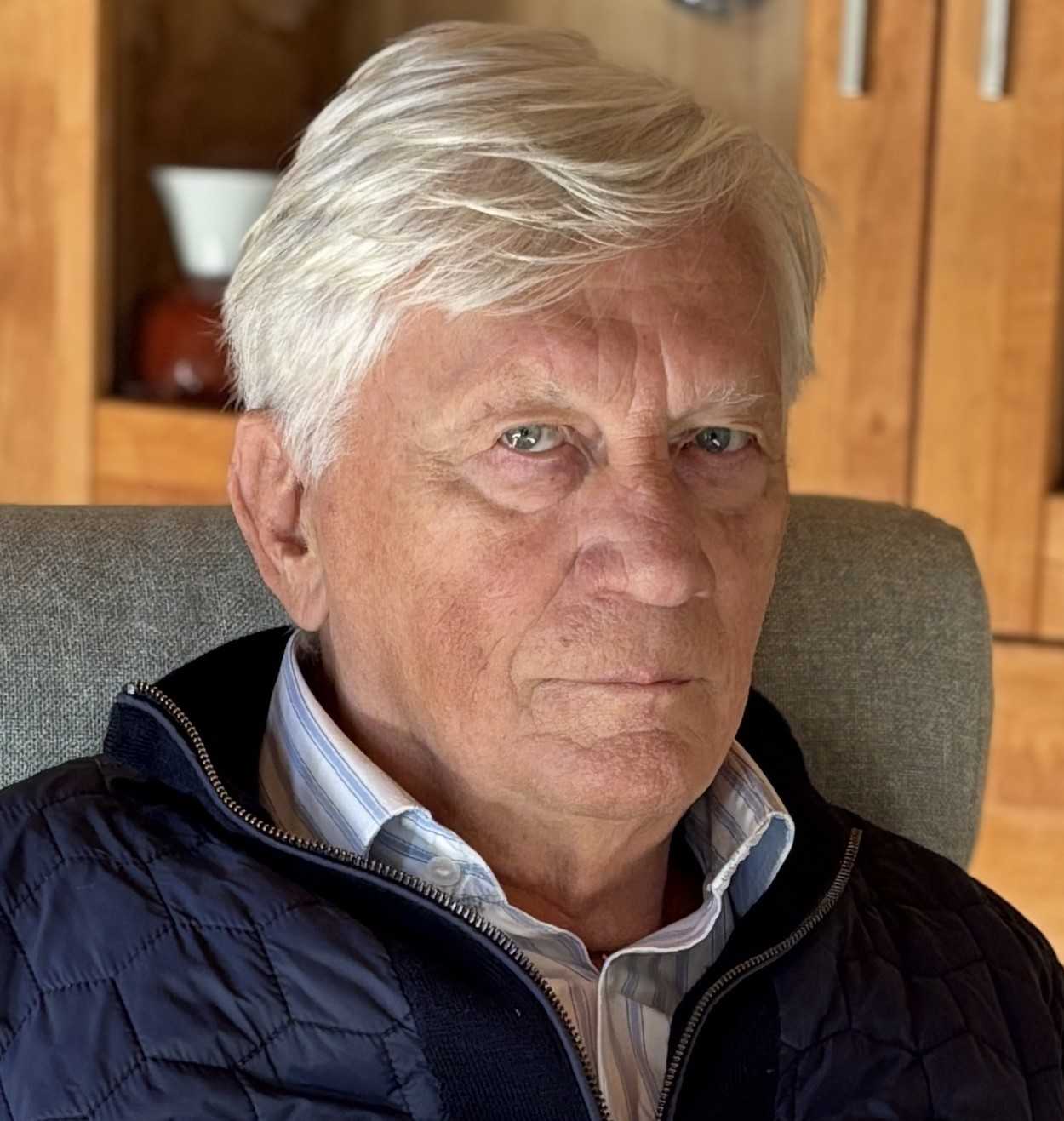
Polish conductor, educator, and cultural manager. He founded and led the Symphony Orchestra in Tarnobrzeg and also co-organized prestigious music festivals. He served, among other roles, as conductor and artistic director of the “Lasowiacy” Song and Dance Ensemble. He also headed the Stanisław Moniuszko Music School Complex in Bielsko-Biała, transforming it into one of the country’s leading artistic institutions. He was honoured with numerous distinctions, including the Knight’s Cross of the Order of Polonia Restituta, the Gold Cross of Merit, and the Silver Medal for Merit to Culture “Gloria Artis.”
Zmień tryb na ciemny