Culture
Between Spectacle and Reflection: What Do We Really Expect From Culture?
18 September 2026





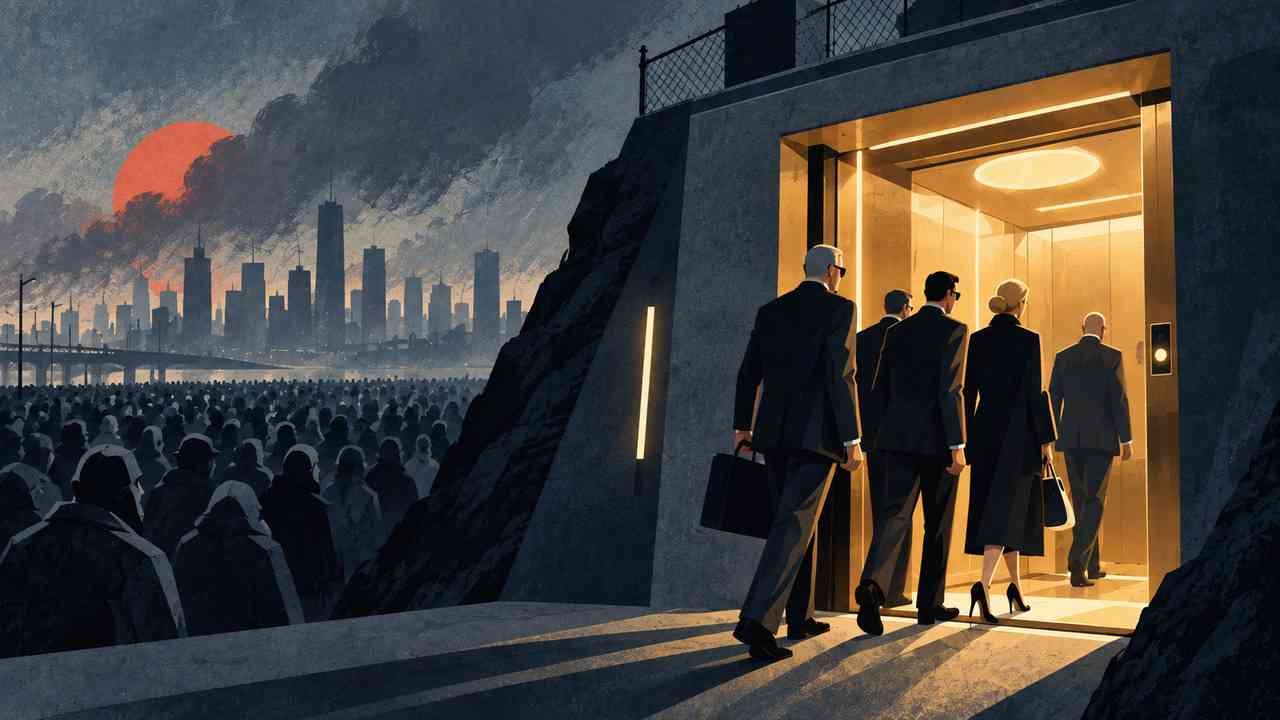
A world straight out of The Terminator, with AI slipping its human leash, a nuclear war, or another, far deadlier pandemic? None of it is a problem, provided, of course, you belong to the richest club on the planet and have access to billionaire bunkers.
“Mark my words: AI is more dangerous than nuclear weapons.” Elon Musk’s words, spoken in 2018, did not cause much of a stir in the media, because at the time hardly anyone understood what this whole thing called AI was supposed to be. Today, as global media are full of fresh reports about alarmist warnings on AI issued by the most important figures in Big Tech, Musk’s words are cited as proof that all of this could have been foreseen much earlier.
In mid-September, Dario Amodei, the head of Anthropic, called on the whole world to slow the pace of the AI revolution, because the risks involved are too serious for humanity to keep rushing ahead without restraint. Other leading American billionaires working on AI joined the Anthropic CEO’s appeal, including the aforementioned Elon Musk, as well as Mark Zuckerberg.
Zuckerberg, as it happens, has been preparing for the “end of the world” for years. Whether the threat were an AI that brings about humanity’s destruction — including speculation about artificial intelligence creating a “supervirus” that would kill humankind — or nuclear war, Zuckerberg has built himself a headquarters in Hawaii, in the middle of the Pacific, designed to give him a chance of survival.
His residence on the Hawaiian island of Kauai was scrutinized in 2023 by the American outlet Wired. Zuckerberg began the project back in 2014, gradually buying up neighboring plots of land. Wired journalist Guthrie Scrimgeour described the 270 million dollar investment in detail. At its center is an underground bunker of nearly 500 square meters, powered by an independent energy source and stocked with large supplies of food.
Zuckerberg does not deny that he is preparing for the worst, but he plays the matter down. In 2024, in an interview with Bloomberg, he said that the underground structure was “just a little shelter,” then clarified: “It’s something like a basement.”
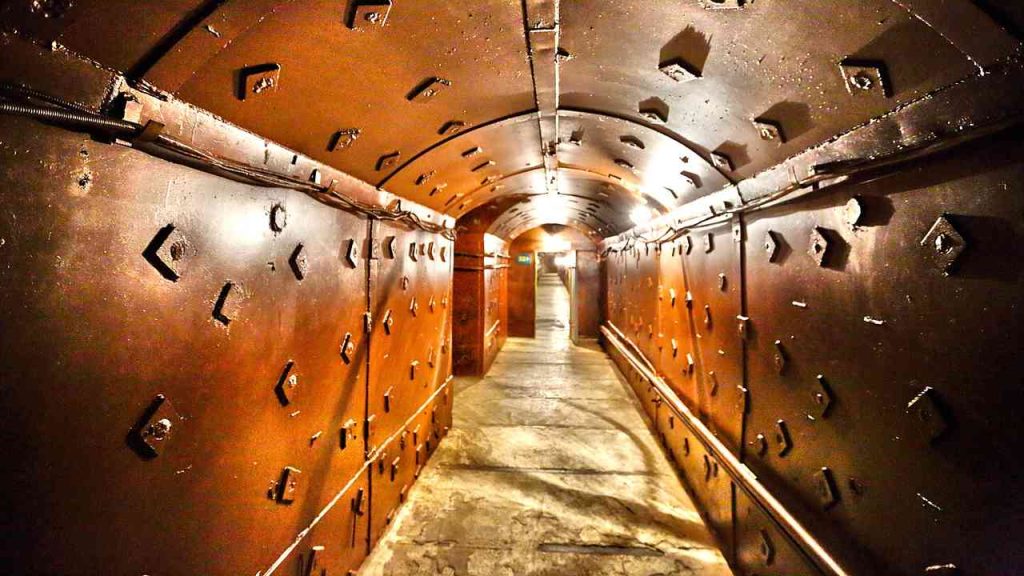
Ron Hubbard, the head of Atlas Survival Shelters in Texas, says he helped develop Zuckerberg’s Hawaiian “basement.” His company is one of the leading American contractors in the shelter business. Hubbard sells shelters and bunkers across the full price range.
That means everything from basic, small shelters costing 20,000 dollars, which anyone can dig into their backyard, to prefabricated giants costing many millions of dollars, poured over with concrete and equipped with secret entrances, for example behind a wall in a building constructed above the bunker.
Incidentally, Zuckerberg is diversifying his security. At the beginning of the year, he bought a 170 million dollar estate in Miami on an island known as the “billionaire bunker,” whose real name is Indian Creek. The island, connected to the mainland by just 1 bridge and full of police and private security, is also home to residences owned by other billionaires, including Jeff Bezos, Ivanka Trump, and her husband Jared Kushner.
Their father and father-in-law, as president of the United States, has access to many bunkers that would allow him to survive for several years in the event of full-scale nuclear war. But Donald Trump had his own bunker for many years, long before he moved into the White House.
Almost next door to the “billionaire bunker” lies Trump’s private residence, Mar-a-Lago, where the previous owner built a bunker during the Korean War in case of a confrontation with the Soviet Union. Trump repeatedly boasted, even before his first term, that he had his own “apocalypse insurance” in Florida.
Sam Altman, the head of another major company developing artificial intelligence, OpenAI, does not admit to building a bunker of his own, although he could undoubtedly afford such a structure. Yet for years he has been known in the industry as a man preparing for the “end of the world,” whatever name we give to a catastrophe that might threaten humanity with annihilation.
In a profile of Altman published by The New Yorker, readers can find accounts from his acquaintances about the preparations made by the head of OpenAI. According to them, Altman has an entire “evacuation kit” at his disposal — “go bag” would be far too modest a term in this context — and on California’s Big Sur coast he owns an isolated property to which he could evacuate by private plane if the world began to fall apart.
If we look at the world map from the perspective of nuclear war, the most isolated places, and at the same time those farthest from the main nuclear powers, are Australia and New Zealand. The land of the kiwi, in particular, is seen as a natural refuge in the event of a global cataclysm. It is no surprise, then, that the richest people in the world have taken an interest in these islands.
Reid Hoffman, the co-founder of the well-known platform LinkedIn, whose fortune is worth around 3 billion dollars, said that buying property in New Zealand is a kind of “apocalypse insurance.” “Saying you’re buying a house in New Zealand is kind of a wink, wink — say no more,” Hoffman told The New Yorker.
Peter Thiel, Elon Musk’s former business partner and the co-founder of the payment service PayPal, has also taken an interest in New Zealand from this point of view. Thiel bought a vast plot of land near Wānaka on the South Island and planned to build a 330-meter-long residence into a mountainside — a structure that resembles a bunker more than a house, which is exactly how the project has been described by global media covering Thiel’s investment.
In 2022, local authorities refused to approve the building, arguing that it would interfere too much with the natural landscape. Thiel, however, did not withdraw his application, and it appears that he is still trying to obtain a building permit.
If, however, one of the American billionaires preferred to approach the matter of “apocalypse insurance” in a more patriotic way, a good option has existed for several years in the middle of the United States. In Kansas, the so-called “Survival Condo” was created: the most luxurious and professional private bunker in the world.
The facility is a converted nuclear missile silo. The central-eastern United States is dotted with such structures. With the end of the Cold War, some were decommissioned; some were filled in, while others were put up for sale. Entrepreneur Larry Hall bought one of them in 2008 for 300,000 dollars and transformed it over the next several years into a luxury bunker for the wealthiest.
The “Survival Condo” reaches 60 meters underground and has been divided into 12 “apartments,” where up to 75 people can live in total. In the event of a global cataclysm, their life underground would be made more pleasant by a swimming pool, a gym, a movie theater, and even a climbing wall. The bunker has its own heavily armed security force.
Interestingly, however, the guards defending access to the bunkers of the rich may turn out to be the weakest point in the plans of billionaires hoping to outlive the rest of humanity. Zoe Kleinman, a BBC journalist, wrote a piece last year for the broadcaster about the apocalyptic preparations of billionaires from the world of Big Tech. In it, Kleinman recalled once speaking with a former bodyguard for a billionaire who owned his own bunker.
He told me that if that [“apocalypse”] really happened, the priority of his security company would be to eliminate the boss in question and get into the bunker themselves. And he did not seem to be joking.
the BBC journalist wrote. Billionaires must therefore remember that, in the end, true power may not come from a larger bank account, but from a larger caliber. In the mythology of billionaire bunkers, survival looks like a private asset. In reality, it may still depend on the oldest and least elegant form of authority: force.
Read this article in Polish: AI, wojna, pandemia. Gdy świat się zawali, oni znikną pod ziemią


Journalist with a degree in American studies, writing mainly about foreign policy and history. Author of numerous reports on international issues and interviews with leading experts in the field of economy, geopolitics and history. Since March 2023, editor-in-chief of the monthly "Historia Do Rzeczy".


Zmień tryb na ciemny