Science
Before There Are Planets, There Is Dust
16 October 2026





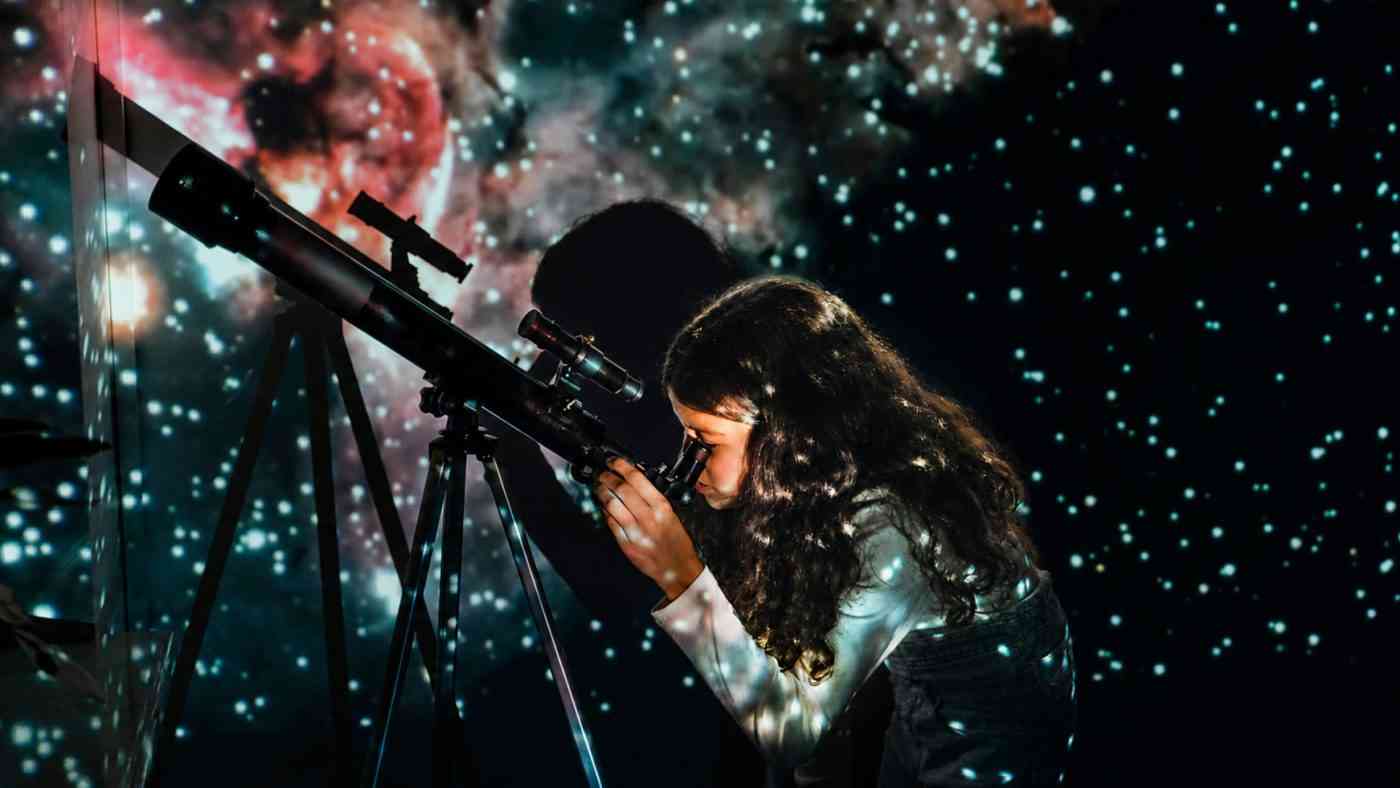
Astronomy education is returning to public debate not only as a question about school timetables, but as a question about what kind of education people need in the 21st century. In Poland, officials are working on a new optional school subject devoted to astronomy. But the larger question reaches far beyond one country: can looking at the stars help us care more wisely for our own planet?
The history of teaching astronomy is longer and richer than many people imagine. In Poland, for example, astronomy once functioned as a separate subject in general secondary schools during the 20th century. Many school textbooks contained dedicated chapters on cosmology. Over time, however, astronomy lost its independent place. Other subjects absorbed it, and its themes scattered across different areas of science education.
In recent decades, many schools have treated astronomy as something taught “along the way.” A little appears in physics, a little in geography, a little in extracurricular activities and student clubs. Poland’s current debate about bringing astronomy back as an optional subject offers one example of a wider educational problem: should astronomy remain dispersed across the curriculum, or should schools give it a clear and visible place of its own? Polish astronomy and education outlets have reported that astronomy may return to secondary schools as a supplementary subject, chosen by school leaders from a ministerial list.
According to reports in Poland, astronomy could appear in schools from the 2027/2028 school year as a supplementary subject. That would place it on a list of optional subjects, with each school principal deciding whether to introduce it. In practice, students would take it only in schools whose leaders chose to offer it.
The proposed subject would not stop at the classical content of stars and planets. It would also include astronautics, the space industry, satellite observation, and space technologies. This matters because modern astronomy no longer belongs only to observatories and telescopes. It now touches climate monitoring, navigation, communications, planetary defense, and the technological imagination of entire societies.
That is why the Polish example deserves attention outside Poland. The question is not merely whether one country should add another subject to the timetable. The question is whether schools everywhere still know how to teach students to think on a planetary scale.
Why teach young people about stars, galaxies, and black holes at all? Do they not already have enough exams, formulas, and practical worries? The International Astronomical Union’s Office of Astronomy for Education promotes astronomy in curricula and supports resources for teaching astronomical topics across countries. Its mission includes helping educators use astronomy in science education from elementary to high school level.
Astronomy can support mathematics, physics, geography, technology, and even civic education. It trains students to move between observation and model, image and theory, wonder and evidence. It also offers one of the clearest ways to teach the difference between science and pseudoscience.
Astronomy education can serve at least three purposes.
First, it trains critical thinking. It teaches students how humans build models from observation and data, how they test hypotheses, and how they recognize false claims dressed up as science.
Second, it opens students to wonder — the thaumazein from which classical philosophy began. It reminds them that the world does not explain itself and that reality remains stranger than habit allows.
Third, it introduces responsibility. If human beings are the only known civilization capable of reflecting on the cosmos, what should we do with that fact here, on Earth?
Astronomy gives students something no other subject can offer in quite the same way: the cosmic perspective. It pushes them beyond daily ego, local disputes, and passing trends. It shows Earth as a small, fragile point in the vastness of the universe.
Neil deGrasse Tyson writes that “The cosmic perspective belongs to everyone”. He also describes it as “humble” and “spiritual—even redemptive—but not religious.”
That kind of cosmic humility feels especially necessary today. In a world full of polarization and self-centered narratives, seeing Earth from millions of kilometers away can act like a cold shower. It shows that we are one civilization on one planet.
It also reveals how extraordinarily complex the conditions for life are, and how small the practical chance of reaching a “second Earth” remains. Perhaps this is why astronomy education can shape not only knowledge, but responsibility: for climate, for biodiversity, and for the future of our blue planet.
Carl Sagan made this point unforgettable when he wrote about the image of Earth taken by Voyager from a distance of more than six billion kilometers. In that photograph, Earth appears as a tiny speck. Sagan’s most famous formulation begins: “That’s here. That’s home. That’s us.”
Through this perspective, astronomy can become a lesson in transcendence. Not religious transcendence in a dogmatic sense, but existential transcendence: a movement beyond the self, beyond group identity, beyond short-term interests. Astronomy teaches that we belong to something immeasurably larger, while also reminding us that our small planet remains the only home we know.
In a world where algorithms feed us increasingly personalized information bubbles, astronomy education points back to what is universal. The laws of physics work the same way in Warsaw as they do in the Andromeda Galaxy. We belong to a history far larger than the history of any nation, religion, or single civilization.
The cosmic perspective does not mean escaping local problems. It means placing them in a wider frame — one that can strengthen both humility and solidarity.
If schools design astronomy well, it can combine two dimensions: hard empirical science and philosophical formation. It can teach students how to calculate, observe, and reason. But it can also help them ask what kind of beings we are if we can look at the universe and understand even a fragment of it.
That is why the debate now unfolding in Poland should not remain merely a Polish story. It belongs to a much wider conversation about education in the 21st century. Schools do not only prepare young people for exams or careers. At their best, they teach them how to inhabit the world.
Astronomy education, if treated seriously, can become more than another subject to pass. It can create a space in which young people learn how to be both residents of a particular place and citizens of the universe.
Read this article in Polish: Kosmos w szkolnej ławce. Po co uczniom lekcje o gwiazdach


A Journalism and Social Communication graduate with 15 years of experience in the media industry. He has worked for titles such as "Dziennik Łódzki," "Super Express," and "Eska" radio. In parallel, he has collaborated with advertising agencies and worked as a film translator. A passionate fan of good cinema, fantasy literature, and sports. He credits his physical and mental well-being to his Samoyed, Jaskier.


Zmień tryb na ciemny