Science
Before There Are Planets, There Is Dust
16 October 2026





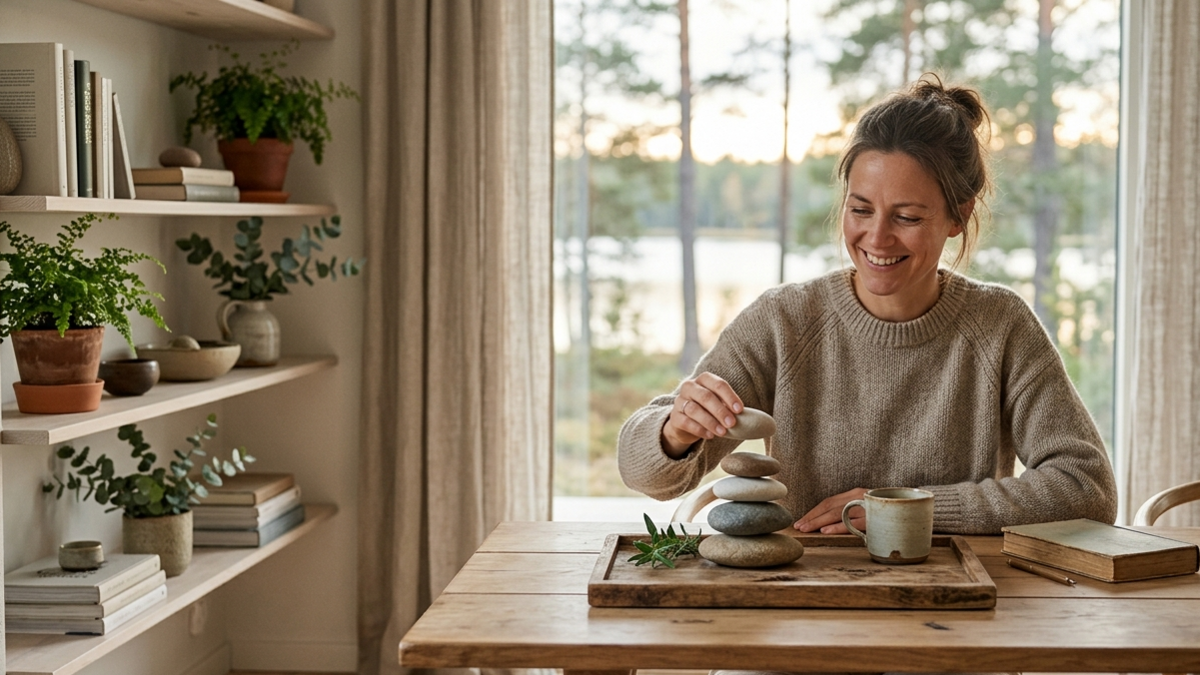
Can we live more calmly without giving up ambition, pleasure, or growth? In a world that constantly urges us toward more, faster, and more intense experiences, many people feel lost and uncertain. The lagom lifestyle suggests how to respond — and how to design a life that feels more satisfying. Perhaps this Swedish idea finds what we miss so deeply and keep searching for.
Modern human beings, living in constant haste and stress, increasingly lose all sense of proportion in their way of life. They lose the ability to rest deeply, observe attentively, and reflect. Overstimulated from every side and living under constant pressure, they experience permanent fatigue and eventually reach the limits of exhaustion. That is precisely why the Swedish proposal known as lagom is becoming an increasingly popular way of life, at least in Europe.
Lagom can be defined as a philosophy of life most often translated as “just right,” “not too much, not too little,” or “exactly as much as needed.” It is not a rigid system of rules, but a way of thinking based on moderation, balance, and the reasonable use of goods and time.
The term lagom itself probably derives from an old expression meaning to share something “for the whole group,” so that everyone receives an appropriate portion. Today, it has become one of the key elements of Swedish culture. And for busy, overstimulated Europeans, such a proposal for living is becoming more and more attractive.
This is the basic principle that should set the main direction of our efforts. Lagom rejects both excess and exaggerated asceticism, because the priority is to find the right measure in everyday life. The point is to:
From a philosophical point of view, lagom resembles the ancient idea of the “golden mean,” developed by the Greek philosopher Aristotle. He based his ethics on the conviction that a good life does not consist in falling into extremes, but in finding the right measure between excess and deficiency.
His doctrine of moderation, described in the Nicomachean Ethics, suggested that the golden mean — understood as a kind of virtue and a skill of living well — is achieved through practice, exercise, and the habits formed along the way.
We become just through just actions, brave through brave actions, and temperate through the practice of moderation. Swedish lagom follows a similar line of thought when it names its second priority: balance between work and private life.
In the spirit of lagom, balance matters. This means compromise, or precisely moderation, based on well-measured proportions. To achieve inner peace and equilibrium, a person needs to find:
It must be emphasized, however, that this is not about maximizing productivity, but about lasting, harmonious functioning. For Aristotle, precisely this approach to everyday life was supposed to lead a person toward eudaimonia: a good and happy life.
In the Swedish approach, so-called conscious consumption is equally important. Modern human beings easily yield to the abundance of goods offered by today’s world. For many, consumerism has therefore become a common way of life. Usually, this turns out to be a cruel trap. With such an approach, it becomes impossible to find moderation or to celebrate what we have already achieved.
The more we have, the more we want to have. And as the German philosopher and psychologist Erich Fromm observed, the point is not to have, but to be. That is why a person living according to lagom does not buy things merely for prestige or fleeting pleasure, does not accumulate more objects because others do so or because others expect it. Instead, such a person chooses:
This approach expresses not only conscious acquisition and use, but also respect for other people’s work and creations, as well as an ecological attitude toward life.
The space in which we function, and the way it is organized, also matter. What surrounds us — architecturally and aesthetically — has an enormous influence on our well-being. As a result, it also affects the comfort of everyday functioning.
Friendly spaces motivate us more strongly to engage and create a better atmosphere for cooperation with other people. That is why lagom practices simplicity in shaping one’s surroundings. In interior design, this means order, functionality, the use of natural materials and muted colors, and the avoidance of excess objects. This is not about minimalism, but rather about creating a space that contains exactly what is needed.
Finally, there are elements we know well from other narratives, elements that most psychologists consider obvious and necessary both for our well-being and for our level of health.
Lagom encourages regular movement, enough sleep, healthy food, contact with nature, and limiting excess stimuli. These factors are also essential if we want to take proper care of our own well-being. This is not about striving for perfect health, but about feeling good in everyday life.
Lagom is often compared with the Danish concept of hygge, but the difference between these lifestyles is quite important. While hygge focuses on coziness, comfort, and creating a pleasant atmosphere, lagom focuses on balance and moderation in all spheres of life.
One might say that hygge answers the question: “How can I create a pleasant mood?” Lagom asks: “How can I live in a balanced way?”
The lifestyle proposed by this Swedish philosophy seems simple and understandable in theory. In practice, however, it proves much harder to live out. That is why it is worth recalling a few simple steps that may help us understand it better — and, as a result, put it into practice more effectively.
Swedes suggest, above all, that we:
These five steps, if we recall them regularly and follow them in our daily functioning, can contribute decisively to acquiring the right practices and habits — the very habits Aristotle also called for in his doctrine of the golden mean. It is worth remembering that exaggeration and extremes never serve human good.
The art of reaching compromise, and therefore the work of balancing different areas of our lives and seeking equilibrium among various activities, can give a person the longed-for sense of calm and a clearer measure of what truly matters in life. This is the quiet promise of the lagom lifestyle: not less life, but life brought back into proportion.
Read this article in Polish: Czy mniej znaczy więcej? Sztuka życia w równowadze


Deals with contemporary philosophy, mainly French, in the current of existentialism, philosophy of dialogue and relations, and phenomenology. Privately, passionate about Mediterranean vibes, crime stories – preferably Scandinavian and a lover of animals and long walks. In the surrounding world, unfortunately, less and less surprised.



Zmień tryb na ciemny