Science
Before There Are Planets, There Is Dust
16 October 2026






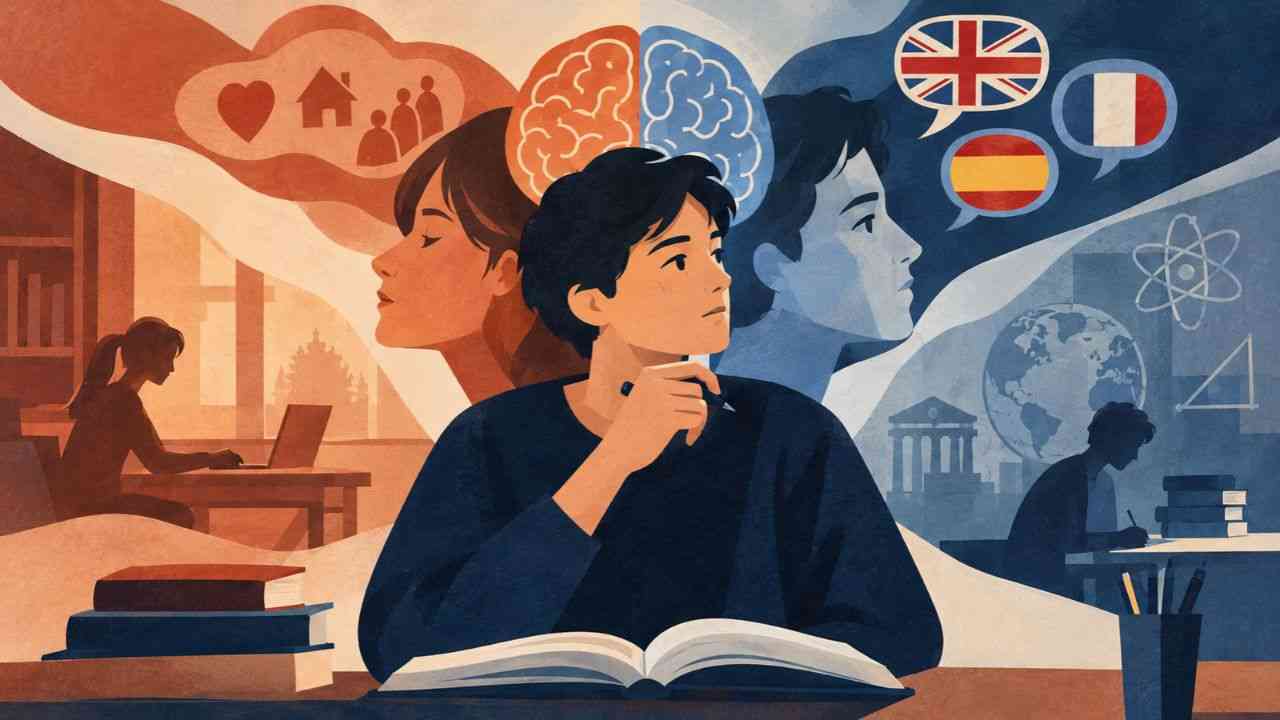
You can change jobs, call someone, or simply say “no.” But how can you be sure that you are truly the one choosing? Philosophers have debated human free will for centuries. Psychology, however, raises a question much closer to everyday life: what happens to us when our belief in free will tells us we have a choice?
The question of whether human free will exists has divided philosophers for centuries. The debate centers on whether people can act differently when genes, upbringing, past experiences, current health, emotions, and social pressure all influence their behavior. Some thinkers argue that, because every event has a cause, our choices are, in a sense, predetermined. Others maintain that freedom does not have to mean living outside the laws of cause and effect.
This second position, known as compatibilism, holds that people can be free even in a world governed by causes. That freedom does not come from acting independently of our personal history and biology. It comes from being able to act on our own reasons, goals, and values, rather than solely under external coercion. For psychologists, however, the question extends beyond who is right in this debate. They also want to understand how this belief relates to everyday well-being.
The authors of a paper published in Social Psychological and Personality Science examined this more practical side of the debate. They wanted to find out whether belief in free will relates to how people feel throughout the day. In the first study, participants in Germany used their phones to rate their current mood several times a day over several days. The researchers had previously assessed how strongly they believed in free will.
People who more strongly believed that humans can make their own decisions reported positive emotions more often throughout the day. The association remained even after the researchers accounted for factors including self-control, religiosity, and overall life satisfaction.
A study conducted in 5 European countries, including Poland, produced similar results. Participants who believed more strongly in free will more often reported feeling happy that day. In a separate experiment, participants read materials presenting arguments for or against free will. Those who read arguments in favor of free will subsequently reported positive emotions more often than those who read arguments challenging the idea.
“Our findings highlight the unique role of belief in free will in shaping daily positive affect and its wider social implications.”
— the authors of the study emphasize.
The experimental findings do not, however, establish that belief in free will alone offers a way to improve mood. The researchers observed a change in how participants rated their own experiences. They did not establish whether participants regained control over their circumstances. Health, relationships, work, and financial circumstances still influence well-being. A change in beliefs alone cannot resolve these issues.
One possible interpretation concerns a sense of agency. An earlier study by psychologists at the University of Essex suggests that feeling able to choose and control one’s actions may play an important role in the relationship between belief in free will and well-being. People who felt they had that influence reported greater life satisfaction and less stress. Once the researchers accounted for a sense of control and the ability to choose, belief in free will itself no longer explained any additional differences.
Perhaps, then, what matters most is not the conviction that we can shape our lives however we wish. A thought much closer to everyday experience is that, even in circumstances we had no control over, we can sometimes decide what to do next. These studies do not resolve the philosophical problem of free will. They do suggest, however, that a limited but real sense of agency may be one of the things that help us experience an ordinary day more positively.
Read this article in Polish: Wolna wola to iluzja? O naszych wyborach decyduje coś innego

A Journalism and Social Communication graduate with 15 years of experience in the media industry. He has worked for titles such as "Dziennik Łódzki," "Super Express," and "Eska" radio. In parallel, he has collaborated with advertising agencies and worked as a film translator. A passionate fan of good cinema, fantasy literature, and sports. He credits his physical and mental well-being to his Samoyed, Jaskier.


Zmień tryb na ciemny