Humanism
What Happens When Winning Stops Being Proof of Worth?
11 October 2026





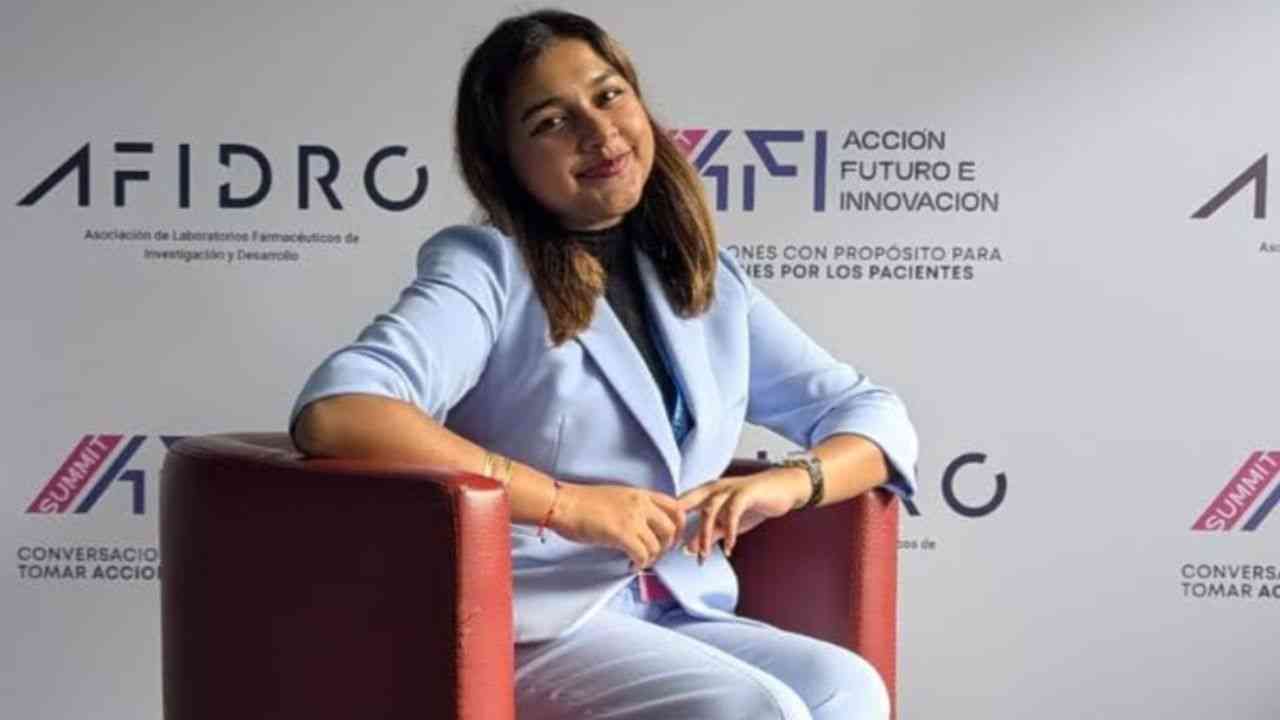
She was barely a teenager when she began thinking about technology that might recognize when something was wrong with a young person, even if that person said nothing. Over time, Gitanjali Rao knew enough to imagine how such a system could be built. And that was precisely when she decided she did not want to build it. In conversation with Patrycja Krzeszowska, she talks about the limits of technology, the cost of being called a child genius, why she now has more questions than answers, and why sometimes the most important decision an inventor can make is not to invent anything at all.
Patrycja Krzeszowska: When you were twelve, you developed Tethys, a prototype designed to detect lead in water faster and more affordably than conventional testing methods. Looking back on that project now as an MIT student, what would you do completely differently? I’m not asking about the technology itself, but about the way twelve-year-old Gitanjali thought. In what way was she actually bolder than the Gitanjali you are today?
Gitanjali Rao*: I think I would spend much more time understanding the problem before deciding I needed to build something. With Tethys, my thinking was pretty direct. Lead testing was slow and expensive, so I wanted to make it faster and cheaper. Now I would want to know what happens after someone finds out there is lead in their water. Can they actually do anything about it? Who is responsible for fixing it? Would making testing easier change the outcome for that family?
MIT has made me think about those questions much earlier. I’ve also spent enough time doing research now that I can find the problems with an idea pretty quickly. At twelve, I couldn’t. I could get interested in a question and spend days on it without knowing whether it was going anywhere.
There is something about that I really miss. I talk a lot about approaching the world like a kid, and I think that’s what I’m trying to hold onto. Kids will ask questions that an adult might dismiss because the answer seems obvious or the question isn’t quite right. Sometimes the question is stupid. But sometimes you find out that the obvious answer isn’t actually very good.
I know much more now than I did then. I just try not to let knowing more make me wonder less.
You’re known for noticing problems that most people overlook. How do you distinguish between a problem that’s truly worth solving and one that’s simply highly visible and attracts media attention?
I try to root my work in empathy. For me, that usually means I need some connection to the people living with a problem before I feel comfortable deciding what should be done about it.
I think traveling has had a lot to do with that. My family prioritized travel when I was growing up, and I still travel a lot now. You realize pretty quickly that your sense of what is important depends enormously on where you’re standing. I’ve been in places where something I had barely thought about affects how people go through every day. I’ve also cared about things that felt much less important once I got outside of my own environment.
So I try to listen before I decide what the problem is. There have been plenty of times when I’ve gone into a conversation thinking I understood something and come out realizing I was focused on the wrong part of it.
Media attention doesn’t really factor into whether I stay with something. I need to care about the people on the other side of the problem. If I don’t, I don’t think I should be the one deciding what they need.
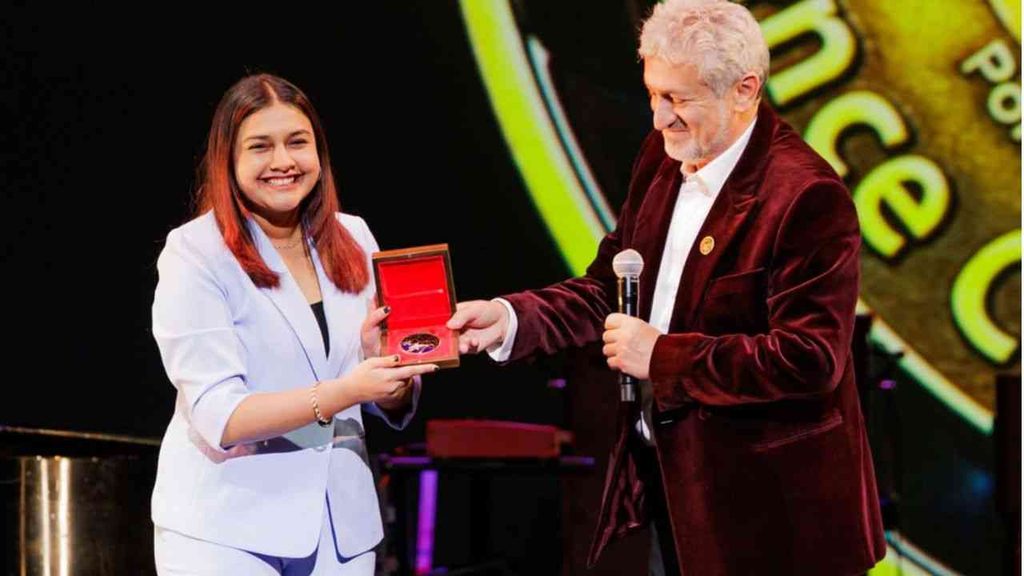
Many young people believe that innovation begins with a brilliant idea. You’ve often said in interviews that it actually begins with empathy. Could you share an experience where speaking directly with people affected by a particular problem led you to a completely different solution than the one you had initially envisioned? Would you say that was a moment when you saw more as a human being than as a scientist?
My work in building “Kindly” changed the way I thought about this. When I first started working on a cyberbullying solution, I thought about it as something you could detect. If a system could recognize harmful language before a message was sent, maybe you could stop some of it.
Then I started talking to students, and language turned out to be the messiest part of the whole thing.
Something that looked completely harmless to me could be awful if you knew what had been happening between two people for the past six months. Two close friends could send each other messages that looked terrible to anyone reading them from the outside. Sometimes nobody had to say anything cruel at all. Being deliberately left out could hurt more.
That made me much less comfortable with building technology that claimed to know whether someone was being kind. I became more interested in whether we could interrupt the moment before someone sent something and give them a chance to think about it themselves. That put much less authority in the technology than I originally imagined, and I liked that.
I don’t know that I was being more of a human than a scientist. I actually think separating the two is part of the problem. If I’m building something that interacts with people, understanding people is part of doing the science well. There are things about a friendship between two thirteen-year-olds that an algorithm simply isn’t going to know. I think I became more comfortable admitting that.
Since childhood, you’ve been known as a “genius,” an “inventor,” and TIME’s “Kid of the Year.” Have there been moments when that public image became more of a burden than an advantage?
Absolutely. I sometimes jokingly call it “child actress syndrome.” My life has been on the internet in some form since I was eight, and when you’re that young, you become very aware of the version of yourself that people respond to.
I don’t mean that I didn’t have a childhood. I really did. But there were times when I felt like I needed to fit a certain mold. I thought about how I dressed. I thought about how I spoke. When I gave talks, I knew exactly where I expected people to laugh and where I expected them to applaud. If they didn’t, I noticed. Looking back, there were probably times when I was paying more attention to whether people were responding to me than whether I was saying exactly what I wanted to say.
Being at MIT has helped me grow out of that in a way I didn’t expect. My closest friends are all incredibly good at completely different things. Nobody needs me to be “Gitanjali Rao, inventor” all the time. I can just be their friend. I can take a class I’m bad at. I can change my mind about something. I can care about something that will never end up in an article.
I’ve become much less interested in getting the whole room to respond to me. I’d rather say exactly what I mean and trust that the people who find something in it will find it.
Is there a project you’ve never shared with the world because you ultimately decided it shouldn’t be pursued? What made you walk away from it?
I’ve cared about adolescent mental health for as long as I can remember. When I was in elementary school, I wanted to build what I called a “happiness detector.” The idea was that if someone wasn’t okay but wasn’t saying it, maybe there was some way technology could notice.
I kept coming back to it as I got older. Eventually it stopped being a little-kid idea and became something I could imagine actually building. You could look at changes in speech or behavior over time. You could probably find patterns that people weren’t consciously noticing themselves.
Oddly, being able to imagine the technology more clearly made me less sure I wanted to build it.
I kept thinking about what it would feel like to be fifteen and have a system tell my parents or my school what it thought was happening inside my head. What if it was wrong? What if it was right and I wasn’t ready to talk about it? Who gets to see that information? I couldn’t come up with answers that made me comfortable.
I haven’t decided that nobody should ever build something like it. I still think about the idea, actually. I just reached a point where my ability to build it was moving faster than my ability to answer what would happen if I did. For me, that was enough reason not to.
I often wonder whether a gifted child growing up in a small town in Poland truly has the same opportunities today as a student attending a well-resourced high school in the United States. The internet may be available almost everywhere, but it doesn’t provide access to a laboratory, a teacher who takes your ideas seriously, or parents who have the time, knowledge, and resources to support them. In your view, what does a talented teenager without money or connections need most: better equipment, a mentor, self-confidence, or simply someone willing to help them take those crucial first steps?
I would say a mentor. Equipment and funding matter, but when you’re young you often don’t even know what you’re supposed to be looking for yet.
Mentorship has shaped a huge part of my life. I emailed people whose work I found interesting even when I had no connection to them. Plenty of people never answered. Some did. I could ask a question and suddenly have a direction I didn’t have the day before. Sometimes someone would tell me I was thinking about something completely wrong, which was useful too.
That’s something I tell students all the time now: ask for help when you need it. I don’t like the idea that a really talented kid should somehow be able to figure everything out alone. How would a teenager know how to get access to a lab they’ve never been inside? How would they know which professor might answer an email? Someone has to show you some of that.
I don’t think a teenager in a small town in Poland automatically has the same opportunities as a student at a well-resourced school in the United States. The internet doesn’t erase that difference. But a mentor can help a young person see possibilities they wouldn’t have known to look for on their own. I’ve had people do that for me. It’s a big reason I care so much about doing it for other students now.
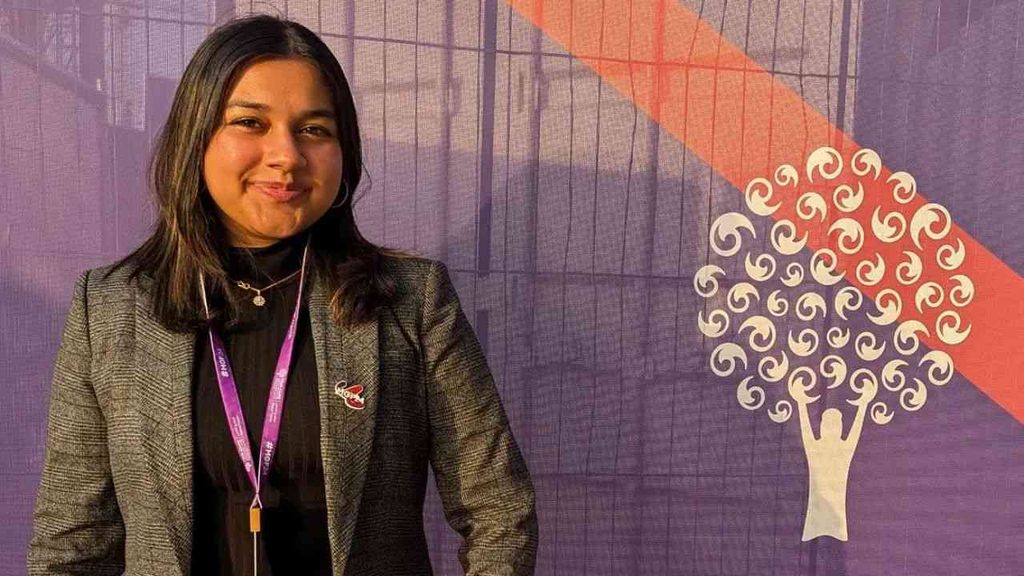
I sometimes feel that the world loves stories about young geniuses. They’re inspiring, but they can also be misleading because they suggest that extraordinary people are simply born extraordinary. Looking at your own journey, what aspect of your story do you think the media tends to overemphasize, and what do you think it most often overlooks?
Definitely my age. “A twelve-year-old built this” is a much more interesting headline than everything that happened between having an idea and having something that worked.
I was a very curious kid. I was also stubborn about things I cared about. I’m comfortable saying that. But I wasn’t born knowing how to build a sensor. I read a lot. Half the time I didn’t understand what I was reading, so I would look up what I didn’t understand and then realize I didn’t understand that either. I asked people questions constantly. I had adults in my life who took those questions seriously.
I think the middle gets left out of stories about young people a lot. You hear someone’s age and then you hear what they made. Eventually the age itself starts to explain the accomplishment. They must have been a genius. And if that’s the explanation, there’s really nothing another kid can learn from it.
I’m twenty now and, weirdly, I feel much less knowledgeable than I did at twelve. At twelve I could learn about something for a week and think I understood it. Now I can spend months on something and mostly come away with better questions. I actually like that change. I don’t feel any need to be the kid who knows the answer anymore.
* Gitanjali Rao – a 21-year-old American of Indian descent. In 2019, she was recognised in Forbes 30 Under 30 in the Science category, and in 2020 she became the first person in history to be named Kid of the Year by TIME magazine. Her most important achievements include developing devices to detect lead in water and an app to detect cyberbullying.
Read this article in Polish: Była „Dzieckiem Roku” w USA. Dziś mówi o cenie bycia geniuszem
A graduate of journalism and social communication at the University of Rzeszów. She has been working in the media since 2019. She has collaborated with newsrooms and copywriting agencies. She has a strong background in psychology, especially cognitive psychology. She is also interested in social issues. She specializes in scientific discoveries and research that have a direct impact on human life.


Zmień tryb na ciemny