Science
Before There Are Planets, There Is Dust
16 October 2026





Modern Europe understands the precarious nature of external dependencies. The continent has parsed the strategic vulnerabilities inherent in its reliance on foreign natural gas, crude oil, and semiconductor supply lines. Yet a much deeper, existential silence surrounds the very mineral that guarantees high-yield agriculture, affordable bread, and stocked grocery aisles. Phosphorus enjoys little media currency, yet it remains absolutely non-negotiable for human survival. The master card in this structural game of resource hegemony belongs to a single North African sovereign power: Morocco. This reality fundamentally reshapes our understanding of global food security geopolitics in an era of fractured supply chains.
Consider the food on your plate today. Whether it is a contemporary, plant-based quinoa bowl or a traditional pork cutlet with potatoes, every cultivated calorie arrived there through the grace of a single chemical element: phosphorus. Modern agriculture does not subsist on water, sunlight, or environmental goodwill alone. The entire structural metabolism of global food production rests upon this single mineral substrate.
The geopolitical reality is stark. Roughly seventy percent of the global reserves of this irreplaceable element reside within a single national jurisdiction: the Kingdom of Morocco. This vast geologic wealth is extracted by the state-owned corporate monopoly, OCP Group, before being integrated into synthetic fertilizers exported to every continent. This transcends standard corporate commerce. It is the material foundation of global food security, governed by a solitary strategic gatekeeper.
The European Union operates under a condition of near-total structural dependence on phosphate rock imports. Analytical briefings from the Polish Economic Institute emphasize a critical vulnerability. While Brussels faces risks across various raw materials, its reliance on external phosphate resources remains deeply institutional. As European domestic demand escalates to sustain intensive agricultural yields, the continent possesses only one significant internal reserve, located in Finland.
Consequently, the pertinent question is no longer whether Europe is dependent. Instead, analysts wonder what diplomatic concessions Morocco can extract through this leverage.
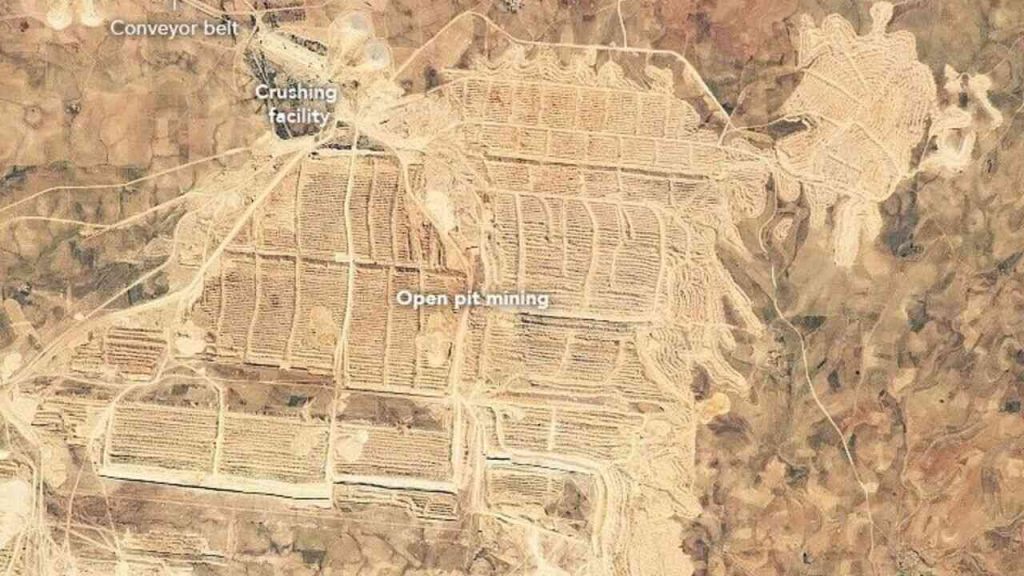
The baseline for this dynamic emerged clearly in twenty-twenty-two. Spain, a former colonial power in North Africa and a cornerstone of the European Union, officially reversed its long-standing foreign policy. Madrid chose to back Morocco’s autonomy plan over Western Sahara. This disputed territory contains the Bou Craa mine, home to the longest continuous conveyor belt system on Earth. This one-hundred-kilometer artery transports raw rock from the desert interior straight to Atlantic shipping ports. As the phosphate moves along that belt, real geopolitical power flows with it.
Rabat increasingly deploys what geopolitical analysts term a “diplomatic lever.” Sovereign governments in both Lima and Nairobi have observed this mechanism firsthand. The suspension or resumption of fertilizer shipments from OCP Group correlated directly with their respective diplomatic stances on Western Saharan sovereignty. This is the raw statecraft of the dinner plate.
A profound historical irony underpins this dynamic. For centuries, Europe consolidated its global preeminence by securing unhindered access to the primary resources of the Global South. Today, it confronts a severe, irreversible strategic asymmetry. The historical era in which raw materials flowed northward exclusively on Western terms has drawn to a close. Geography has triumphed over history, and geology has proven far more stubborn than ideology.
At the center of this matrix stands OCP Group. This state-backed Moroccan titan has quietly evolved into the ultimate gatekeeper of the international food system. In the first quarter of twenty-twenty-two alone, the conglomerate’s revenues scaled to twenty-five point three billion dirhams—approximately two point seven billion US dollars. This represented a year-on-year surge of nearly seventy-seven percent.
This financial windfall did not stem from a sudden expansion in mining output. Instead, it reflected a sharp, volatile spike in global fertilizer prices. Moroccan fertilizer diplomacy is no longer a theoretical projection; it is an active reality. Rabat has transformed from a mere commodity supplier into a structural player capable of dictating the macroeconomic stability of entire continents.
The twenty-first century is defined by an almost religious faith in technological substitution. The prevailing cultural assumption suggests that any material bottleneck can be bypassed, re-engineered, or innovated away. Yet phosphorus cannot be circumvented by technological ingenuity. President Franklin Delano Roosevelt explicitly designated this element in nineteen-thirty-eight as a vital asset for the nation’s agricultural future.
No synthetic analogue for phosphorus exists. There is no botanical substitute. The global biosphere possesses exactly the fixed quantity left behind by millions of years of slow, ancient geological sedimentation.
While Western economies can attempt to substitute fossil fuels with renewable energy matrices or nuclear power, phosphorus cannot be swapped out for another element in the human metabolic chain. For this reason, the European Commission maintained phosphate rock on its Critical Raw Materials list in twenty-three. Analytical projections from the Polish Economic Institute indicate that demand for minerals essential to both the green transition and basic human sustenance will rise drastically through twenty-forty and twenty-fifty. Morocco has effectively established a unilateral OPEC for soil fertility, controlling the one input without which modern civilization cannot eat.
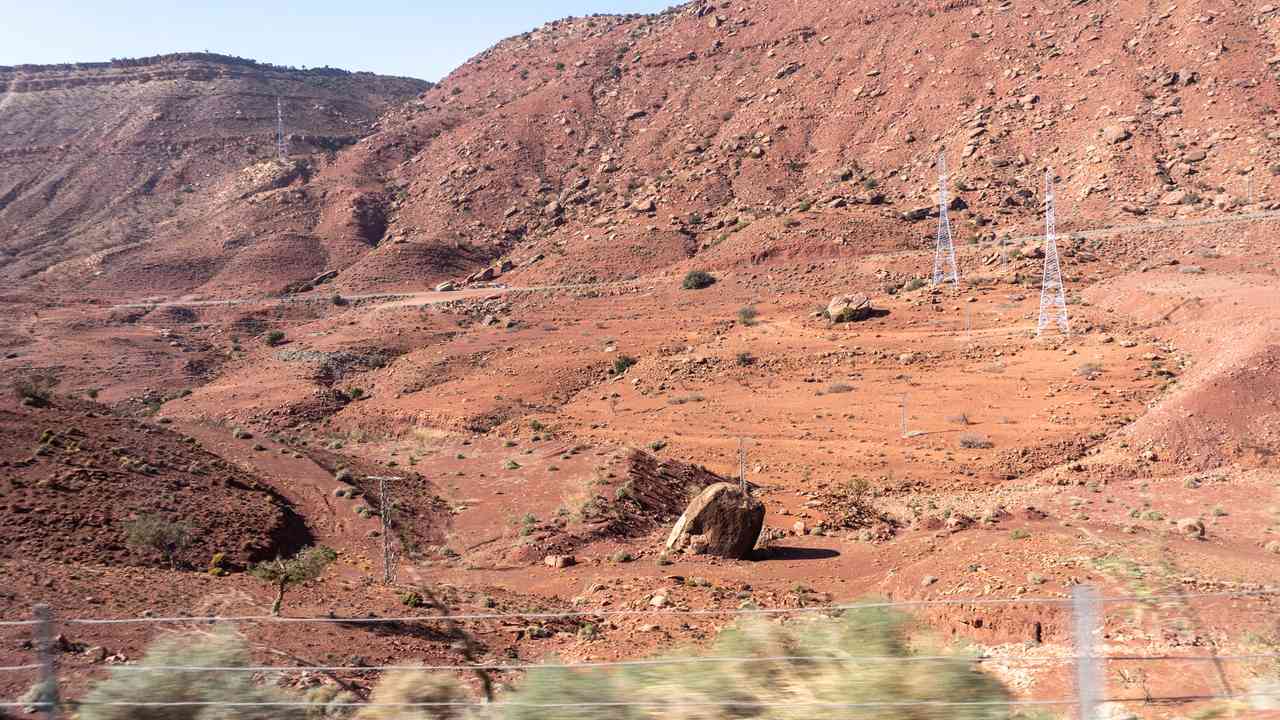
While policy architects in Brussels debate the merits of the “Farm to Fork” strategy, the discourse rarely accounts for the environmental price extracted from the North African ecosystem. Phosphate extraction in industrial basins like Khouribga is a resource-intensive endeavor. The manufacturing of agricultural inputs generates considerable industrial byproducts, most notably phosphogypsum.
As part of this ecological fallout, empirical data highlights the persistent challenge of heavy metal contamination. Cadmium occurs naturally within sedimentary phosphate deposits. In an effort to safeguard its own agricultural topsoil, the European Union enforces strict regulatory caps on cadmium concentrations in imported fertilizers. This regulatory wall forces suppliers to employ complex, capital-intensive decadmiation technologies.
This dynamic introduces an intricate secondary layer of dependency. Western Europe requires not just raw Moroccan rock, but rock processed precisely to meet the increasingly stringent environmental mandates of the importing zone.
The European Union has championed a circular economy roadmap as its primary strategic contingency. The policy narrative surrounding the reclamation of phosphorus from municipal wastewater, sewage sludge, and slaughterhouse waste remains a staple of optimistic bureaucratic briefings. However, empirical assessments temper this enthusiasm.
Although Brussels aims to secure a significant portion of its mineral demand through internal recycling infrastructure by twenty-thirty, contemporary reclamation technologies remain far too capital-intensive and inefficient to offset Moroccan market dominance. Recycling remains an environmental necessity. Yet, at its current industrial scale, it merely delays an inevitable deficit. Without a continuous, uninterrupted influx of raw phosphate rock from North Africa, European agricultural productivity would degrade within a few harvest seasons.
This mineral reality forms part of a broader macroeconomic re-alignment. As noted by economic research institutes, the African continent is rapidly emerging as the indispensable resource frontier for Europe’s digital and ecological re-engineering. The relationship extends far beyond traditional transition metals like copper, cobalt, or lithium. It encompasses the fundamental building blocks of human life.
Morocco is leveraging this geological wealth to cement its position as a dominant regional power. By financing and constructing advanced processing infrastructure across sub-Saharan Africa—notably in Ethiopia and Nigeria—Rabat is weaving its own web of continental integration. Through these investments, the Moroccan state does not merely oversee primary exports to the West. It positions itself as the structural guarantor of Africa’s internal agricultural transformation.
If European nations wish to guarantee their own supply chain security, they must abandon the outdated framework of viewing Africa through the lens of developmental assistance. Instead, they must treat these states as sovereign, equal, and occasionally superior strategic partners.
The most striking aspect of the phosphorus dilemma is not Europe’s immediate supply vulnerability. Rather, it is the endurance of the historical illusion that global interdependence remains symmetrical. For decades, Western policy elites operated under the assumptions of the “global village”—a benign network where every actor faced equal, reciprocal needs.
That equilibrium is an illusion. If Morocco experiences a supply disruption, it risks a budgetary deficit. If Europe loses access to the mineral, it faces a structural threat to its social stability, driven by food scarcity and rampant inflation.
No artificial intelligence model, digital framework, or bureaucratic directive can substitute for basic soil nutrients. While the energy sector undergoes a painful but technologically viable migration toward renewable infrastructure, agriculture without phosphorus remains a physical impossibility. It represents a hard material limit that cannot be bypassed by innovation budgets alone.
Western institutions must stop pretending they dictate the terms of this relationship. Rather than clinging to the myth of absolute technological sovereignty, Europe must accept its poor position in the global geological lottery. The continent is structurally dependent, and it will remain so for the foreseeable future. Under these conditions, high-level engagement with Rabat transcends standard diplomatic courtesy. It is a necessary exercise in resource security—a calculated effort to ensure that, in an era defined by the volatile realities of global food security geopolitics, the continent retains the material means to feed itself.
Read this article in Polish: Ukryty pierwiastek władzy. Europa zależy od jednej skały


Content marketing specialist with his heart in journalism and English translations. An active writer for 20 years. Majored in economy. He has authored several non-fiction books, one of which won an award at the Ladek Mountain Festival. Sports, hard rock, and Italian cuisine afficionado.



Zmień tryb na ciemny