Culture
A Life Spent Becoming Someone Else’s Ideal
12 October 2026





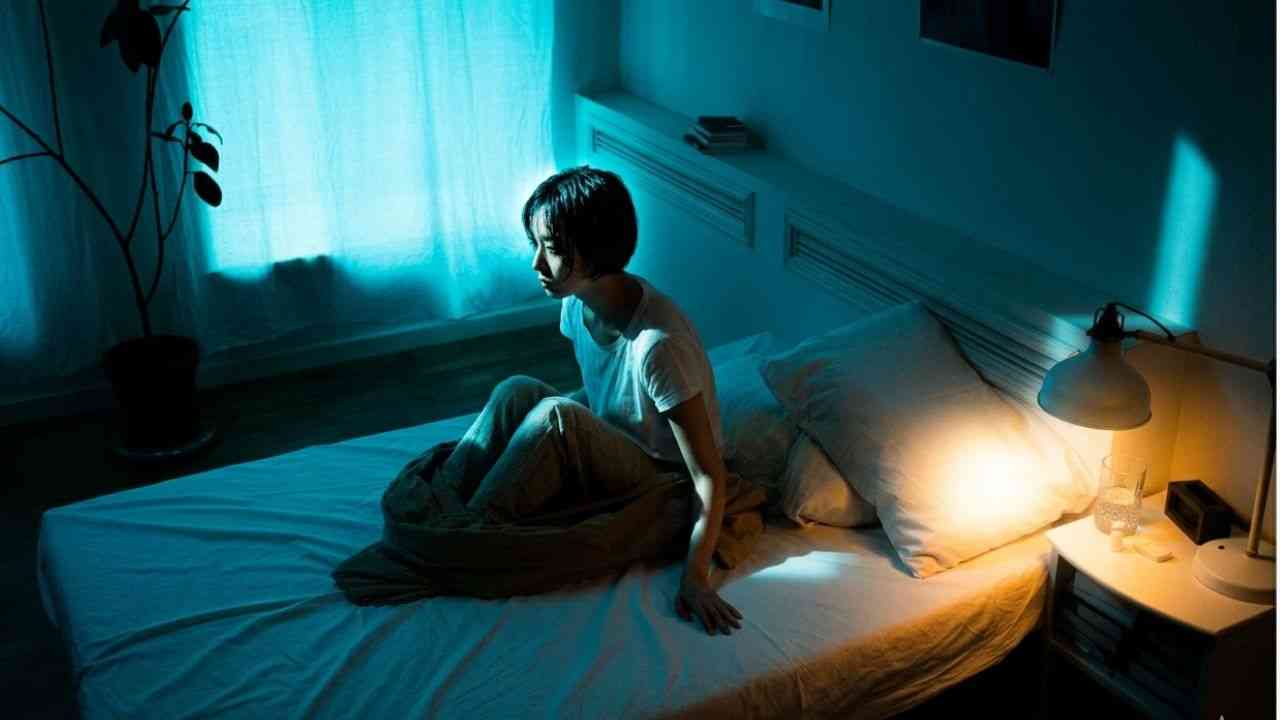
You wake up and remember only a broken image, a strange place, or an emotion you cannot explain. New research suggests that dreams are not random chaos. So where do dreams come from? During sleep, the brain takes fragments of the day, memories, and emotions, then builds them into an entirely new story.
Scientists from the IMT School for Advanced Studies Lucca analysed data collected from a total of 287 adults. In studying the results, the researchers also took into account the participants’ sleep habits, personality, cognitive abilities, and psychological profiles.
The psychological study of word meaning, conducted by Italian experts, offers an answer to why night visions can differ so widely from one another. It turns out that the cause may lie in a combination of several elements. The researchers compared the language people used to describe their day with the language of their dreams. They found that at night, the brain does not simply replay experiences and memories. It takes them apart and shifts their emotional emphasis.
The researchers’ results proved striking. As we read in the article published in the scientific journal Communications Psychology, dreams do not appear to be entirely chaotic or random. Their content may be linked to our traits, our tendency to let the mind wander, sleep quality, attitudes toward dreams, and external factors. These include our own experiences, but also major social events, such as the COVID-19 pandemic.
The scientists also wanted to understand exactly how this mechanism works. They compared the relationship between descriptions of daytime experiences and dream reports. That is when the research team discovered that the brain does not reproduce reality literally during sleep. It transforms it in its own way. This helps explain where dreams come from, and why they so often differ from ordinary waking life.
That is why our workplaces, schools, or even homes do not return in dreams with every detail faithfully restored. Instead, the brain creates absorbing scenes in which familiar elements mix with sudden shifts in perspective.
Research into the psychological meaning of dreams points to an important conclusion. Dreams reconstruct the reality we have lived through while awake; they do not simply reflect it faithfully. The brain prefers to combine real memories with imagined or anticipated events. In this way, it creates new, often surreal scenarios. And here begins another fascinating part of the story.
Not everyone dreams in the same way. People whose minds often wander tend to have dreams that keep changing and feel highly chaotic. Those who attach greater significance to dreams, meanwhile, more often described dreams that felt more realistic, richer, and more immersive.
Experts also wanted to know whether major events that affect people’s lives leave traces in dreams. For that reason, they analysed dream descriptions from lockdown during the COVID-19 pandemic. It was a major event. During enforced “closure,” everyday life changed for most people. Contact with friends became limited or disappeared, and many spent more time in isolation. As it turned out, dreams from that period differed significantly from those recorded in later months.
They became more intense and more emotional. Very often, they included themes of confinement and restriction. That intensity faded over time, probably as people gradually adapted to the new reality:
During lockdown, dreams more often contained references to restrictions and showed greater emotional intensity, but these effects gradually faded in the following years.
That is what the study reports.
The results of the analysis help explain why some people remember dreams as intense, realistic stories, while others wake with only a broken image or a strange impression. They also show where dreams come from in their most surreal forms: from the mixing of daily experiences, emotions, individual traits, and the world around us. That is why our own dreams can never be easily compared with anyone else’s.
Source: Valentina Elce et al., “Individual traits and experiences predict the content of dreams,” Communications Psychology, 2026.
Read this article in Polish: Skąd się biorą sny? Mózg robi z dniem coś zaskakującego


A graduate of journalism and social communication at the University of Rzeszów. She has been working in the media since 2019. She has collaborated with newsrooms and copywriting agencies. She has a strong background in psychology, especially cognitive psychology. She is also interested in social issues. She specializes in scientific discoveries and research that have a direct impact on human life.


Zmień tryb na ciemny