Science
Before There Are Planets, There Is Dust
16 October 2026





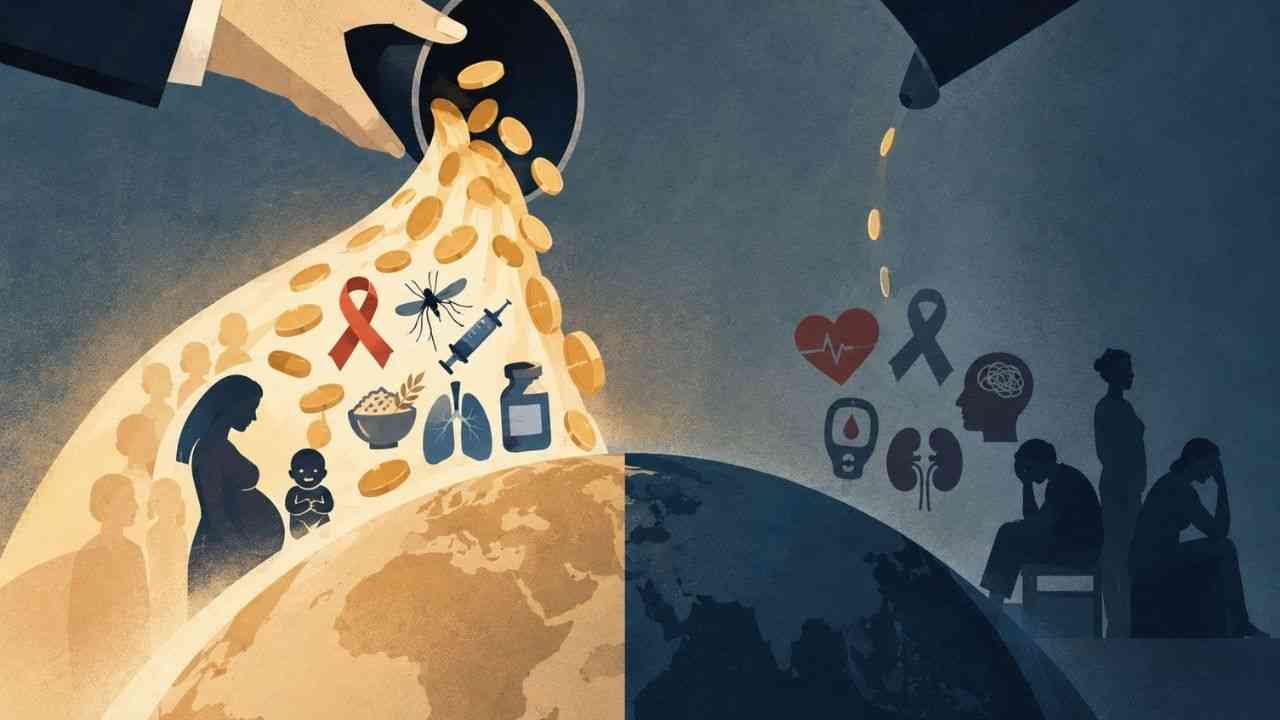
Every year, billions of dollars go toward tackling diseases around the world. It might seem that this money is helping us change the world for the better. Yet that does not mean it reaches the places where the burden of ill health is greatest. An analysis of more than 3.7 million projects revealed a striking disparity.
Researchers from institutions including the University of Copenhagen and ETH Zurich analyzed how donors distributed funding to tackle diseases around the world. They used artificial intelligence to examine more than 3.7 million development aid projects from 2000 to 2022. An AI model classified projects across 17 major disease categories, identifying approximately $332 billion in disease-specific aid.
The researchers then compared global health aid spending with the actual burden of disease in individual countries. Their findings, published in Nature Communications, revealed a vast disparity. Approximately $324 billion went toward tackling infectious diseases and nutritional deficiencies, as well as maternal and neonatal health conditions. That represents 97.5 percent of the total funding analyzed in the study.
The remaining 2.5 percent—approximately $8.3 billion of the aid analyzed—went toward noncommunicable diseases.
These include diabetes, cancer, mental health conditions, and heart disease. The figures reveal how little international health aid these conditions receive relative to their burden. According to the researchers’ analysis, noncommunicable diseases account for approximately 59.5 percent of the global disease burden. Yet they received just 2.5 percent of all the aid analyzed. A closer look at individual diseases makes the disparity even more apparent.
Cardiovascular diseases account for approximately 17 percent of the global disease burden. Yet they receive less than 1 percent of the health aid analyzed. Other conditions also receive similarly small shares of aid: cancer, which accounts for 10 percent of the burden; mental health conditions, which account for 6 percent; and diabetes and kidney diseases, which account for 5.4 percent. But there is another side to this story. Some diseases receive a much larger share of aid than their contribution to the global disease burden.
These include HIV and AIDS, along with other sexually transmitted infections. Together, they account for 6 percent of the global disease burden but receive 34 percent of the total aid budget analyzed. Malaria and neglected tropical diseases account for approximately 5 percent of the global disease burden, yet receive 12 percent of health aid. Nutritional deficiencies represent 3 percent of the global burden, while efforts to address them receive 12 percent of the overall aid budget—a funding share 4 times their share of the burden. The study also offers another revealing finding.
Health aid funding rose substantially over the period studied. In 2000, the total annual budget stood at just $0.78 billion. By 2022, 22 years later, it had reached $34.6 billion—an increase of more than 40-fold. The largest sums went toward HIV and AIDS, respiratory infections and tuberculosis, and nutritional deficiencies. In the later years of the study, funding placed particular emphasis on tuberculosis and respiratory infections. In 2020 alone, funding for this category reached $25.3 billion, potentially reflecting the impact of the COVID-19 pandemic.
Across recipient countries, aid aligns most closely with the distribution of disease burden for HIV, AIDS, malaria, and neglected tropical diseases. For noncommunicable diseases, that relationship is often weak or even runs in the opposite direction.
Some of the starkest and most troubling mismatches occur in Central Africa, West Africa, and parts of South Asia. Interestingly, in the poorest countries, aid for infectious diseases, maternal and neonatal health conditions, and conditions related to malnutrition aligns relatively well with their burden. For other health problems, misalignment affects countries across income groups.
In their paper, the international research team explicitly stresses that it did not examine the entire system of healthcare financing, only part of it. Nor do the researchers suggest that health spending should simply match each disease’s share of the burden. Such a difficult and complex allocation process must also take account of local health systems’ capacity, costs, and efforts to prevent pandemics. Even with these qualifications, the data tell another story: a story about global priorities.

Reading the study and examining its findings suggests another important conclusion: those who control the flow of money and decide how to spend it effectively determine which diseases matter. They shape who receives support for treatment and who must wait.
This is the geopolitics of health. It operates through decisions rather than sanctions, soldiers, or military equipment. Those decisions take shape in ministries, aid agencies, and international funds, where senior officials and executives set the agenda.
Global health aid takes shape through decisions: which hospitals receive medicines, which vaccination programs continue, and which health problems remain almost invisible. Vast flows of money follow those decisions. When a handful of countries control most of the funding distributed across many others, their priorities, in a sense, become the priorities of the entire system.
Read this article in Polish: Nie wszystkie choroby są równie ważne. Pokazały to miliardy dolarów

A graduate of journalism and social communication at the University of Rzeszów. She has been working in the media since 2019. She has collaborated with newsrooms and copywriting agencies. She has a strong background in psychology, especially cognitive psychology. She is also interested in social issues. She specializes in scientific discoveries and research that have a direct impact on human life.



Zmień tryb na ciemny