Science
Before There Are Planets, There Is Dust
16 October 2026





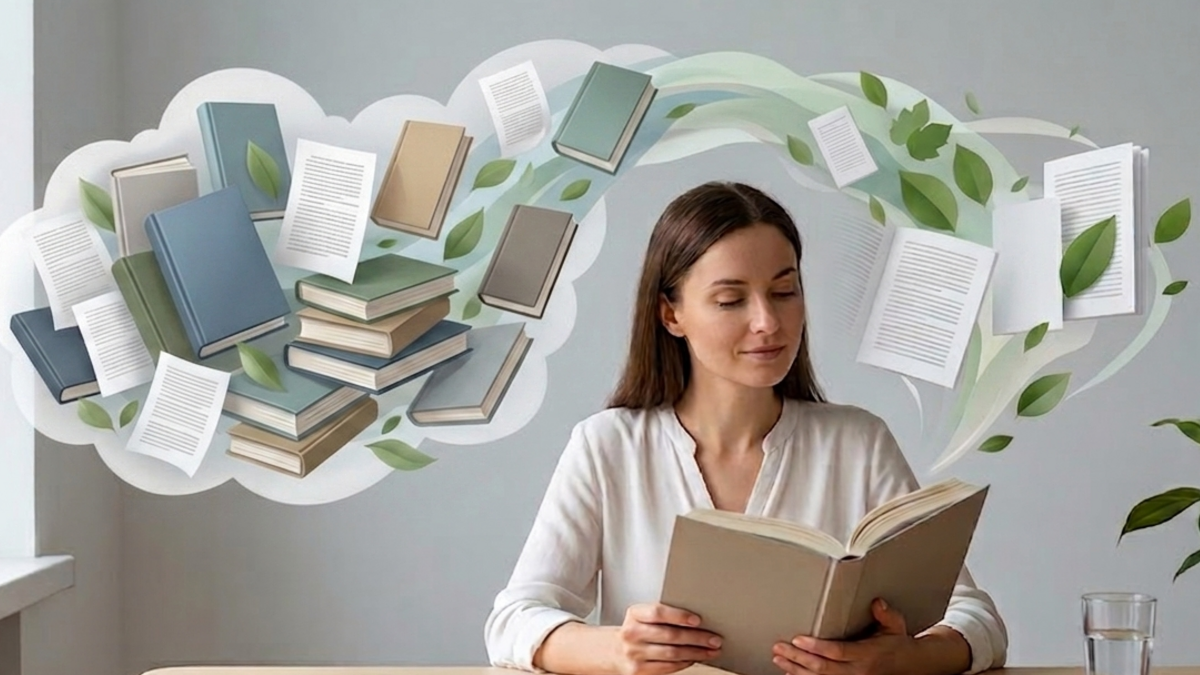
Notifications, news, and digital noise bombard us from every side. Although knowledge is always within reach, the excess of stimuli can paralyze thought and destroy our ability to concentrate. How can we avoid drowning in this toxic flood? The question is how to care for the brain in an age of permanent overstimulation — and how an information diet can help us regain control over what we feed the mind.
The contemporary German philosopher of Korean origin Byung-Chul Han, in his book The Crisis of Narration and Other Essays, diagnoses modern human beings not only with overstimulation caused by an excess of information, but also with the neuronal disturbances and the breakdown of thinking that follow from it. He writes:
An unfiltered mass of information leads to the complete dulling of perception. It is also responsible for certain mental disorders. IFS, information fatigue syndrome, is a mental illness caused by an excess of information. Sufferers complain of the progressive paralysis of analytical abilities, attention disorders, general anxiety, and an inability to take responsibility.
We live in a world in which, every day, we receive an almost unlimited amount of information. The human brain and nervous system are bombarded by different kinds of stimuli coming from both the virtual world and the real one. It is difficult to keep up with processing such a quantity of data, let alone absorbing it or reflecting on it consciously.
Byung-Chul Han diagnoses the problem this way:
An excess of information leads to the breakdown of thinking. Analytical ability consists in selecting and removing perceptual material that does not essentially belong to the problem being analyzed. It is therefore the ability to distinguish the essential from the inessential.
In a word, we are losing the ability to think under the pressure of a flood of information. Perhaps, then, at least from time to time, it is worth stopping and trying an information diet. Not to withdraw from the world, but to feel better, to “free” overworked neurons a little, and to give ourselves space to choose the information that truly serves us.
The term information diet means, in practice, consciously limiting and selecting the information we allow into our minds.
Just as in a nutritional diet we limit some products and eliminate others entirely so that the body can function in a healthy and balanced way, we should also learn how to care for the brain and for psychological resilience. This is both a great art and a valuable skill: rejecting the messages we do not need, the ones that merely clutter the mind.
But how can we do it successfully? Controlling the quantity and quality of information requires a high degree of self-awareness and inner maturity. This kind of diet allows a person to avoid cognitive overload, when the brain cannot keep up with processing data. It reduces the stress and distraction associated with overstimulation, and it also helps maintain informational balance, protecting us from falling into an addiction to information, such as constant scrolling.
It is worth focusing on several very specific practices that can help us control and select the information we face every day.
First of all, it is worth limiting the number of sources we turn to when looking for news. Instead of following twenty news portals, it may be better to choose a few of the most valuable ones. The same applies to YouTube channels, podcasts, and newsletters.
To choose well, we first need to ask ourselves: Does this source truly expand my knowledge, or does it merely occupy my time? Why am I watching one video after another? Am I looking for something specific, or am I simply bored — or already so tired that I keep switching from one video to the next without reflection, living under the illusion that I am resting?
It is also rational to set a specific time for information. We do not have to check the news all day, and we do not have to give in to the pressure to “stay up to date” nonstop. For example, we can:
This allows us to regain control over our own attention.
Byung-Chul Han also advises applying the principle of quality over quantity. In practice, this means that it is better to read one valuable essay than a hundred short social media posts. In this sense, we can say that an information diet means moving from “scrolling” to “reading.”
The philosopher writes:
More information does not necessarily lead to better decisions. Precisely because the amount of information is growing, the higher faculty of judgment is withering today. Often, less information can achieve more.
It may also help to create a zone completely free from information. We have become so accustomed to information — and perhaps even addicted to it — that at first glance some people may find this difficult even to imagine. But perhaps it is worth trying.
For example:
Something extremely helpful, though demanding a great deal of concentration and self-awareness, is to ask ourselves about the purpose of opening yet another website or following yet another social media feed. Before opening an app, it is worth asking: Why am I going there? If the answer is “I don’t really know,” there is a good chance that we are acting automatically. That is why mindfulness plays such a crucial role here: observing ourselves, the processes within us, and the motives that guide our actions.
Psychologists point out that we can work on this. In a sense, we can train the skill of mindfulness and focus by reading books, longer articles, or texts that are harder to grasp at first, because then the brain exercises the capacity for concentration that digital culture gradually weakens.
It is also worth becoming aware of the benefits such an information diet can bring. We can see that an information diet is not primarily a time-management technique. It is a spiritual and intellectual exercise: an attempt to recover the attention without which both deep thinking and authentic encounters with another person become impossible. The point is not to know less, but to know fewer things at once, and to know them more consciously.
We might say that an information diet does not “slim down” knowledge. It lightens the burden on attention. When we reduce the number of stimuli and stop constantly switching between messages, the brain can work in a more continuous mode rather than an alarm mode.
A brain going through this kind of detox begins to remember better, because information has time to move from short-term memory into more durable memory traces. Lower cognitive fatigue also follows from the fact that the brain now uses less energy filtering out irrelevant stimuli. This allows it to connect facts more easily, notice relationships, and formulate its own conclusions.
Our psyche also feels the undeniable benefits of an information diet. While constant “checking” keeps the body in a state of readiness, limiting the flow of news reduces the sense of pressure and urgency. The result is less tension and a lower level of anxiety.
The fewer emotional spikes caused by headlines, comments, and online conflicts, the greater the sense of stability and the calmer the mood.
The effects of an information detox become especially visible when cutting oneself off from screens and news in the evening reduces stimulation before sleep. Better sleep quality — and, as a result, better condition after waking up in the morning — is worth a firm break from the glass screen before bedtime.
And finally, perhaps the most important thing: a greater sense of agency. Realizing that I choose what information I need, in what doses, and at what times of day gives me a sense of control over my own life.
Because it is worth remembering: you decide when and what you read and watch — not the algorithm. That is the quiet power of an information diet.
Read this article in Polish: Koniec ze scrollowaniem. Czas na dietę informacyjną


Deals with contemporary philosophy, mainly French, in the current of existentialism, philosophy of dialogue and relations, and phenomenology. Privately, passionate about Mediterranean vibes, crime stories – preferably Scandinavian and a lover of animals and long walks. In the surrounding world, unfortunately, less and less surprised.


Zmień tryb na ciemny