Science
Before There Are Planets, There Is Dust
16 October 2026






For a long time, biohacking seemed like a niche pursuit: cold plunges, supplements, and the belief that the body could be “set up” like a well-configured system. Today, it is entering the mainstream, promising better sleep, more energy, and a sharper brain. What is biohacking really about — and is it only about health?
At the beginning of 2026, the results of the Biohacking Index were announced: an expert report that organises the rapidly growing market of products and services promising to “upgrade” the human body and mind. Companies appear in the ranking not because of catchy marketing. Instead, they are included because they declare a basis in data, transparency, and credibility. The aim is to help distinguish meaningful practices from ordinary informational noise.
The mere fact that such an index now exists says a great deal about the present. Biohacking has stopped being a niche hobby for enthusiasts. Instead, it has become an important enough part of contemporary wellness to need its own infrastructure of trust. When something has rankings, expert curators, and regular reports, it means that it has been recognised as a significant part of lifestyle. And a profitable business.
What exactly is biohacking? At the most basic level, it is an attempt to consciously influence how the body functions so that it works “better”: with more energy, better sleep, faster recovery, and sharper thinking. In its wellness version, then, it is not about spectacular experiments straight out of science-fiction laboratories. Instead, it is more about everyday decisions concerning sleep, diet, light, stress, and movement. These are increasingly supported by technology: wristbands, apps, and sensors.
Today, biohacking is a way of organizing life around the idea of optimization. It is no longer enough simply to “take care of yourself.” You have to “manage yourself like a system.” The body and the psyche become something one can — and perhaps even must — constantly steer. Biohacking is therefore both a set of practices and a certain philosophy of everyday life.
Biohacking is partly a response to real needs. In a world of overstimulation, work spilling across entire days, and chronic fatigue, many people look for simple ways to regain influence over how they function. If better sleep, less violent energy crashes, or a few calmer hours each day can be achieved by changing one’s daily rhythm or paying closer attention to the body’s signals, it is hard to see that as suspicious. However, the problem begins when self-care imperceptibly turns into an obligation to improve oneself without end.
In this sense, the question of what biohacking is turns out to be a question not only about techniques, but also about values. Are we still talking about health understood as a kind of balance, or rather about performance? The boundary is thin, because the language of well-being today blends very easily with the language of efficiency. Therefore, self-care is increasingly presented not as a path toward a better life, but as a way to function longer, do more, and perform more effectively.
There is nothing surprising about this. Human beings have long wanted to overcome their own limits. They want to suffer less, sleep better, think more clearly, and have more strength for life. These are deeply human needs. But for that very reason, they easily become fuel for the market. Wherever fear appears — fear of fatigue, aging, chaos, or mediocrity — the promise of a solution appears immediately as well. Biohacking sold in its wellness version does not merely say, “you can feel better.” More and more often, it says, “you can become a better version of yourself.”
“The better version of yourself” sounds innocent, but it carries a hidden assumption: the current version is not enough. From this perspective, every imperfection can be presented as a problem to fix. Poorer sleep, a drop in energy, tiredness after work, distraction, tension, a weaker day. All of it can enter the catalogue of defects for which the market already has a protocol, device, or subscription ready. In such a world, the human being is increasingly seen not as a creature of flesh and blood. Rather, the human is seen as a project awaiting an update.
In this sense, the question of what biohacking is does not concern only practices and gadgets. It also concerns the extent to which the growing cult of performance springs from our authentic needs, and the extent to which it comes from the market’s ability to turn those needs into promises of an “even better version of yourself.”
Of course, this does not mean that all biohacking is a fraud, or that every technique for caring for the body expresses narcissistic pride. Many practices associated with biohacking are simply sensibly organised forms of life hygiene. The difficulty lies rather in the fact that common sense is increasingly packaged in the language of constant optimisation. What used to be care for oneself is now often presented as an investment in personal performance.
Used wisely, biohacking can be a form of real care for the body and the psyche, which — under the conditions of the contemporary world — simply need support. The key question, however, is whether the logic of constant optimisation leaves room for ordinary imperfection. Namely, for a worse day, a weaker workout, fatigue that is not a system error, but part of being human.
In this sense, the Biohacking Index 2026 can be read in 2 ways. On the one hand, it is a sign of a maturing market that is trying to separate reliable solutions from pure marketing. On the other, it is a symbol of an age in which even care for one’s own body enters the logic of ranking, selection, and the constant raising of standards. Perhaps this is where the most important question of contemporary wellness lies. Do we want to live better, or merely function ever more efficiently? Biohacking forces that question into the open.
Read this article in Polish: Dbanie o siebie czy kult wydajności? Pułapki biohackingu

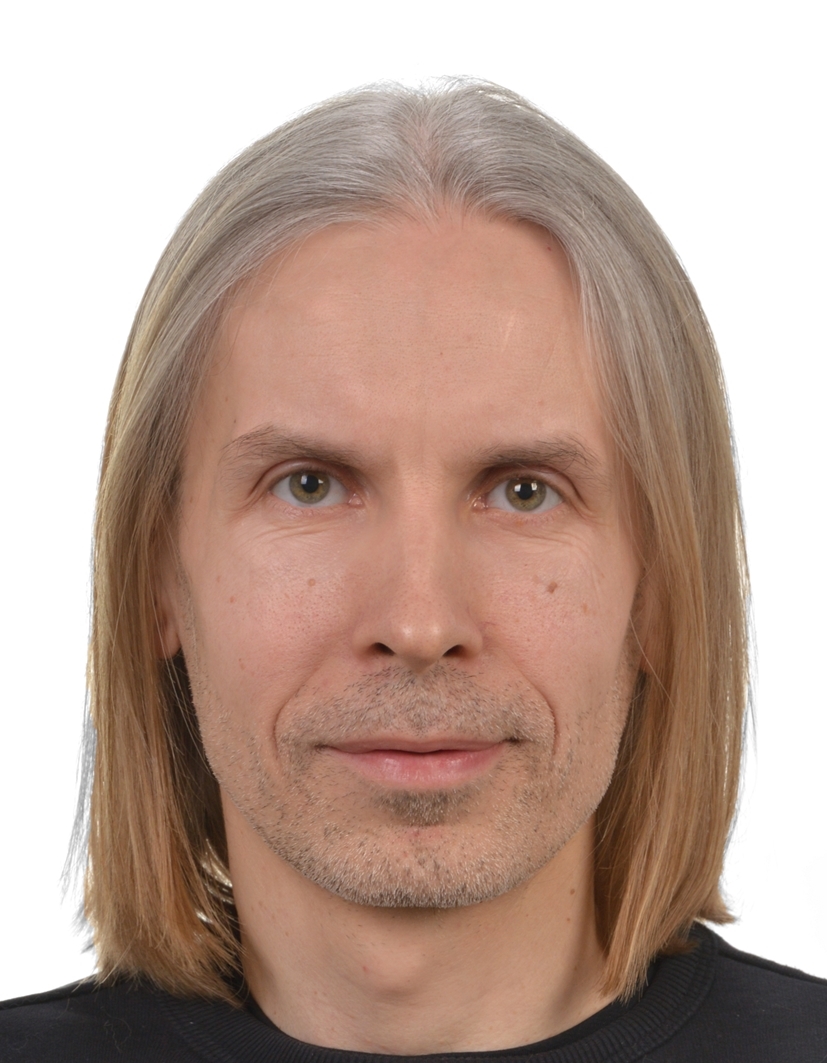
A Journalism and Social Communication graduate with 15 years of experience in the media industry. He has worked for titles such as "Dziennik Łódzki," "Super Express," and "Eska" radio. In parallel, he has collaborated with advertising agencies and worked as a film translator. A passionate fan of good cinema, fantasy literature, and sports. He credits his physical and mental well-being to his Samoyed, Jaskier.



Zmień tryb na ciemny