Science
Before There Are Planets, There Is Dust
16 October 2026





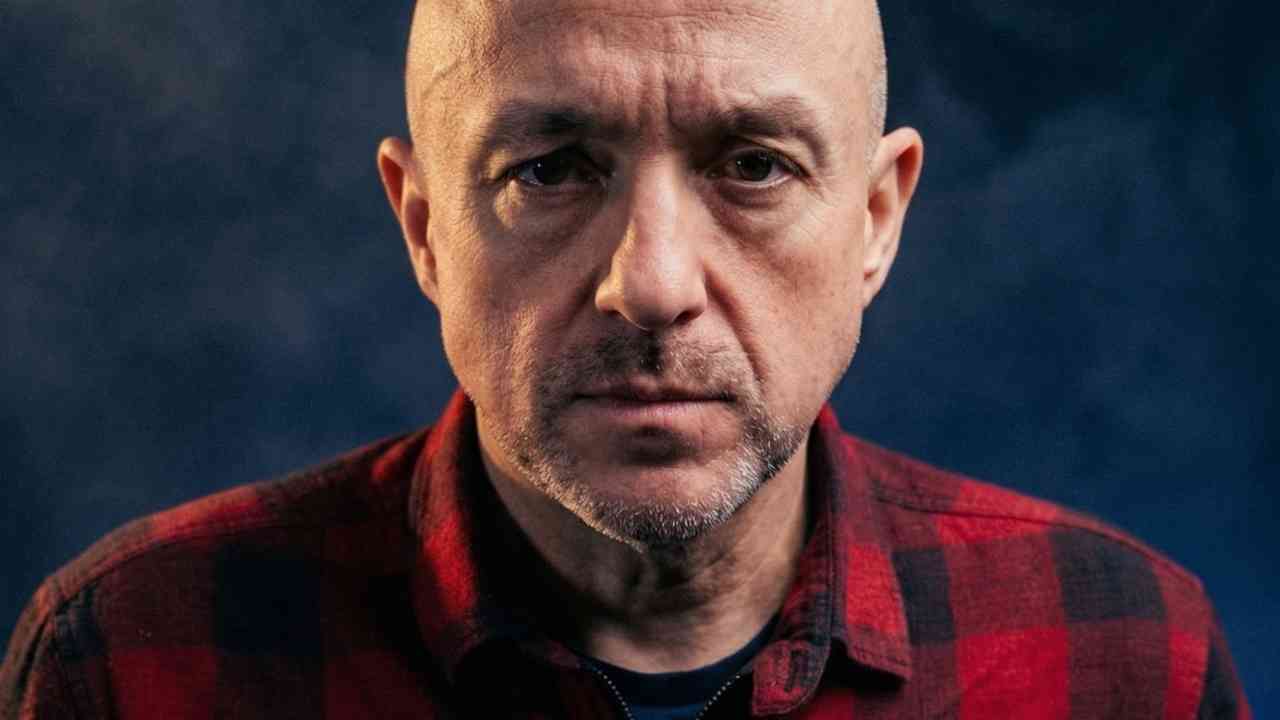
Przemysław Wójtowicz reveals the inner world of a soldier who took off the uniform, but never fully shed his military habits. How does the legendary Polish sniper define love of country today? Who is he now — as a father, a citizen and a man with a mission? This is a conversation about life after military service.
Jarosław Kumor: A sniper is associated with someone who, literally and figuratively, keeps his eyes open all the time — with maximum alertness. What is it like to function in that state, especially under extremely stressful conditions?
Przemysław Wójtowicz: I really was switched on all the time then — not in waiting mode, but in full readiness. I do not experience that in everyday life anymore. Maybe only when I happen to drive in difficult conditions; then something of that old focus comes back. But in a theatre of operations, where at any moment you could lose your life or have to save someone else’s, a person functions completely differently. It was a different endurance, a different level of mind. Today, honestly, I do not know whether I could handle it.
Is that something you are born with, or is it the result of training?
Both. The right people are selected for this profession — every army has its own system. Usually, those who can handle this kind of work end up there. But working with good instructors and going through experiences, both good and bad, builds a resilience you cannot gain any other way.
In 2017, your service ended. You stepped out into a noisy world — phones, notifications, social media. Was that a difficult transition?
Very difficult. And not only for operators or snipers — for most professional soldiers. In the military, everything is simpler: I come to work every day, I am provided for, I get paid, I have comrades-in-arms who will always be there. Then, after you leave, it turns out to be a completely different world.
I always put it this way: life does not begin from the pass office inward, inside the unit. Life begins from the pass office outward. That is where the real world is — and you have to know how to find your place in it. To this day, I still have strictly military habits, and sometimes I get lost in them. But there are good sides too: a person lives by certain rules, and those rules do not leave him.
What specific rules stayed with you after service?
Respect, above all. I remember a situation from when I was a warrant officer. An older staff sergeant came around the corner — a grey-haired elderly man. I automatically saluted him, although he held a lower rank. He stopped me and said, “Mr Warrant Officer, but I am lower in rank.” I replied, “I saluted you out of respect.” And that stays.
What also stays is that sniper’s detection mode. When I enter a lift or a crowded place, I scan the space all the time. Recently, for the first time in my life, I was invited to a dance club. As soon as I walked in, I felt very bad — too many stimuli, too many signals. I told my partner: I have to sit down, I have to sort this out in my head. I sorted it out, put it in order, and only then could I go onto the dance floor and dance. Without alcohol, completely sober. This is not a switch you can simply flip.
There are 2 areas that intrigue me: patience and aggression. I assume that patience on a firing position is absolutely fundamental. But what about emotions? From the outside, the military environment looks very unemotional.
Today I can say that it really takes a lot to throw me off balance. And I am glad about that. Even when something very bad happens, I analyse first, then act. Good preparation, work with good people, experience — all that builds this kind of resilience.
But does the army give that to everyone, or does it shape different people differently?
I saw a great many fired-up soldiers who reacted immediately. Service in a mechanised brigade, with 30 subordinates and 30 different stories — that passes onto the commander. A good commander takes all those stories in and lives with them. He is strict like a father and good like a father — at the same time.
I think the soldiers you meet as sensitive and open are precisely those who, for years, were good commanders. If someone were not empathetic, it would be hard to draw anything out of his unit. Only a subordinate who feels supported by his superior can follow him. I have former subordinates who, after years, write in comments that they were glad to have had a commander like me. That is the greatest reward for me.
You have a daughter. How do you translate that military experience — emotional control, alertness, empathy — into fatherhood?
I try to pass calm on to her. She is a teenager, she has a strong temperament, she is a competitive athlete — sport gives her an outlet for emotions. I believe every soldier should be an athlete for exactly that reason: even if bad emotions accumulate in a person, sport lets them out without destruction.
But there is one story I often recall. Once, some children came to me — crying, agitated — and started saying that my daughter had pulled one girl’s hair, kicked another, hit someone else. I went with them to look for my daughter. Finally, I saw 2 little black eyes in a hedge. I took her by the hand and said calmly: “Whatever happens, always come to me. I will not praise you, but we will discuss it together and draw a conclusion. I will always be on your side — which does not mean I will praise what you did.” I told her to apologise to her friends and then went home with her so I could explain things calmly.
I think a parent should remember that their child is not a saint. But they should also protect their child. Constant quarrelling is only wasted energy — on both sides.

You were wounded during your service. I remember you once said something surprising about it — about a feeling of relief.
When I was shot and when the evacuation succeeded, I really did feel relief. Only later did the stress come: I had become disabled, they would probably discharge me, I would be unemployed. Then I cried. But that first relief is, I think, an experience many soldiers have. Subconsciously, you feel all the time that this has to end badly — and when it does end, there is clarity. The uncertainty disappears.
And what was care like after you returned?
No psychologist came to me. We were lying in operating rooms, wounded, needing someone. No chaplain came either. That is difficult, and it is part of a much broader subject. For example, I repeatedly asked military chaplains to go to the mountains with us — to Tarnica in the Bieszczady, for the fallen and for wounded comrades. No one wanted to.
Meanwhile, when I was taken to the hospital in Ramstein, Germany, the first person who hugged me in the corridor was a chaplain from the U.S. Army. He only said: “Don’t worry, you are in Germany, now everything will only get better.” And even earlier, on the operating table, when beside me an American soldier with a gunshot wound to the head was dying, there was a chaplain with me. He kept talking to me, distracting me, comforting me. That soldier died. But this man was there with me. That means a lot.
That is exactly what I would expect from the Polish army. A psychologist and a chaplain are not a matter of goodwill — they are a duty. A soldier has the right for someone to come to him.
How do you define the homeland for yourself — stripping away the pathos?
The homeland, for me, is responsibility. Responsibility for the legacy of our ancestors. I do not know whether this will be free of pathos, but look: we are in the centre of Europe, geopolitically in one of the most difficult places in the world, and still we continue to speak Polish, we have our own culture, Western European and Christian. That did not happen by itself. It happened because behind us stretches a chain of millions of people who wanted to be Poles and gave their lives for it. We owe them remembrance.
And what does that responsibility look like in everyday life — not on the front line?
The same as with a good doctor, a good priest or a good specialist in any field who does many things for people, not for their own benefit. That person is just as much a patriot as a soldier who would go to the front line. We are a system. Let us do everything in our own field as professionally as possible. And let us remember history, because it is the foundation of identity. We must not forget it.
And responsibility for whom we choose — or whether we vote at all?
That is exactly the point. I agree with an opinion — I no longer remember who I heard it from — that those who do not push themselves forward, who do not long to stand in the middle of the square and hear their name shouted by millions, yet are valuable people and would know how to govern us, are usually the ones we neither see nor hear. And we should look for them. That, too, is part of this responsibility.
Read this article in Polish: Co zostaje w głowie snajpera? Życie po wojsku to inna walka

Journalist and podcaster specializing in psychological, social, and religious topics. Creator of Dobry Podcast and the founder and editor-in-chief of the Siewca.pl portal. On a daily basis, he analyzes digital media and communication trends. He gained his professional experience at Polskie Radio Kielce, Tygodnik Niedziela, and the Aleteia portal. He combines journalistic integrity with the ability to conduct in-depth interviews and create engaging audio and online content. In his free time, he enjoys reading—from popular science to non-fiction—while cycling through Masovian trails and cheering for Korona Kielce, Liverpool, and Barcelona.



Zmień tryb na ciemny