

Science
Before There Are Planets, There Is Dust
16 October 2026





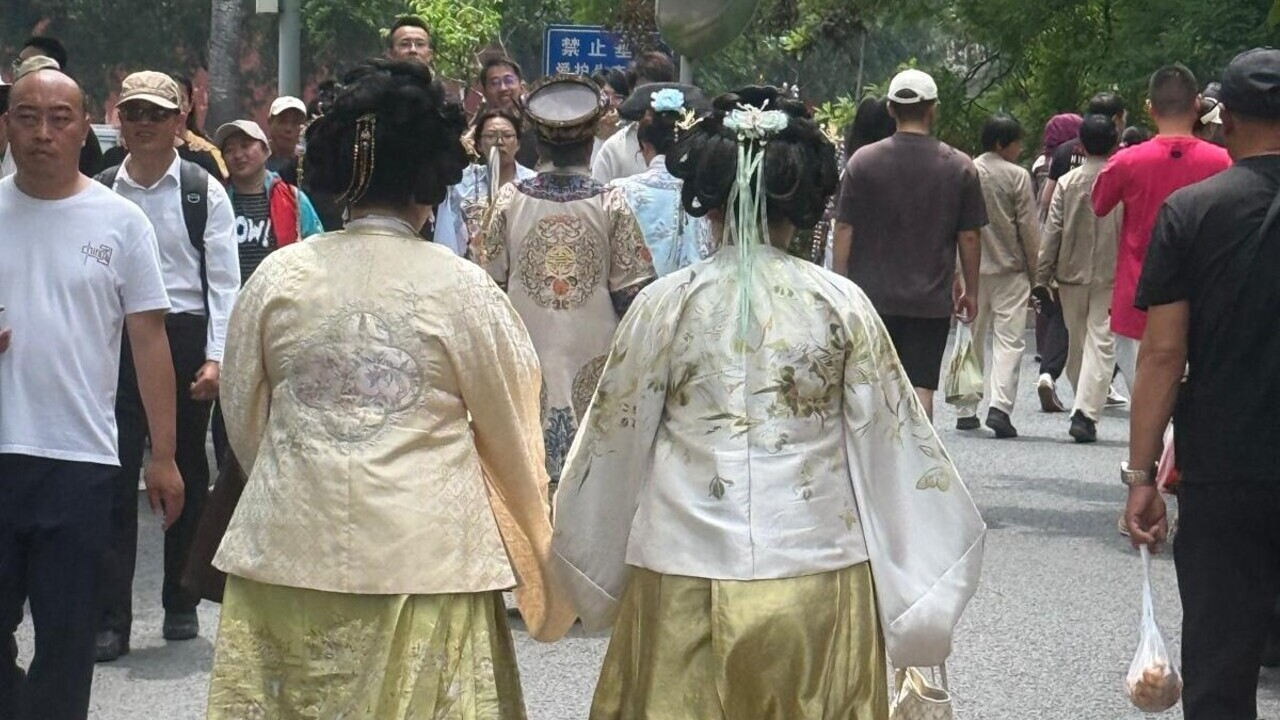
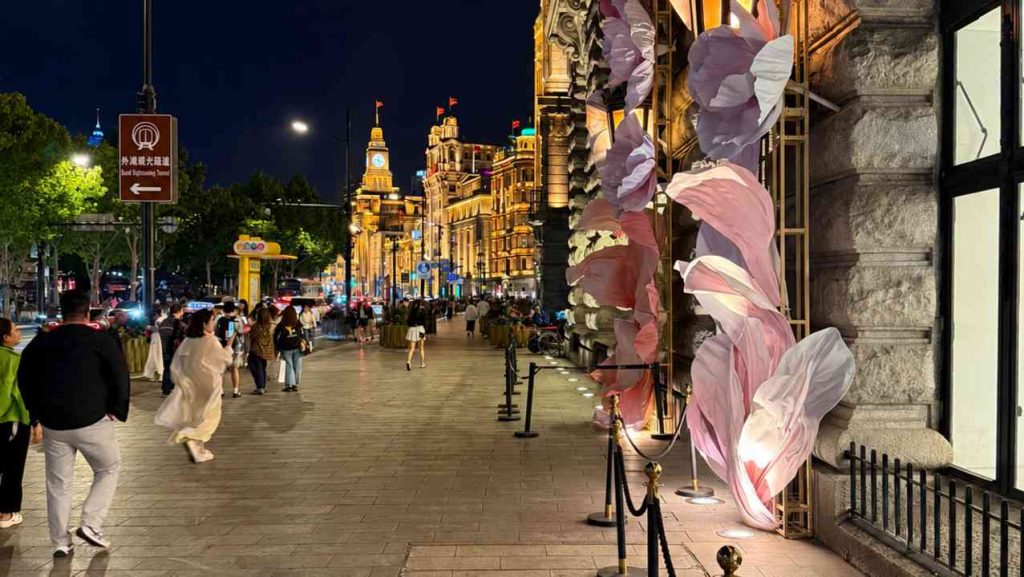
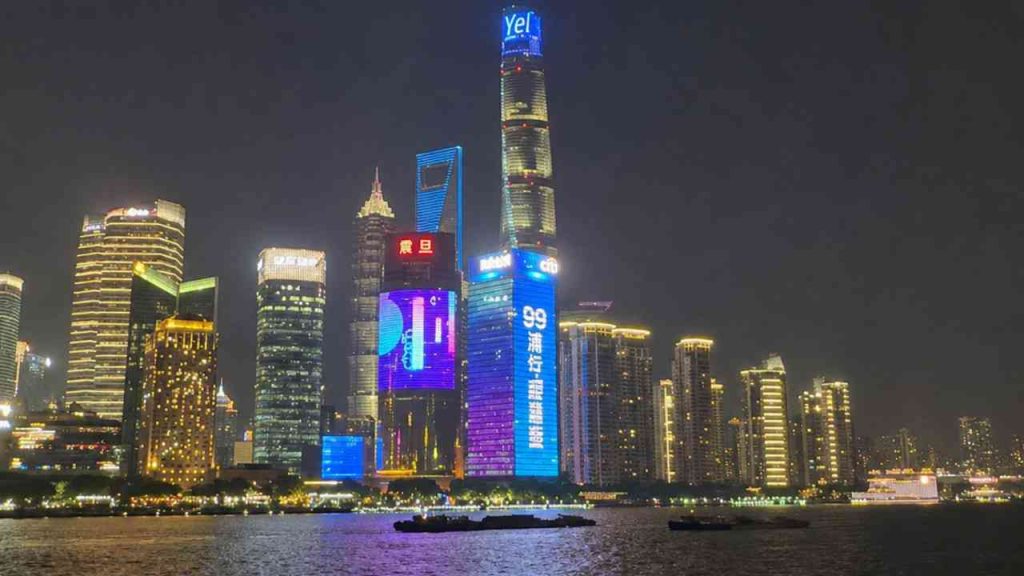
This is my first time in China, and the scale of what I have seen has completely changed the way I think about this country, its culture, and its civilization. I chose Shanghai, Hangzhou, and Beijing as my starting point. Shanghai surprised me with its greenery, lights, modernity, order, and openness. I felt as if I were in the most modern place in the world.
The policy of opening up to the world, launched after Mao’s death in the late 1970s, gave China what Poland lacked in those years: capitalism. I found myself asking many questions as I looked around at this unexpected sight. The most important question troubling me is whether China is aggressive like Russia, and whether it will want war. We cannot predict that. Still, as we know, democracy is no guarantee of peace. Intuitively, however, I feel that this country does not want war. It does not need war. It needs a sense of pride and it wants development.
A journey through contemporary China is, for a European, an experience of strange dissonance. One arrives in a country that for decades was presented in the West as “the world’s factory”: a developing state, a place of cheap labor and mass production. Yet after only a few days, it becomes clear that this image is outdated.
First comes the infrastructure. Trains traveling at 350 kilometers per hour. Enormous railway stations that resemble airports of the future. Endless tunnels cutting through mountains. Elevated roads stretching for kilometers above cities. Highways that look as if they were built for a country richer than Europe. A European begins to understand that China did not develop gradually, as the West did. It tried to make up two centuries in a single generation.
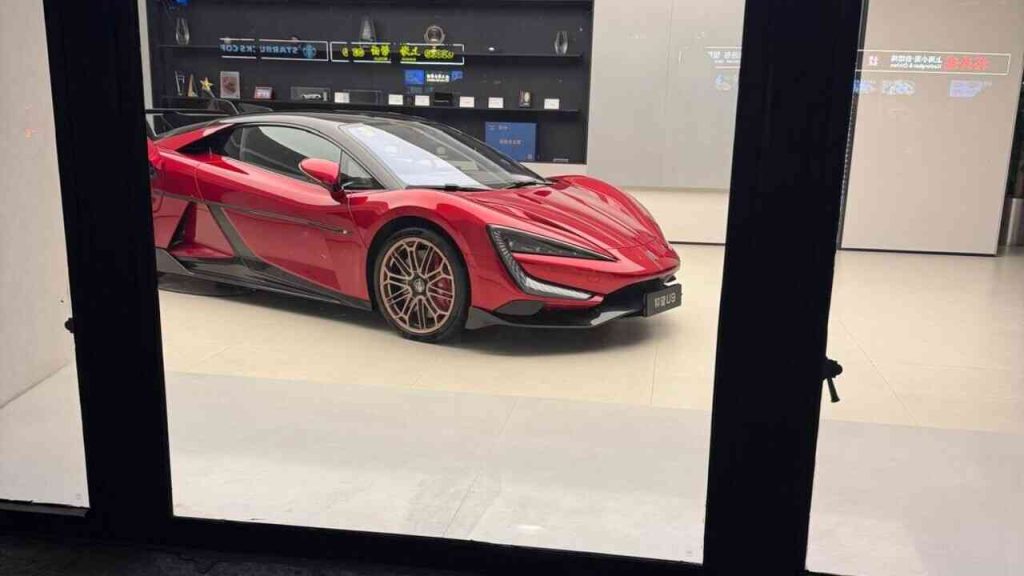
This is especially visible in cities such as Shanghai and Shenzhen. They are more futuristic than most European metropolises. Skyscrapers rise there at a pace that would be unimaginable in Europe. Electric cars are everywhere. Local brands that were almost unknown in the West only a few years ago — BYD, NIO, and Xpeng — now symbolize the ambition of a state that no longer wants merely to copy the world, but to overtake it.
And yet China remains a deeply traditional country. In a luxury hotel, one can drink whisky in the evening and talk about artificial intelligence, then in the morning watch people practicing tai chi by a lake. One can board a high-speed train and, a few hours later, find oneself among tea fields and temples, where time seems to flow just as it did several hundred years ago.
This is felt particularly strongly in Hangzhou. The city looks like a fusion of Song dynasty poetry and modern Asia. Mist over West Lake, Longjing tea, pagodas, and gardens create an almost unreal image. And yet, only a few kilometers away, there are headquarters of technology giants and modern middle-class residential districts. It is there that China’s true paradox becomes most visible: a country that is building the future while trying to preserve the memory of its thousand-year heritage.
The Chinese middle class also makes a powerful impression. It is probably the largest middle class in world history — hundreds of millions of people who, within a single generation, have moved from poverty to a standard of living comparable with Europe. They travel, invest, buy luxury products, play golf, and take an interest in health, technology, and the Western way of life. At the same time, vast differences still exist between wealthy metropolises and the provinces. China resembles several historical eras existing side by side.
The Chinese attitude toward real estate is highly characteristic. An apartment is not merely a place to live. It is security, prestige, savings, and a symbol of family success. Entire generations often finance the purchase of one apartment for a son before marriage. That is why China has seen the rise of enormous housing estates and a vast construction boom. Paradoxically, average new apartments today can be larger and more modern than those in Poland.
At the same time, prices in the best cities have reached levels so high that even well-paid members of the middle class feel immense pressure.
Europe and China also differ in their philosophy of the state. Europe has grown accustomed to the chaos of freedom. China has chosen order, efficiency, and control. This is visible everywhere: in street safety, the organization of transport, digital systems, and state surveillance. For a European, it is both impressive and unsettling. The state is capable of acting with extraordinary effectiveness, but the price is a limited space for individual freedom.
A similar paradox can be seen in the culture of alcohol. In Europe, drinking often means privacy and relaxation. In China, alcohol remains part of social and business relations. Baijiu — an extremely strong traditional liquor — is more a ritual than a beverage. At the table, building trust and community matters more than the taste itself. “Ganbei,” meaning “bottoms up,” becomes a symbol of the Chinese way of forming relationships.
At the same time, China is no longer a poor country in the classical sense. It is a country of enormous contrasts. One can see luxury at the level of the world’s highest standards, while also remaining aware that, not so long ago, hundreds of millions of people lived very modestly. That is precisely why ambition remains so strong there. In some ways, it resembles Poland — the need to show the world one’s worth, to make up for historical delays, and to prove that a country can become something greater than others had predicted.
And perhaps that is why a journey through China remains so deeply in the memory. Because it is not only a geographical journey. It is an encounter with a civilization that, in an extraordinarily short time, tried to move itself from the nineteenth century into the twenty-first. With a country that both fascinates and unsettles. With a place where tradition, technology, control, luxury, ambition, and history exist side by side on a scale that Europe no longer really knows.

A European in China is often struck by a certain paradox. The country looks modern, wealthy, and impressive, yet people seem more tense, less spontaneously kind, and more nervous than in Europe. This is not about a lack of culture or empathy. It is rather the result of the enormous pressure under which contemporary Chinese society lives.
Within a single generation, China has undergone a transformation greater than that experienced by many Western countries over 100 years. Hundreds of millions of people have escaped poverty, but the price of that success has been immense competition. Education, work, housing, social status — everything has become a race. In cities such as Shanghai or Beijing, life resembles constant motion: crowds, haste, pressure to succeed, and a struggle for one’s place in the modern world.
This is particularly visible in attitudes toward children. The contemporary Chinese child is often the center of an entire family project. Parents and grandparents invest almost everything in that child’s future: education, extracurricular activities, languages, sports, prestigious schools. The child is expected to succeed not only for himself or herself, but also for the whole family. Love for children is immense, but it is often joined with very high expectations. From the earliest years, there is pressure to achieve results, compete, and succeed.
In this respect, the Chinese partly resemble the Japanese, but there is an important difference between them. Japan is a more orderly, subdued society, emotionally disciplined. The Japanese may seem reserved, but in public space they usually remain extremely polite and calm. In China, emotions are more visible. There is more chaos, noise, jostling, and spontaneity. Japan resembles a perfectly functioning mechanism. China resembles enormous energy in constant motion.
For decades, Europe has grown used to relative comfort and stability. China still lives with the mentality of a country that remembers poverty and wants to make up for lost time. This creates a society that is ambitious, effective, and extraordinarily hardworking, but also exhausted by its own pace.
That is why Chinese courtesy looks different from European courtesy. It is less spontaneous toward strangers, more practical, and more connected with relationship and trust. On the street, people can seem cold and impatient, but in private they often turn out to be very caring and helpful. In China, warmth more often appears only after the first distance has been crossed.
This is one of the most characteristic features of contemporary China: a country technologically futuristic, yet psychologically still carrying the memory of a difficult history and of the enormous effort required to reach its current level of development.
I will leave China with admiration for its people more than for the state itself. For the scale of collective effort that can be created by a society which, at one point in its history, believed it could pull in the same direction. In Europe, we increasingly see the breakdown of shared goals, the dominance of individualism, and endless disputes. In China, one has the impression that a vast part of society has accepted a certain unwritten contract: less individual freedom in exchange for stability, security, and a sense of common direction.
What is most striking is not that China is not a democracy. We all know that — and the Chinese know it perfectly well, too. What is surprising, rather, is how many of them consciously accept such a model of the state. Not because they do not understand the West, but because they see concrete results around them: relative order, a low level of street crime, an absence of the chaos known from many Western cities, and a lack of homelessness on the scale visible in Europe or the United States. For a huge part of society, these things have become the measure of the state’s success.
The Chinese give the impression of being tired people, sometimes nervous, often less spontaneously warm than Europeans. But beneath that surface lies something very strong: collective ambition. This is a society that, until recently, remembered poverty, uncertainty, and historical humiliations. Today, many people live with the feeling that they are participating in something larger — the restoration of the significance of their own civilization. The success of the state is also, for them, a personal success.
And this is precisely where the unavoidable question arises. Does this model truly lead to a better world, or only to a more efficient one? Democracies can be chaotic, slow, and frustrating, but they have natural limits on power. Even the most controversial Western leader functions among institutions, media, courts, and opposition. He cannot cross certain boundaries without risking the loss of power.
In China, potentially, this is possible. And perhaps this is where the greatest risk of the entire system lies. When everything works well, the state can achieve impressive things. But when enormous power is concentrated in one center, the question appears: what happens if, one day, someone makes a great mistake? History shows that systems based on unity can be extraordinarily effective — until the moment they become dangerous to themselves.
That is why China leaves behind a feeling that is difficult to assess in simple terms. It is at once admiration for collective discipline and a question about the price paid for such unity. Perhaps the West has lost its ability to act together. Perhaps China has gone too far in the opposite direction. And the truth, as so often in history, lies somewhere between these two worlds.
In China, one can sometimes hear stories that sound almost unbelievable to a European. They clearly reveal the fundamental difference between the Western world and the Chinese understanding of the state, institutions, and responsibility. In Europe, the starting point is this: a person has the right to decide for himself or herself, even if that person makes a bad decision. In China, the starting point is much more often different: the system has a duty to maintain order, security, and stability — even if that sometimes means limiting individual freedom.
The state is capable of reacting very quickly, organizing vast operations, imposing rules, and expecting obedience. During the pandemic, the world saw both the impressive effectiveness of Chinese organization and its hard side: mass lockdowns, mandatory quarantines, control of movement, and compulsory testing. For some, this was proof of the state’s efficiency. For others, it was an example of a system that too easily subordinates the individual to the collective.
At the same time, one must honestly say that most Chinese people do not perceive this as oppression in the way the West does. Many people in China consciously accept a greater role for the state in exchange for safety, stability, and development. For them, chaos, crime, drugs, or homelessness on the scale known from parts of Europe or the United States are a greater threat than limited individual autonomy. It is an entirely different social contract.
That is why such stories — like a patient being kept in a hospital — are not, in China, a symbol of a “bad system” in any simple sense. They are rather the result of a philosophy in which an institution believes it has the right to know better what is good for a person. Sometimes this works effectively. Sometimes it inspires admiration for organization and discipline. But sometimes it also raises unease: where exactly does the care of the state end, and the loss of freedom begin?
This question will return more and more often, because China is showing the world a model of an extraordinarily effective society built not on full individual freedom, but on harmony, control, and a shared goal. And perhaps the greatest dilemma of the twenty-first century is precisely this: how much freedom are people willing to surrender in exchange for safety, order, and a sense of stability?
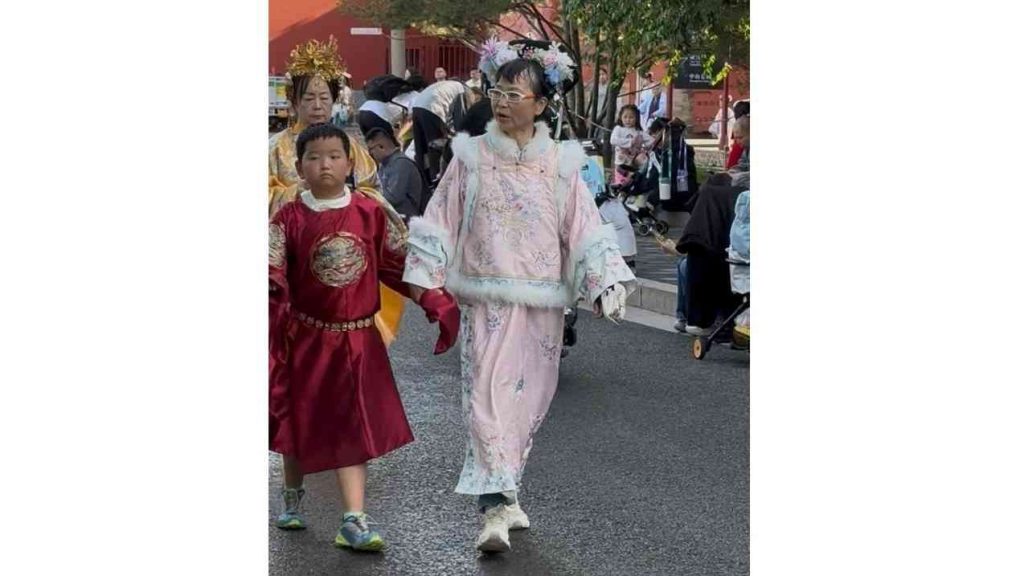
Standing in China today, I find it difficult not to think about all those travelers who came here before me. About Marco Polo, who saw a state so efficient, wealthy, and organized that Europe long refused to believe his stories. About Ibn Battuta, who admired the safety, order, and scale of this civilization, but at the same time searched within it for something more — the spiritual closeness of one human being to another.
I have the impression that, after 700 years, we are still asking exactly the same questions.
Because China impresses. That is hard to deny. It impresses with its scale, ambition, organization, and sense of common purpose. One sees a society that has believed it can build something larger together than the individual life of a single person. In Europe, we increasingly see chaos, divisions, and loneliness. Here, one sees discipline, safety, and direction.
And that is precisely why the West looks at China today with both fascination and anxiety. Because a question appears that no one can fully resolve: how much freedom is a person willing to give up in exchange for stability, development, and a sense of shared meaning?
Marco Polo admired the effectiveness of the system. Ibn Battuta asked more about the human being living inside that system. And perhaps the truth has always lain somewhere between them.
It is possible that Europe has overestimated individualism, while China overestimates the collective. It is also possible that both civilizations are now trying to find a balance that neither has yet truly achieved.
Still, I am leaving China with one important reflection. The greatness of a civilization is not born only from money, technology, or armies. It is born above all from people’s belief that they are taking part in something shared. That their effort has meaning. That they are building a future not only for themselves, but also for others.
And perhaps that is why both Marco Polo and Ibn Battuta return so strongly in my mind today. Because both understood something very important: a journey to China is never only a geographical journey. It is always a journey toward questions about the future of humanity, society, and civilization itself.
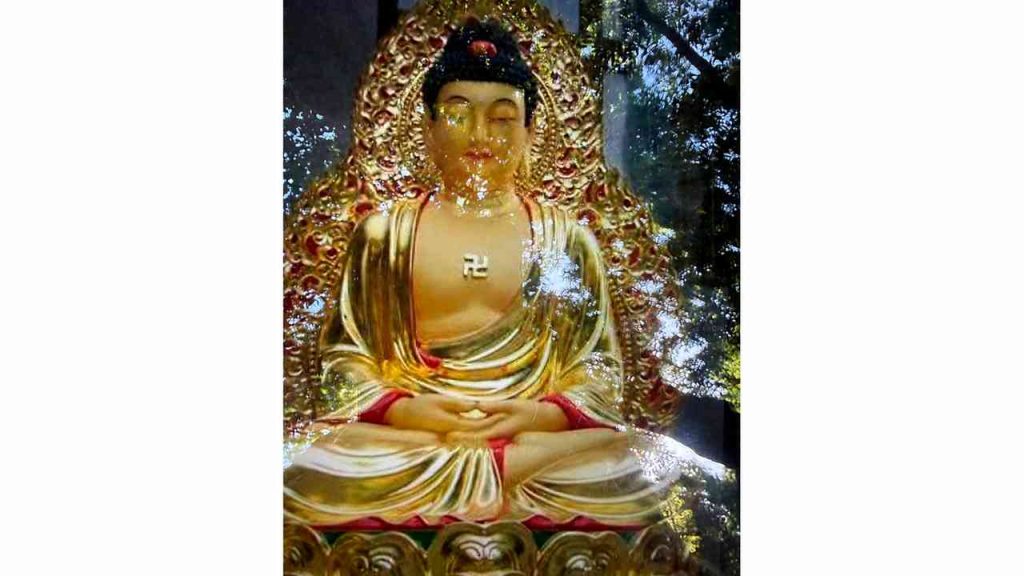
The journeys of Marco Polo and Ibn Battuta were something much greater than the travels of two men. They were encounters between great civilizations at a moment when the world — despite the brutality of its times — remained surprisingly open.
Marco Polo belonged to the world of Venice — a merchant republic that understood earlier than other Europeans that true strength does not lie solely in armies, but in the ability to connect worlds. Venice lived by trade, information, and relationships. Its influence reached the former lands of the Byzantine Empire, Constantinople, and the routes leading toward Asia. It was not an ideological empire. It was an empire of pragmatism.
Ibn Battuta, in turn, represented the world of Islam — a vast civilizational space stretching from the Maghreb to India and China. A world connected not so much by state borders as by a shared language of culture, religion, law, and knowledge. Traveling through caravanserais, ports, and cities of scholars, he moved through a civilizational organism that understood the importance of the exchange of people and ideas.
Both lived in an age of paradox. It was a time of brutal empires, conquests, and violence, and at the same time a time of extraordinary mobility. The Mongol Empire created something historians would later call Pax Mongolica — a space in which a merchant, traveler, or scholar could move from China to the Mediterranean without the chaos of a fragmented world. Security did not then result from democracy or human rights. It resulted from the strength of an empire that understood that trade and the flow of information were the foundations of its power.
This is one of history’s greatest paradoxes: brutal systems could at the same time create stability for travelers and merchants. Power could be ruthless toward its opponents, but pragmatic toward those who strengthened the system. In this sense, the world of Marco Polo and Ibn Battuta at times resembles the present more than we would like to admit.
Today’s routes no longer run only through deserts and across seas. They run through container ships, airports, the world of finance, data, and technology. The contemporary Silk Road is made up of the ports of Shanghai and Singapore, the Suez Canal, semiconductors from Taiwan, the American financial system, and digital communication networks. Just as caravans once needed the protection of empire, global trade today needs the stability of sea lanes, technological infrastructure, and strong states.
And once again, the same paradox appears. Many places that are symbols of safety, development, and organizational efficiency are not at the same time models of Western democracy. The twenty-first-century world, like the world of Marco Polo, shows that order and economic openness can coexist with hard political control.
But the most important question has remained unchanged for centuries: does the encounter between civilizations lead to understanding, or to fear?
In The Other, Ryszard Kapuściński wrote that the encounter with the Other is the greatest challenge of the modern world. This is not, however, only about tolerance. A true encounter begins when, through knowing the Other, we begin to understand ourselves better. And knowing oneself is, in essence, a lesson in communication with “that Other.”
Marco Polo and Ibn Battuta were therefore not merely travelers. They were translators of civilizations. They understood that the greatness of a culture does not lie in isolation, but in the confidence that allows one to enter into dialogue without losing one’s own identity.
Looking today at China, Europe, the world of Islam, and the West, it is difficult not to feel that history is coming full circle. Great civilizations are once again trying to define their own models of the world, their own values, and their own boundaries of influence. Perhaps, however, the future will not belong only to those who prove stronger economically or militarily. Perhaps it will be won by those who preserve the courage of Marco Polo and the curiosity of Ibn Battuta — the ability to look at a foreign world not only as a threat, but also as a mirror in which one can see oneself more clearly.
After returning from China, I found End Times lying on the table. It would have been hard to imagine a more symbolic moment. Only a few days earlier, I had been looking at a state that, from a European perspective, seems to function according to a logic entirely different from that of the West. A vast, disciplined state, focused on a long-term goal, giving the impression of a civilization pulling in the same direction.
In Europe, China is often spoken of only in the language of threat or propaganda. Yet what makes the greatest impression is not the infrastructure, the technology, or the scale of investment, but the people. The sense of participation in something greater than the individual. The belief that the state — regardless of its limitations — has a direction. For someone arriving from the West, immersed in permanent cultural and political conflict, this is an almost shocking experience.
And that is when I returned to Turchin.
His basic thesis is brutally simple: civilizations collapse not only because of poverty or economic crises. Far more often, they are destroyed by the overproduction of elites. The moment when too many people possess ambition, education, money, and aspirations to influence, while the number of real seats at the table remains limited. Then the struggle no longer takes place between the poor and the rich, but within the privileged class itself.
History knows this mechanism very well.
This was partly what the decline of the Roman Republic looked like. This was what the tensions preceding the Civil War looked like. The America of Abraham Lincoln’s time was a rapidly growing country, full of new financial, industrial, and political elites. The North and the South represented 2 competing models of the future. The moral conflict over slavery was real, but beneath it lay an even deeper struggle for dominance over the state and its future shape.
Today, similar tensions — though in different circumstances — can be seen in the America of Donald Trump. Trump is not the cause of the process, but its symptom. The collapse of a common language, the culture war, the aggression of media, academic, financial, and political elites toward one another all resemble a moment when a system begins to lose its ability to defuse tensions peacefully. More and more people believe that the defeat of their opponent matters more than the survival of the community.
A similar mechanism can also be interpreted in the context of contemporary Russia. A state built around centralized power for years produced its own elites: oligarchic, military, administrative, and security-service elites. The problem is that an authoritarian system very often creates aspirations faster than it can satisfy them. In such a model, an external war can become a way of temporarily resolving an internal crisis — through social mobilization, the consolidation of elites, and the redirection of frustration beyond the state’s borders.
This, too, is not a new mechanism.
The empire created by Genghis Khan for a time bound together a vast part of the world. In the days of Marco Polo and Ibn Battuta, one could travel thousands of kilometers thanks to a single imperial order. The Mongol Khanate created conditions for trade, cultural exchange, and communication between civilizations on a scale previously unseen.
But it was precisely there that the same problem appeared. Successive generations of elites — princes, commanders, and local rulers — began to compete for power over a system that could no longer continue to expand. When expansion stopped, internal struggle began. The empire that had earlier united the world began to disintegrate under the weight of its own successes.
And perhaps that is precisely why contemporary China is so fascinating. Looking at it, it is difficult not to ask whether its current civilizational acceleration is the beginning of a new order — or perhaps another version of an old historical cycle. Can a strongly centralized state avoid the fate of earlier empires? Can it control its own elites, ambitions, and inequalities before they begin to tear the system apart from within?
Because perhaps the greatest paradox of history is that civilizations very rarely collapse when they are weak. Far more often, they begin to crack when they reach the height of their power, complexity, and belief in their own permanence.
Read this article in Polish: Notatki z Chin


Zmień tryb na ciemny