Science
Before There Are Planets, There Is Dust
16 October 2026





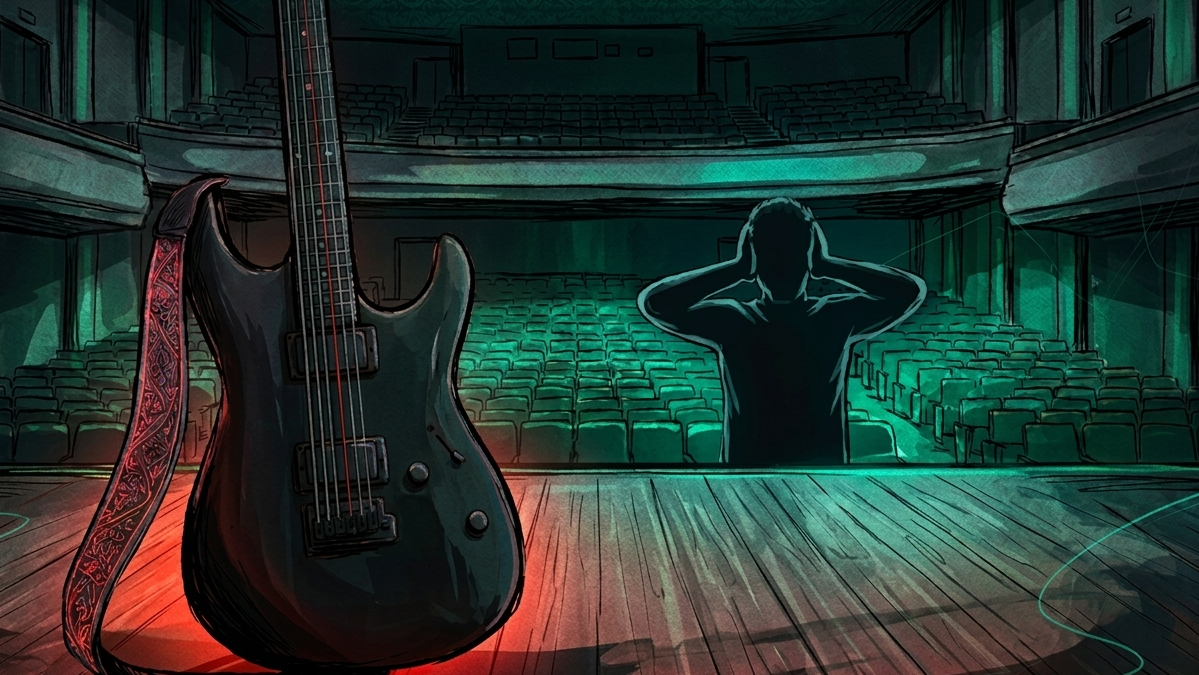
Before the next festivals, protests and demands to cancel concerts return. Is music censorship — whether aimed at metal or any other genre — really a way to fight evil?
The Sun Dies Festival in Dobre Miasto was scheduled for August 22, 2026. The stage was to feature stars of Polish extreme metal. The music was loud, dark and had its devoted fans. The festival was cancelled after a resolution by city councillors. They invoked the need to protect young people from “demoralisation” and “spiritual threats.” The festival was eventually moved to Olsztyn.
A much larger festival takes place every year in Gdańsk. Mystic Festival is also a celebration of metal music. Tickets are not cheap, the stars are big, and the event has a broad European scale. Catholic organisations called for the festival to be cancelled, accusing it of offending religious feelings.
In the spring of 2019, Antifa, a far-left organisation that describes itself as “anti-fascist,” used pressure to bring about the cancellation of a concert by the Polish black metal bands Mgła and Deus Mortem in Germany. This time, the issue was not “Satanism.” The accusations concerned Mgła’s alleged links to the nationalist NSBM scene, meaning National Socialist Black Metal, and a song in which one of the artists assumed the persona of a Nazi. For Antifa, that was enough to treat the entire concert as a promotion of fascism.
Similar accusations, incidentally, once met the legendary band Slayer over the song Angel of Death, in which the “lyrical subject” takes on the voice of Dr Mengele — although the band stressed from the beginning that the point was to confront history, not glorify it.
The 1980s in the United States were also the era of the so-called satanic panic and organisations such as Mothers of America, which saw spiritual threats in the music listened to by their teenage children. “Satanism” became a frequent accusation against bands playing heavy music. Sometimes those musicians really did identify that way. More often, it was a kind of pose or convention, or something more nuanced: “Satan” as a symbol of rebellion, or as a metaphor for evil within the human being and the world. Often, there was simply nothing to it. The aim of organising concerts is, above all, ticket revenue and the chance to spend time listening to one’s favourite music.
Sometimes the problem lies in the artists’ views, as in the case of Kanye West, whose pro-Nazi declarations — along with low interest and weaker sales results — contributed to the cancellation of concerts in Europe, including Poland. It turns out, then, that both the right, in the name of religious feelings, and the left, in the name of the “fight against fascism,” can be inclined to ban various sounds. Yet these concerts are usually ticketed, entirely voluntary and rather niche. Why, then, do they provoke such emotions?
The argument that this is simply about values is not entirely convincing. It is hard to find heated Christian protests against performances of Mozart’s “Masonic” opera The Magic Flute, which some interpret as a work promoting Enlightenment ideas, including rationalism and criticism of authority — while Freemasonry was, at times, fiercely opposed by the Church.
Sentimental pop songs that promote a frivolous lifestyle, partying and drugs are not taken off the air. Wagner or Strauss are not rejected despite the dark historical connotations of their music.
The desire to ban music is, of course, not an invention of our own time. Power has always feared sounds it did not understand. In the Soviet Union under Stalin, a doctrine known as “Zhdanovism” developed, named after Andrei Zhdanov, who directed Soviet cultural policy in the post-war years.
Music could not be “formalist” — that is, it could not serve itself, experiment with form or express individual emotions. It had to be “socialist in content and national in form.” In other words: it had to praise communism, be understandable to the masses and support party policy.
The most famous victim of this policy was Dmitri Shostakovich. His music — full of dissonances, irony and hidden meanings — was condemned as “chaotic,” “neurotic” and “alien to the people.” The composer lived in constant fear for his life. His music bears the mark of a continual game with power.
Writing to political order, as in the Seventh Symphony, the “Leningrad,” did not guarantee him safety. Creating far from ideology, as in the Fourth Symphony, proved impossible. The authorities decided anyway what was allowed and what was not. In a democracy, protests may only make a concert difficult. But when power has an absolute ability to ban, the consequences are those Shostakovich knew: music ends up in a drawer, and the composer fears for his life.
This history shows that music really is a carrier of values. It is not morally indifferent. If it were, no one would try to ban it: not the councillors in Dobre Miasto, not Catholic organisations, not Antifa, and not Soviet communists.
The point is not that a physical sound wave itself carries moral content. The point is that what people express through sounds — lyrics, conventions, contexts — carries values. Precisely because music can express rebellion, nihilism and fascination with death, but also freedom, solidarity and hope, it arouses various emotions, as well as resistance.
Here the problem begins. If music is a carrier of values, why not ban all its varieties? Why metal, and not disco polo? Why black metal, and not pop songs about partying and drugs? In the name of values, one could ban music altogether, as the Taliban did in Afghanistan, treating sounds as a crime.
And yet history shows something else too. The paradox is that this very “dangerous,” “formalist,” “Western” music — rock, jazz and later metal — gave many young people under communism a breath of freedom. Listening to it was an act of rebellion. Today, it is merely one form of entertainment alongside streaming, cinema or discos.
What is more, many new, louder and more rebellious musical genres were initially treated as “dangerous.” Jazz in the 1920s? The corruption of youth. Rock and roll in the 1950s? A moral threat. Punk and metal in the 1970s and 1980s? Satanism and violence. Today, these genres have their place in the canon, and their greatest representatives can be heard in concert halls and theatres. What once shocked people can become classic — if it has value. The premiere of The Rite of Spring, with its dense rhythms and pagan references, provoked reactions of outrage similar to those later directed at metal music.
A better approach would be to treat music and musicians with a more “formalist” ear: to judge them from the perspective of music itself. Ask whether they are good or bad musically, not ideologically or ethically. What is musically weak will disappear anyway, while what is good will somehow defend itself. And if someone dislikes a style, genre or message, they can simply choose not to buy a ticket and not attend. In voluntary, ticketed, niche music, there is no coercion. There is only choice — and that is where music censorship should end.
Read this article in Polish: Kto się boi muzyki? Dobro i zło nie ukrywają się w dźwiękach


A graduate of Journalism and Social Communication at the University of Warsaw (UW), specializing in culture, literature, and education. Professionally, they work with words: reading, writing, translating, and editing. Occasionally, they also speak publicly. Personally, they are a family man/woman (head of the family). They have professional experience working in media, public administration, PR, and communication, where their focus included educational and cultural projects. In their free time, they enjoy good literature and loud music (strong sounds).


Zmień tryb na ciemny