Culture
The Reports Were Written by Friends
10 October 2026





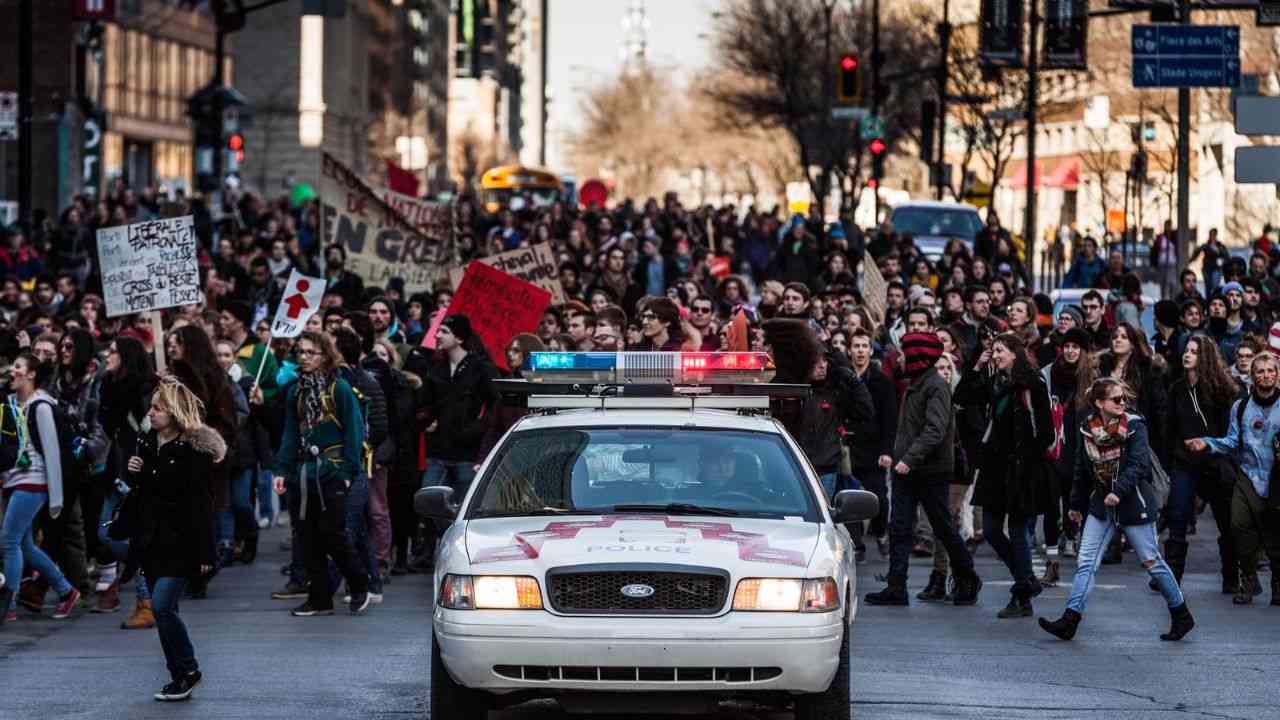
Political arguments can destroy relationships. Yet differences of opinion do not explain everything. Political polarization becomes a more serious problem when an opponent starts to seem like a threat to our values, security, or interests.
Politics has stirred powerful, often negative emotions for years. Supporters of different parties argue with one another, sometimes bitterly. Across many contemporary democracies, political divisions increasingly involve not only differences of opinion, but also outright dislike of people on the other side.
Researchers from institutions including the University of Liverpool and the University of Surrey decided to examine this more closely. They wanted to explore how politics affects relationships—specifically, why political opponents can provoke not just disagreement, but personal dislike.
The researchers used survey data collected in Germany and Spain in 2024. The questions examined, among other things, whether people perceived other political and social groups as threats, both to their values and to more tangible interests.
This allowed them to examine the mechanism in two different European societies.
The study examines the idea that strong identification with our own political group, such as supporting a particular political camp, does not automatically mean we dislike people who support another party. Something else may matter more: the feeling that our opponents threaten us.
Drawing on intergroup threat theory, the researchers distinguished between two types of threat. The first is symbolic threat. This arises when we feel that “those people” threaten our norms, values, worldview, or way of life.
It need not have anything to do with money or physical safety. The belief that “if they win, the world I want to live in will begin to disappear” is enough. The second is realistic threat. Here, the concern becomes more tangible: the belief that another group could threaten our safety, financial circumstances, or access to resources.
Put simply, in the first case we fear for our values and way of life; in the second, for our safety and material interests.
The researchers hypothesize that symbolic threats are generally more strongly associated with dislike of supporters of other political camps, potentially contributing to political conflict. They expect this pattern to hold across groups with different political views. That distinction matters. A political opponent may irritate us for reasons that have little to do with proposing a higher or lower tax rate. Much stronger emotions can arise from the belief that they threaten values we regard as part of our identity.
The hypothesis is different for realistic threats. The researchers expect these to play a greater role among supporters of right-wing parties, particularly those on the far right. Precision matters here. This does not mean the study proves that right-wing voters are inherently more fearful or more susceptible to political emotions.
The study is described in the conference paper Perceived Threats and Horizontal Affective Polarization: A Comparative Study of Germany and Spain, by Raul Gomez of the University of Liverpool, Roula Nezi of the University of Surrey, and Luis Ramiro of UNED in Madrid.
The paper was presented at the ECPR General Conference 2026, held in September at Jagiellonian University in Kraków. Its abstract draws on existing research suggesting that supporters of right-wing and far-right parties may be more sensitive to concerns about safety and security.
A political opponent need not provoke intense dislike simply because they mark a different name on their ballot. The situation becomes much more fraught when we begin to think that “those people” could take something important away from us: money, security, values, or our way of life.
At that point, political disagreement stops being an ordinary debate over policies. We begin to perceive it as a conflict over things that are fundamental to us.
The study explores the possibility that hostility and political conflict between party supporters in European democracies cannot be explained solely by belonging to one political camp or another. A potentially more important question is whether people feel threatened by “the other side”, particularly in matters of security, material interests, and values. That perceived threat may help explain why political polarization becomes personal.
Read this article in Polish: Nie tylko poglądy dzielą ludzi. Kluczowy jest jeden mechanizm


A graduate of journalism and social communication at the University of Rzeszów. She has been working in the media since 2019. She has collaborated with newsrooms and copywriting agencies. She has a strong background in psychology, especially cognitive psychology. She is also interested in social issues. She specializes in scientific discoveries and research that have a direct impact on human life.

Zmień tryb na ciemny