Culture
A Life Spent Becoming Someone Else’s Ideal
12 October 2026





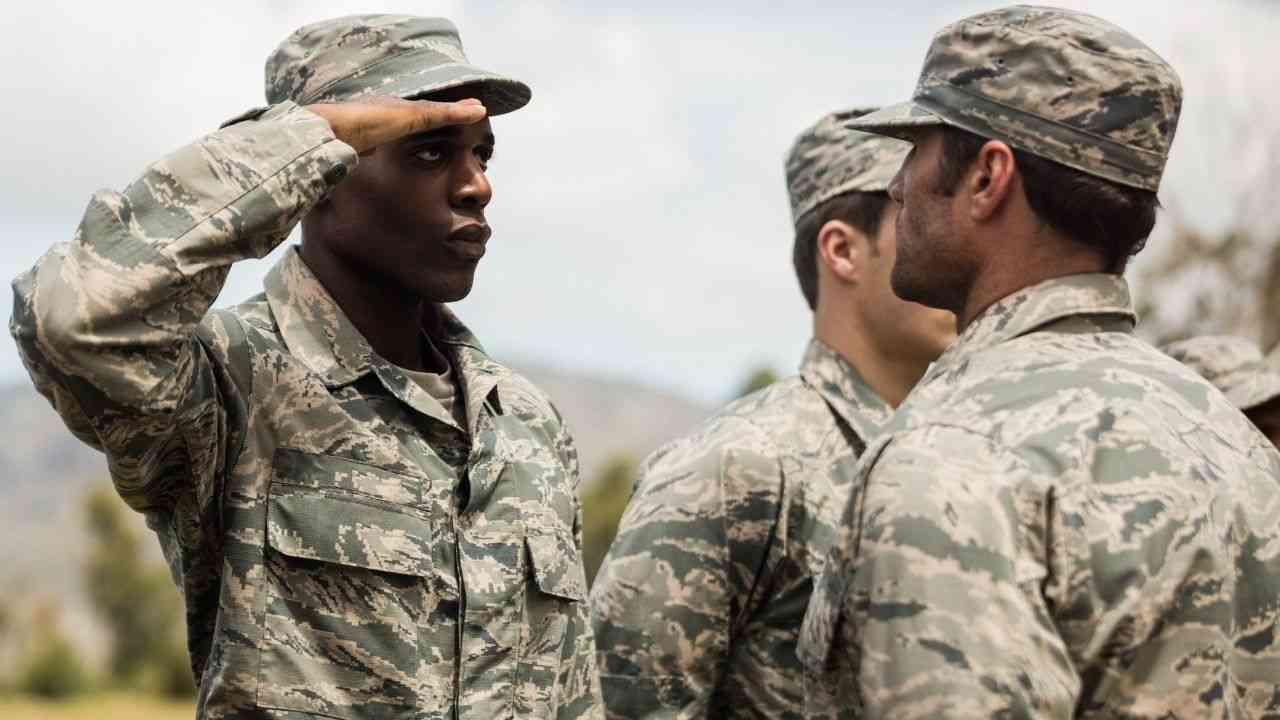
Mali, Burkina Faso, and Niger moved away from France, left ECOWAS, and declared that they were reclaiming sovereignty. Yet they have still not achieved military self-reliance. A new analysis reveals the paradox of the Sahel: in the story of Russia in Africa, French assistance is being replaced by Russian troops, equipment, and training. Dependence has not disappeared. Above all, it has changed direction.
Despite 51 years of existence, ECOWAS — the West African organization whose aims are somewhat similar to those of the EU — has not managed to stop terrorism, restore security to its member states, or effectively manage military forces in order to establish law and order.
The most serious tests of ECOWAS’s effectiveness came between 2012 and 2025. These were the years of security crises, military coups, and the expansion of jihadist groups. As a result, the 3 countries hit hardest by terrorism in recent years — Mali, Burkina Faso, and Niger — created their own alliance and withdrew from ECOWAS.
A new study published in the academic journal Frontiers in Political Science tries to answer a pointed question: why could an organization capable of cutting off electricity to all of Niger not stop jihadists crossing borders?
Dr. Mohammed Bello Umar of Peoples’ Friendship University analyzed 3 selected cases of security crises: the crisis in Mali in 2012 and 2013, counterterrorism cooperation around Lake Chad, and finally the withdrawal of Mali, Burkina Faso, and Niger from ECOWAS, which took place in 2025. His findings show that the answer is neither clear nor simple. Why?
West Africa’s military security does not depend on a single solution. For this part of the continent to confront threats more effectively, it needs 3 components working together.
The region under study remains deeply dependent on Europe, the US, and Asia. Russia, France, and China are permanent actors in the region’s security architecture. They take part in military operations, financing, and diplomatic activity. A few days ago, Russia’s role in Africa expanded once again. This happened because the Russian Africa Corps supported Niger’s military government during the suppression of a soldiers’ revolt. It was Nigerien representatives who appealed to Russia for help. Later, the Russian Foreign Ministry announced that the operation had been a complete success.
Deep political differences between individual African states do not help the situation. Nigeria, Senegal, and Ghana emphasize institutional stability and democracy. The military governments of the Sahel, by contrast, place sovereignty and the fight against neocolonialism at the center of their politics. This is precisely why the study’s conclusions do not point to any rapid improvement in West Africa’s security situation. We are clearly dealing with a stable but fractured system, one that will be extremely difficult to bring back together.
Dr. Umar called the whole situation externalised interdependence, meaning externalized interdependence. What does the term describe? The situation reveals a simple mechanism: threats — smuggling, rebellions, and crime — begin in local environments. They then spill over into other states because borders are porous and poorly secured. To fight them, governments need equipment, troops, logistics, and money. For many years, those resources have come primarily from external actors.
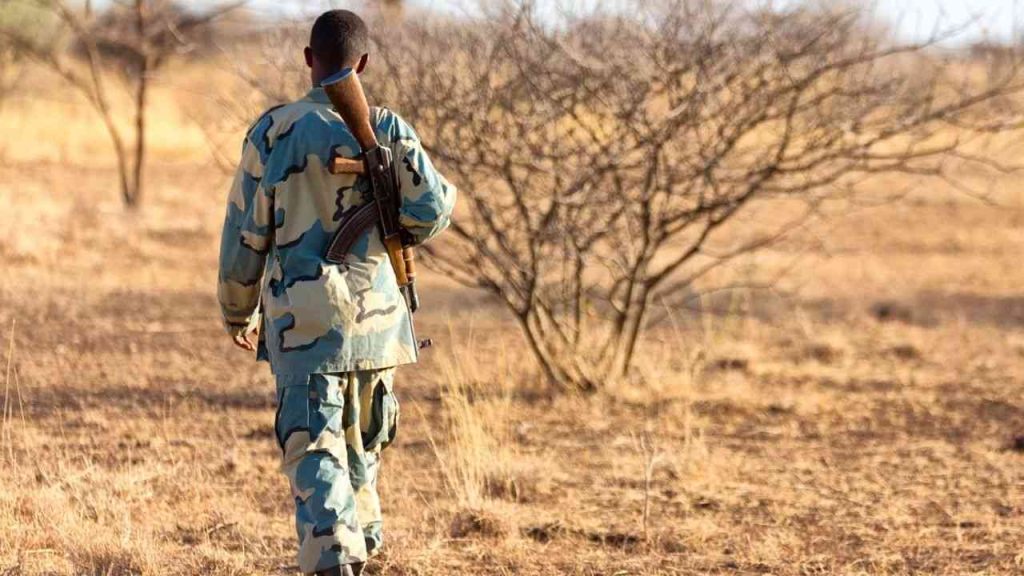
This also serves as a kind of answer to the question posed at the beginning of the study by the researcher working at a university in Moscow. Why did ECOWAS fail to provide security to the states of the region while still managing to enforce painful sanctions against them? Because it does not have sufficient autonomous strength or security resources. And the departure of Mali, Burkina Faso, and Niger from ECOWAS only made the situation worse.
Some arrangements — trade, a sense of security, and the free movement of people — did remain unchanged. Even so, the split damaged the organization’s prestige. This situation affects the past, the present, and the future alike.
In 2013, during the crisis in Mali, France’s Operation Serval played a key role. It helped stop the Islamist offensive toward Bamako, while the UN and the EU funded and supported stabilization efforts and security institutions for years. France’s role, however, is clearly weakening. Now the most important military partner of the new alliance — the AES states — is Russia.
The paradox of the whole situation is that the Sahel countries, in trying to free themselves from ECOWAS and France, are falling into the same trap. They have not eliminated their dependence on external military support. To a large extent, the partner has changed: Russia has taken over some of the functions previously performed by France.
In theory, African states were supposed to gradually increase their own autonomy in the field of security, as countries from outside the continent slowly withdrew from providing direct assistance. The example of West Africa shows, however, that the situation is quite different. Hybrid ties may last for a very long time. The permanent presence of non-African powers on the continent, the conflicting security visions of African countries, the dispersal of power, and the absence of a single state capable of independently ensuring regional order now appear to be a lasting condition — not, as previously suggested, a transitional one.
In that sense, Russia in Africa does not simply mark a new chapter in geopolitical rivalry. It exposes a deeper problem: sovereignty can be announced in a speech, but it has to be built through institutions, resources, and security capacity. In the Sahel, that work remains unfinished.
Read this article in Polish: Francja wyszła, Rosja weszła. Afryka wpadła w nową pułapkę

A graduate of journalism and social communication at the University of Rzeszów. She has been working in the media since 2019. She has collaborated with newsrooms and copywriting agencies. She has a strong background in psychology, especially cognitive psychology. She is also interested in social issues. She specializes in scientific discoveries and research that have a direct impact on human life.



Zmień tryb na ciemny