Science
Before There Are Planets, There Is Dust
16 October 2026





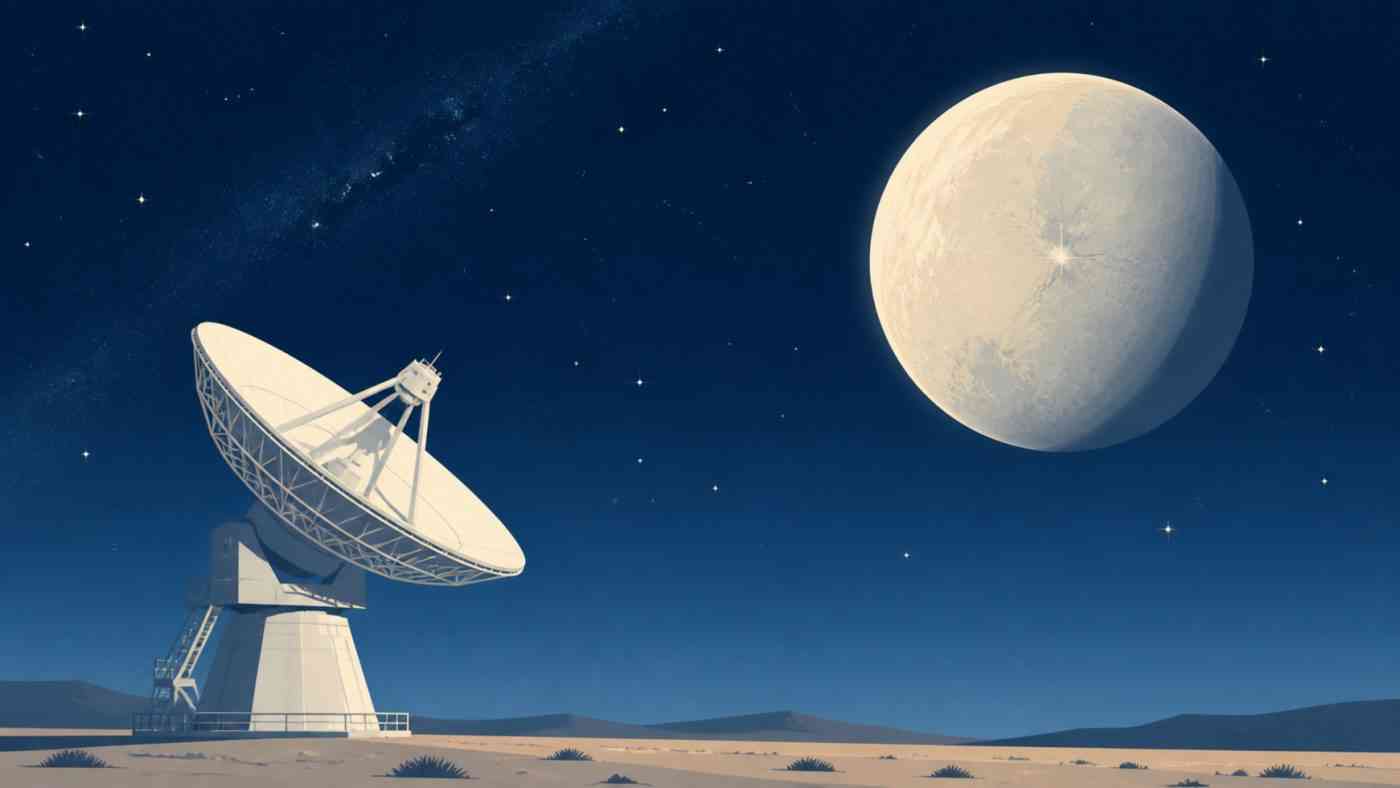
Could we have found signs of extraterrestrial life and simply failed to notice them? A growing number of astrobiologists fear that this scenario is real. The crucial question, then, is no longer only whether life exists somewhere in the universe, but whether we know how to see it.
In its search for signs of extraterrestrial life, astrobiology has long focused on avoiding false positives. These are cases in which a signal looks like evidence of life, only to turn out later to be something else entirely. A group of researchers from several European universities, however, shifts attention to a less spectacular but potentially more important problem: false negatives.
These are cases in which life existed, or still exists, but scientists fail to detect it. As the authors published in Nature Astronomy stress, such errors are inevitable, and their consequence is a failure to recognize life, past or present.
This marks an important change in perspective. Scientists can later correct a false positive signal, or at least name it as an error. A false negative result triggers no alarm. It produces only silence, and that silence can easily pass for proof that nothing was ever there. This is why the study’s authors warn that current strategies for searching for life still pay too little attention to the risk of overlooking it.
The sources of such oversights can vary widely. Biological traces may not survive long enough. Signals may prove too weak to read. Instruments may lack the capacity to detect what is actually present. If life exists under a rock, and the observer looks only from above, they have no chance of seeing it. The same problem may apply to planets and moons, where potential biosignatures may hide beneath the surface, in the atmosphere, or in chemistry that we currently interpret too narrowly.
The problem also lies in the fact that we mostly search for what we already know from Earth. If life beyond our planet works differently, leaves different chemical traces, or exists in an environment we do not consider, its signs may simply slip past our attention. For that reason, instrument sensitivity alone will not be enough if we do not know from the start what, exactly, we should be looking for.
In such a situation, scientists can easily make an interpretive mistake. One example involves iron-bearing minerals found on Mars, which show an unusual oxidation pattern compared with the material around them.
On Earth, we see such varied oxidation only when life is present. But does that mean we are dealing with life in an extraterrestrial context?
– asks Inge Loes ten Kate, professor of astrobiology at Utrecht University and the University of Amsterdam.
The researchers stress that this case does not yet amount to a confirmed false negative. Rather, it shows how much remains unclear until we better understand the geochemistry of a given environment. Something may look promising, yet still leave us unsure whether it points to life or only to a chemical process we cannot yet explain well.
The current way of designing missions rarely accounts for the risk of failing to detect signs of extraterrestrial life. Scientists usually design instruments and observation targets with potential detection in mind, not with a systematic effort to reduce the chances of missing what may be there. According to the researchers, a more targeted research strategy could help: one that combines laboratory experiments, theoretical modeling, and fieldwork. Artificial intelligence may also prove useful because it can detect patterns that remain invisible to human observers.
How do we investigate things we cannot find? That question goes to the heart of our problem, because we usually search for what we already know. We therefore need to understand very clearly what kind of life could exist in a given place, what conditions such life would need, and how to recognize its traces,
– ten Kate emphasizes.
This shift in approach brings order to the wider debate about extraterrestrial life. The question is no longer only where to search for signs of extraterrestrial life, but also how easily we might miss them. We need not only increasingly sensitive instruments, but also a systematic awareness of what we may fail to notice.
Read this article in Polish: Nie znaleźliśmy życia w kosmosie. A może po prostu je przegapiliśmy?


A Journalism and Social Communication graduate with 15 years of experience in the media industry. He has worked for titles such as "Dziennik Łódzki," "Super Express," and "Eska" radio. In parallel, he has collaborated with advertising agencies and worked as a film translator. A passionate fan of good cinema, fantasy literature, and sports. He credits his physical and mental well-being to his Samoyed, Jaskier.


Zmień tryb na ciemny