Culture
A Life Spent Becoming Someone Else’s Ideal
12 October 2026






Young people’s spirituality can be a way of searching for meaning and answers to difficult questions. But when the need to understand the world combines with loneliness, helplessness, and a lack of critical thinking, it can lead to spiritual manipulation, conspiracy theories, and dangerous communities. How can we help young people find their way back to reality?
Many people probably remember the 2010 film Eat Pray Love, starring Julia Roberts. After a difficult emotional experience, Elizabeth sets out on a spiritual journey to India to find meaning and happiness. She meditates, fasts, and embraces a form of ascetic practice. Yet an attentive viewer notices that she maintains a certain distance throughout the journey.
Elizabeth is a rational and pragmatic woman. She knows that at some point she will have to return to the world she came from. In other words, the moment will come when she must take responsibility again. She will have to return to the ground where everyone has their own tasks to fulfil. To live a satisfying life, she needs to give it meaning. And if she cannot see that meaning at first, she sets herself a task: to discover it. By doing so, she gives her life direction.
When the film appeared in cinemas, many young people interpreted its message too literally and wanted to experience a similar life adventure. Those who could afford it travelled to ashrams to meditate. Meanwhile, those who could not signed up for meditation courses in their own cities, immersed themselves in spiritual self-development books, and introduced wishful thinking into their everyday lives. What did that mean in practice?
Everything must work out in the end. Everything happens for a reason. Life is a lesson from which I should learn, and the glass is always half full. If I cannot see that, I still have a lot of inner work to do.
The “human project” was improving itself every day. It avoided toxic people because that was what positive-thinking books recommended. It synchronized its brain hemispheres to attract wealth. From time to time, it used herbs to explore new levels of consciousness.
After several years of such practices, it often turned out that little had changed — apart from the benefits gained by those promoting alternative lifestyles. Yet the culture of “spiritual searching” had become a reality. It became a kind of pseudo-antidote to corporate life, a false remedy for turbo-capitalism.
The “spiritual development” market flourished around the world. Indian spiritual teachers increasingly travelled abroad to teach Europeans and Americans meditation and life according to spiritual principles. Not even a documentary about Osho — one of the best-known spiritual teachers, which exposed the fraud and sectarian practices surrounding his movement — changed this trend. Osho’s community was associated with luxury, controversy, and the use of psychoactive substances.
Hundreds of young people paid a heavy price for joining his community, including damage to their physical and mental health. The two often go together when people push themselves beyond their limits through experiments with psychoactive substances. They also do this through altered states of consciousness.
Two issues seem particularly important here. The first is the feeling of not fitting into the reality we live in — a world where we are expected to always smile, feel satisfied, overflow with ideas, and build a meaningful career. The second is our difficulty accepting that we are ordinary human beings. Even though the market promotes the idea of uniqueness and pressures us to prove that we belong among the exceptional, this is still hard for us to accept.
The exceptional ones are actors, celebrities, athletes, outstanding scientists, beautiful women and men, stars of the stage, and leaders of all kinds. You are not one of them? There is nothing you can do about it? Should you therefore feel sad? This is where the problem begins. It is one that, according to many messages circulating today, must immediately be fixed.
Tomasz Stawiszyński writes about this brilliantly in his book Ucieczka od bezradności (Escape from Helplessness). He examines everything we try to reject, even though it is an inseparable part of human existence: grief, sadness, hopelessness, and the disappointment of discovering that we cannot achieve certain things. We struggle to accept our own helplessness, and this creates space for fraudsters, manipulators, and false prophets. This includes those to whom we entrust our political choices.
Two fundamental forces operating in today’s reality, fighting for influence over people’s minds — religion and the market — assess sadness and discouragement in an entirely negative way. From a religious perspective, these states appear to undermine the greatness of divine creation and, indirectly, the greatness of the Creator himself. From the market perspective, expressed among other things through extreme definitions of mental disorders, sadness and discouragement are stigmatized as conditions that paralyze productivity and efficiency. They prevent action, activity, and the pursuit of goals. They cause an inability to work.
— argues Stawiszyński.
Because sadness and grief are pushed out of contemporary culture, while the market demands that we remain productive from an early age, countless false methods of restoring happiness appear. And because the problem of sadness affects more and more young people, they become easy targets for spiritual manipulators. These people, in turn, are skilled at using seductive language that promises to reveal the hidden meanings and mysteries of human existence.
Yet when we examine what experts of “higher living” actually say, we often discover that their narratives resemble the classic logical fallacy known as ignotum per ignotius — explaining something unknown by referring to something even more unknown.
Surprisingly, it works. It works because it is wrapped in meanings and visions of a better life. Moreover, it offers a promise: “You are suffering now, but if you work hard and follow my instructions, you will become happy.” It works especially well when a young person lacks basic psychological and intellectual tools for self-protection.
When nobody has taught them how to ask questions, encouraged their curiosity, or introduced them to art, music, or literature — forms that can reveal parallels with difficult experiences, offer comfort, and bring relief in moments of suffering — they may be left alone with their struggles. And loneliness can become so painful that they may embrace a dangerous cult or believe in a conspiracy theory simply because it offers hope. It convinces them that they are not alone in an indifferent world.
That is why they may willingly place themselves in the hands of an experimenter. Most often, they do not meet such a person face to face, because psychological manipulation can be carried out very effectively in virtual spaces.
All it takes is sitting in front of a computer screen and listening for thousands of hours to a favourite spiritual teacher who speaks with such confidence and looks into the camera as if they were looking directly into your eyes. As if every word had been intended only for you.
Do not mock or insult them. If you do — for example, by calling someone crazy and ridiculing a young person who has fallen victim to manipulation — you only close the door to dialogue. Also, you strengthen the belief that “the world is against us.”
Do not enter into aggressive arguments either. Rational discussion and presenting scientific evidence often produce the opposite effect. A defensive mechanism can make a young person believe in the conspiracy even more strongly.
Instead of lecturing, it is better to ask questions. Instead of saying that something is nonsense, ask:
Where did you read about this?
How does this person online know these things?
What would have to happen for you to consider that it might not be true?
It is also worth helping a young person learn how to analyze sources independently.
Escaping into an alternative reality is often a cry for acceptance, a need to feel special, fear of the future, or loneliness. Ask yourself: what is missing from this person’s real life?
If you build a relationship with a young person based on trust, create a safe space for them, and accept them as a person — even if you do not accept their beliefs — you have a much better chance of helping them resist the temptation to escape into other worlds.
Be present and involve them in everyday, tangible activities. Suggest spending time together, exercising, walking in nature, cooking, or working with your hands. Physical and practical activities naturally help people stay grounded. They also move away from spending long hours in front of a computer.
And if a loved one’s behaviour shows signs of severe psychological dependence or involvement with a cult, it may be worth consulting specialists. In Poland, support is available from organisations that help people affected by psychological manipulation.
Read thios article in Polish: Duchowość miała pomagać. Szukają sensu, trafiają w pułapkę

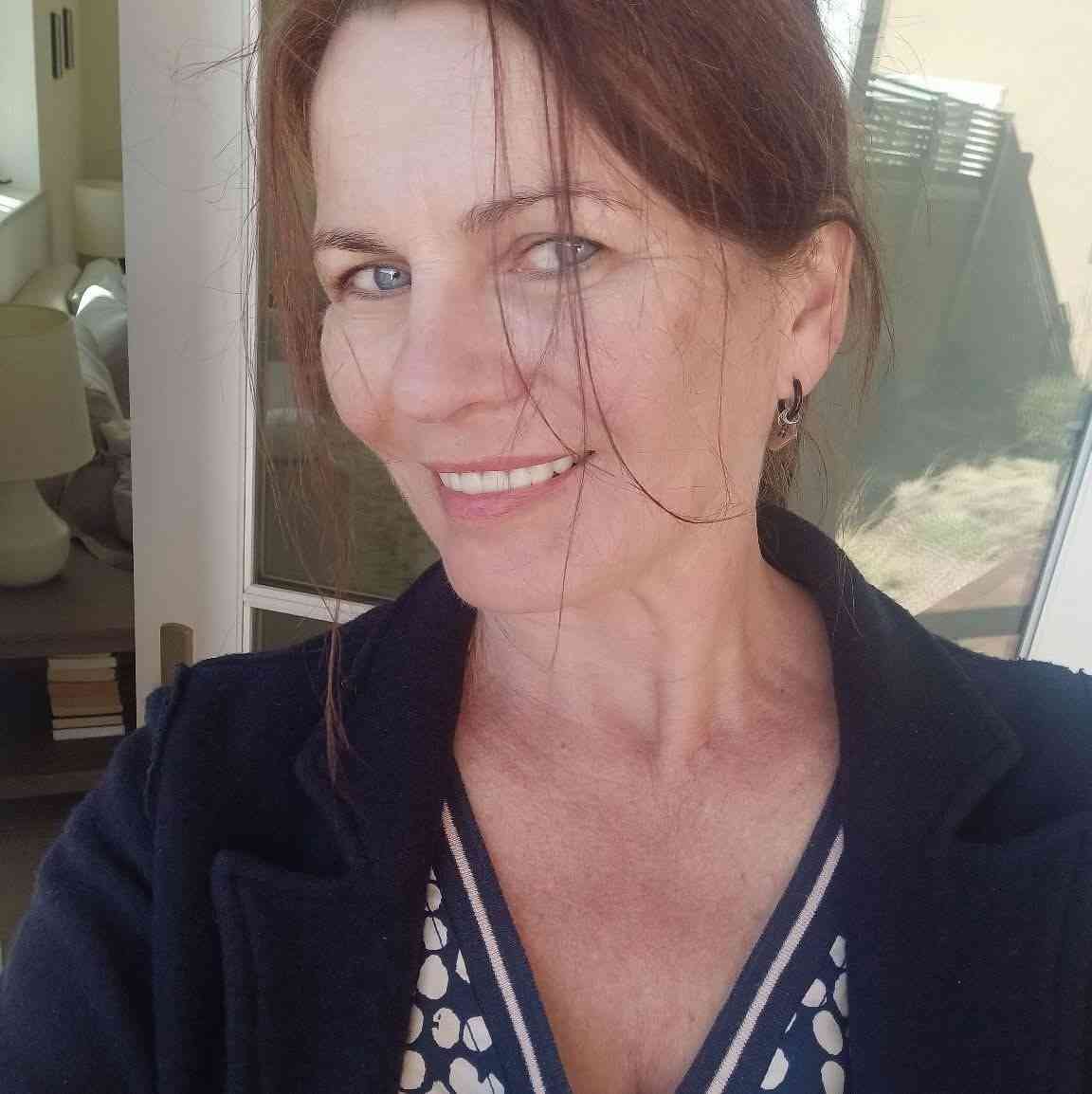
A journalist, writer, playwright, painter, and therapist working towards certification. The author of 9 books, including Jak odzyskać duszę, Gdy nadwrażliwość wystawia rachunki. Czterdzieści dwa listy o miłości, życiu i śmierci, co-written with philosopher Professor Lech Witkowski, and Miłość w Ejlacie, published by PIW. A graduate in Political Science from Nicolaus Copernicus University in Toruń, she also completed the European Journalism Programme at the Natolin European Centre and the Academy of Transpersonal Therapy in Warsaw. Her work has appeared in Twórczość, Odra, Czas Literatury, Helikopter, and Dialog.



Zmień tryb na ciemny