Science
Before There Are Planets, There Is Dust
16 October 2026





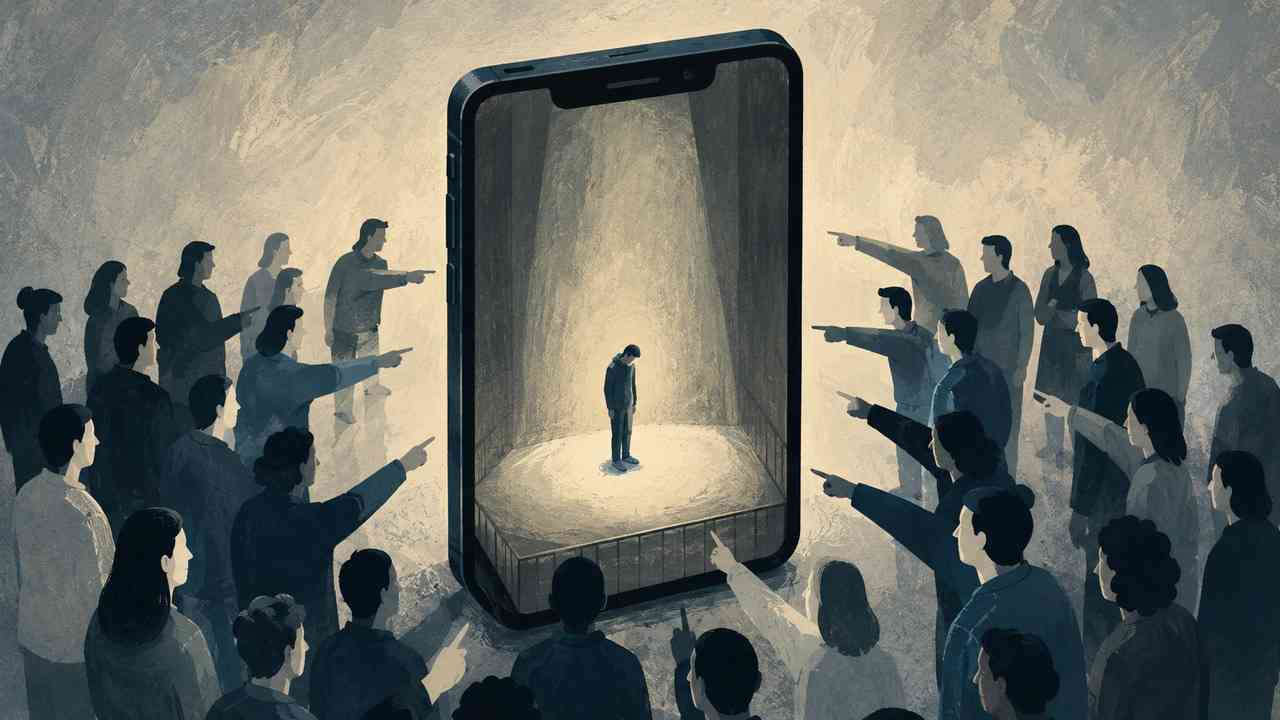
Modern democracy has created a court no one appointed, with no appeals procedure and a docket open 24 hours a day. We are all its jury. Trial by social media can repair a wrong that institutions failed to see. It can also destroy a person before anyone has tested the evidence, writer Jacek Piekara observes in his essay.
The phrase “people’s justice” reminds me, as a child of the Polish People’s Republic and as a reader of many books about communism, of a long-vanished, inhuman system that came out of the Soviet Union. It was there, in the country of the greatest enslavement, the country of gulags, persecution, and mass crimes, that people sang, as if in mockery: “I know no other country where a man breathes so freely.” Everyone had to sing it and, interestingly, some people sincerely believed it.
But today I want to write not about “people’s justice” in the political or ideological sense. Instead, I want to write about people’s justice as the voice of public opinion — a voice that delivers verdicts, passes judgments, and declares assessments and opinions. In today’s world, the world of the global village, that voice carries enormous social importance. It also often translates into marketing or financial value.
The voice of the people, people’s justice, or the judgment of public opinion often tends to be unconditional, unequivocal, and drawn in black and white, with little patience for shades of gray. In other words, the people choose their hero and defend him with all their strength. At the same time, they condemn anyone who attacks that hero or questions his heroism.
The voice of the people very often cuts across the views expressed by courts, media, or celebrities. It takes under its protection someone it considers wronged, or it ruthlessly stigmatizes someone it considers guilty.
Today, suppressing that voice has become very, very difficult because mass communication has so many channels. What does it matter if something gets blocked by Facebook’s censorship, if it then appears on Twitter, YouTube, or in dozens of other places? Blocking a single voice remains possible. However, blocking the voice of public opinion — the voice of thousands or tens of thousands of internet users — no longer is. That has both positive and negative consequences, though I myself see far more positives.
To become a popular hero, to become someone whom public opinion supports, sympathises with, or stands behind, is a dream position for many people fighting for their own violated interests. One concrete and recent example is the case of Rafał Brzoska, the owner of InPost. He publicly revealed how much tax he pays in Poland and, at the same time, showed that his competitors pay very little tax or avoid paying it altogether.
In short, Brzoska proved that, as a taxpayer, he contributes to our common good and to the development of our country. Meanwhile, his competitors merely feed off Poland and Poles. I know that these dry statistical data made a huge impression on many people. And I myself, as a very frequent user of courier companies, always choose InPost whenever such a choice is available. Interestingly, my partner still sometimes checks whether I definitely chose InPost. That is precisely this people’s justice, which tells us to support Brzoska and ignore his competitors.
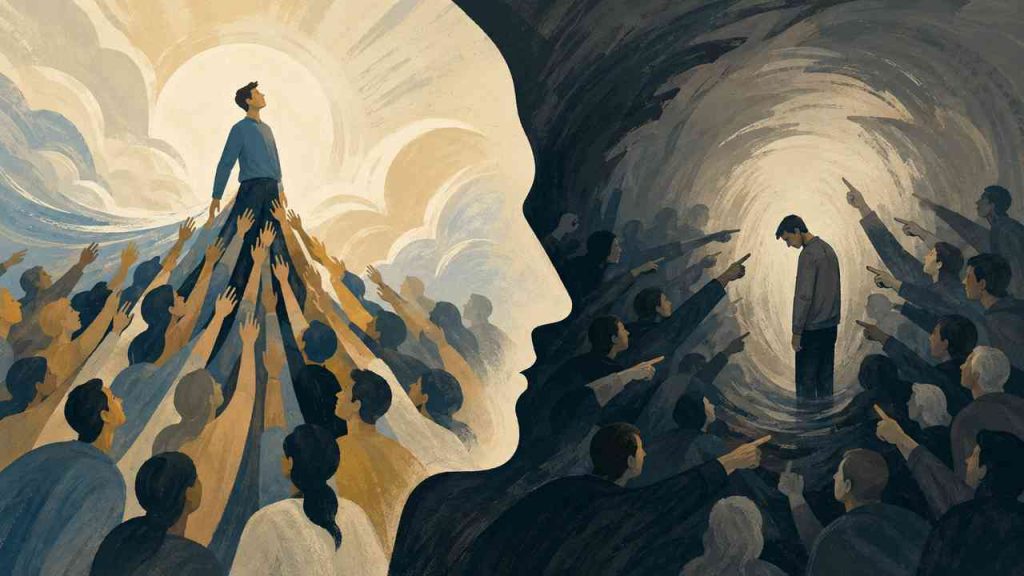
Out of another very recent, but very loud, scandal we have gained a new popular heroine, widely recognised as the victim of a great injustice. I mean the actress Joanna Jabłczyńska, who was not allowed to return to the role she had previously played in the continuation of the cinema hit Nigdy w życiu. This was because the deep-pocketed producers pushed through their own candidate. According to popular rumour, she was someone well known to one of the producers, as so often happens in the film world.
Jabłczyńska was left out in the cold, even though she had previously been assured that the role would remain hers. This triggered a massive and spontaneous reaction from public opinion. And again, the point was not really the role or the importance of some romantic comedy. Instead, the point was that the voice of the people decided that an innocent, weaker person had been wronged, and that a conspiracy of the powerful had inflicted that injustice upon her.
A side effect of rescuing Jabłczyńska was the wave of hate that flooded her rival. But that is how people’s justice usually works: if there is a hero, there must also be an antihero. If a victim appears, someone has to find the tormentor.
In certain matters and situations, the voice of the people becomes powerful, unequivocal, and marked by demands for the greatest possible severity. I think the best example here is paedophilia, which courts often treat far too leniently and which some politicians, psychologists, and celebrities try to excuse. One need only recall the case of the rapist and paedophile Roman Polański. Behind him stood not only the Polish acting community, but also figures as politically significant as Radosław Sikorski.
Public opinion is unequivocal: paedophiles should, in the mildest case, be castrated, though in principle physical elimination would be best. And it is hard not to agree with that opinion. As far as the undersigned is concerned, I, like most Poles, believe that for some people — and especially for paedophiles — the death penalty should be restored. This is because there is no greater crime than hurting a defenceless, trusting child and turning that child’s childhood, which should be happy and carefree, into a nightmare.
The voice of the people can support someone, lift someone on a great wave of popularity, indeed even create a fashion for a person. But it can also deal with extraordinary cruelty with those who get caught in the machinery of people’s justice. And because, as I wrote at the beginning, the people prefer to see black and white rather than grey, those judgments can sometimes prove deeply unfair and complicate people’s lives.
Of course, we need not pity the swindlers who have been ground through the people’s meat grinder. A recent example in Poland was the case of Donald Tusk’s favourite, Minister Barbara Mróz-Gorgoń, who was caught in extortion and fraud. Yet sometimes certain problems require a little more finesse than the famous cry of the Queen of Hearts: “Off with his head!”
Despite all its shortcomings, the voice of the people, the voice of public opinion, people’s justice, should be heard and supported. After all, it remains an element of democracy. Sometimes it irritates; at other times, it proves unjust or carries its judgments too far. But in this case, the abuse of freedom is decidedly better than the gag of censorship. Trial by social media may be flawed, but silencing public judgment would be worse.
Read this article in Polish: Jacek Piekara: Internetowy lud wydaje wyroki. Czasem słuszniej niż sądy

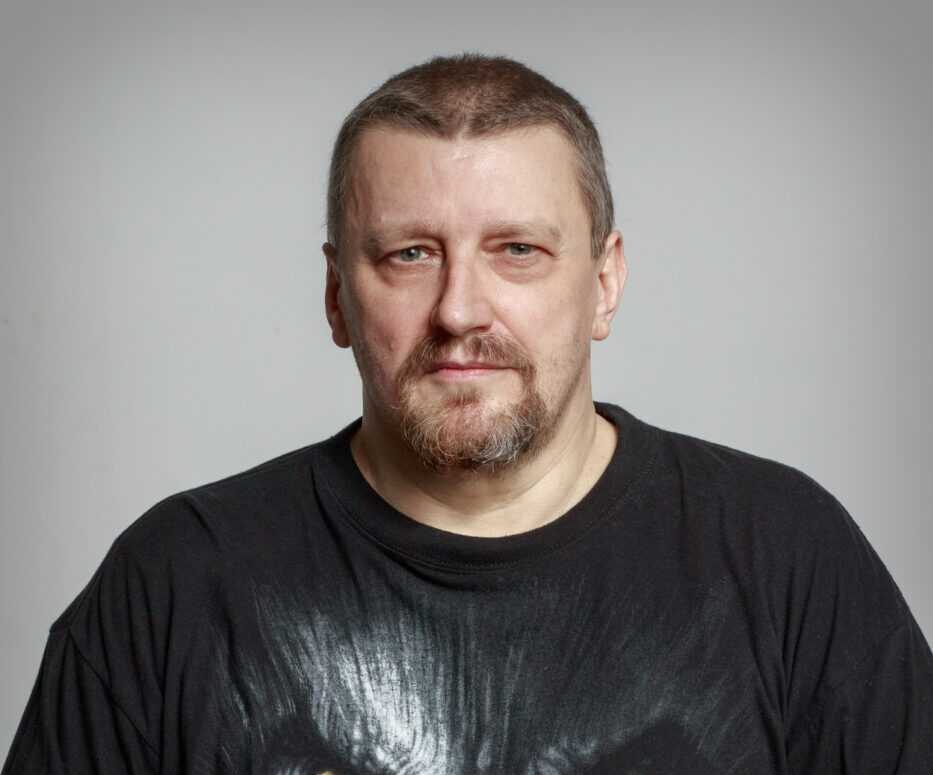
Jacek Piekara: One of Poland's most popular fantasy writers, a journalist, and a columnist. He is the author of the widely acclaimed "Inquisitor Series" (Cykl Inkwizytorski), dozens of books, and numerous short stories. Piekara has also contributed to specialized and popular press, including the magazines Click! and Gambler. In addition to literature, he writes scenarios for computer games and works as a publicist.


Zmień tryb na ciemny