Science
Before There Are Planets, There Is Dust
16 October 2026





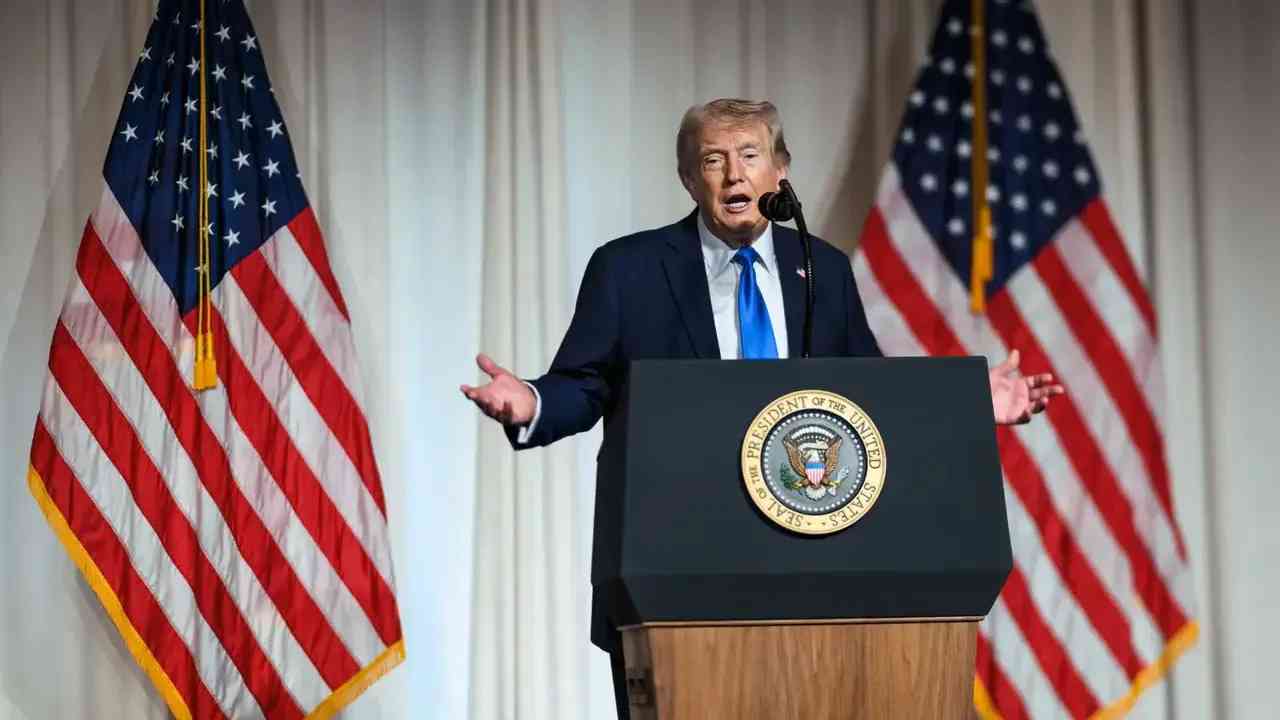
For years, Donald Trump built the image of a brutally honest politician: improper, harsh, but real. Trump and Iran war shattered that myth. For many of his own voters, this is no longer merely a dispute about strategy. It has become a question of whether the president of the United States can still be believed.
Tijuana, a city of 2 million people, has for years remained among the 10 most dangerous cities in the world. Statistically speaking, it is 100 times easier to die on the streets of Tijuana than in an average Polish city. Yet the activity of local cartels affects not only the lives of Tijuana’s residents. The issue, of course, is drug smuggling and the movement of illegal immigrants, problems the Americans had failed to deal with for years. Under Joe Biden, in particular, the situation looked exceptionally bad.
When I came to this border city in February this year — San Diego lies on the other side — in the north-westernmost corner of Mexico, residents told me that for a year the situation at the border had looked completely different: calmer.
Eduardo, a taxi driver from Tijuana, drove me from the beach toward the city centre and talked about life in the shadow of the border wall.
You used to see people jumping over the barrier. It wasn’t a big problem. The Americans didn’t have enough Migra,
Eduardo said, using the colloquial term for Border Patrol.
But now that’s history. You can’t do it that way anymore, because they’ll catch you quickly. If you want to try your luck, you have to look somewhere far out in the desert, where there are no people and the wall is less secure.
This is how Donald Trump fulfilled the most important of his campaign promises on domestic policy. During Joe Biden’s term, at the height of the border crisis, when real caravans of migrants moved toward the United States, encouraged by reports of the practical capitulation of local border enforcement, more than 2 million apprehensions were recorded each year.
In truth, it is hard to estimate how many people managed to enter the United States illegally. As U.S. Customs and Border Protection recently indicated, in the first months of Trump’s presidency that number fell by 92 percent.
The Trump administration invested in Border Patrol, but it also ended the liberal rules that allowed detained illegal immigrants to wait freely in the United States while their asylum claims were processed. Sending such signals inevitably reduced the number of people interested in crossing the border illegally. And this, after all, was one of the most important issues in the eyes of American voters.
“Ordinary” Americans could not understand how the most powerful country in the world could fail to control its southern border effectively, while millions of illegal arrivals poured through it and destabilised the country internally. On the other hand, Trump clearly overplayed this policy when he sent ICE agents into the streets of American cities to catch illegal immigrants.
The agents conducted these operations so aggressively that 2 people protesting against the policy were killed by them in Minnesota. Trump, in a sense, admitted that things had gone too far when he announced that he would pursue “de-escalation.” And indeed, ICE operations are no longer quite so ruthless.
Trump also introduced the higher tariffs on foreign products that he had promised. The goal of this tariff policy was supposed to be action in the public interest: making it profitable again to manufacture various goods in America and bringing some manufacturing jobs back to the United States from Asia. Here, however, the balance sheet is not clear.
On the one hand, tariff revenues tripled compared with the previous year, and some industries — steel and aluminium producers, for example — strengthened their position thanks to this protection. Yet despite Trump’s promises, American consumers largely covered the increase in tariff rates. The cost was passed on to them.
Another issue is that the Supreme Court — to the undisguised fury of the U.S. president — ultimately ruled that the tariff mechanism he had introduced was unconstitutional. As a result, the Treasury will have to return 166 billion dollars to importers. Consumers are unlikely to receive anything from that sum.
Biden’s successor also carried out the anti-woke counter-revolution with determination, removing from government the institutions that promoted various shades of “equity” politics. Trump’s words from his inaugural address became the symbol of that shift:
As of today, it will henceforth be the official policy of the United States government that there are only 2 genders: male and female.
The counter-revolution also reached American universities, which faced a clear choice: either abandon the implementation of a radical left-wing agenda in the spirit of woke politics, or lose federal funding. Yet there was a catch. While trying to cleanse America’s best-known universities of the effects of the radical left-wing revolution — including the presentation of white people as a problem for society — the Trump administration also made sure there was no antisemitism on campus. The term, however, was understood so broadly that virtually any criticism of the State of Israel could fall under it.
Matthew Lohmeier, a retired U.S. Air Force officer, is a good example of the anti-woke counter-revolution. He was removed from service during Biden’s term. The reason for his exclusion from the ranks of the U.S. armed forces was the fact that he had written a book titled Irresistible Revolution: Marxism’s Goal of Conquest & the Unmaking of the American Military.
In it, Lohmeier warned that the radical left was indoctrinating young soldiers and causing racial divisions to appear in the U.S. military, something that, in his view, had not happened before. He considered this a dangerous phenomenon, because soldiers were no longer concentrating entirely on their basic tasks — training for combat in order to defend the United States — but were being distracted, for example, by “trainings” on “problems related to white skin.”
Lohmeier spoke about this threat with passion, as I learned when I interviewed him. Last year, this U.S. Air Force officer, once expelled from the military, was appointed to the Pentagon as under secretary of the Air Force, where his responsibilities included removing elements of woke ideology from the armed forces.
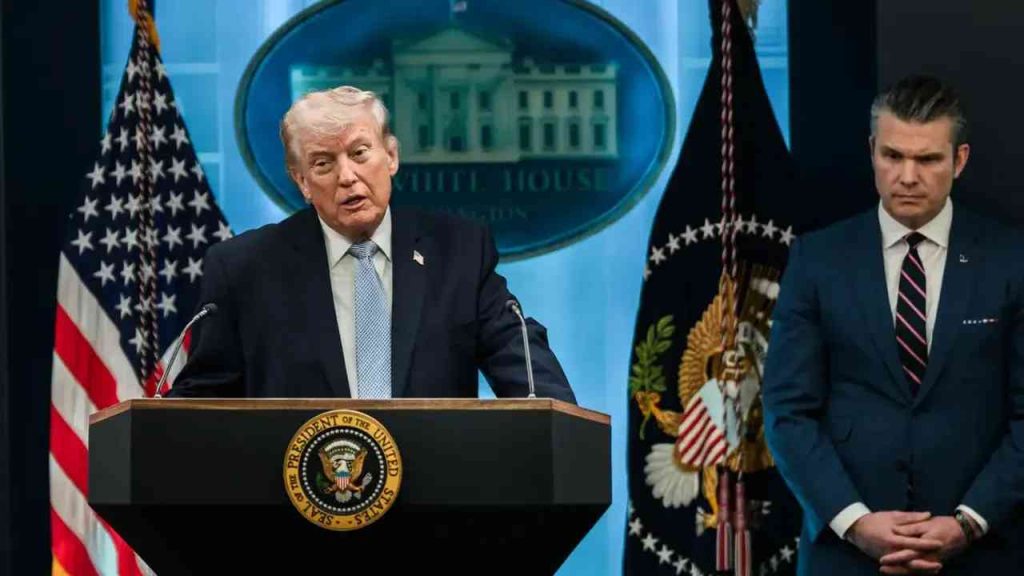
The question of truth in Donald Trump’s political life looks much worse in foreign affairs. The loudest political “divorce” may serve as a symbol here. Tucker Carlson is not a politician, but a commentator with an audience in the millions. Still, he deals with politics. And by supporting Donald Trump so explicitly for years, he inevitably moved beyond a purely media role.
As often happens in divorces, this break-up too is full of bad emotions and bitter words. The American president called the famous commentator “low IQ,” while Carlson described his former political guru as a “slave” — of Israel. A few days later, the commentator went even further: he officially apologised to conservative voters for having urged them 3 times in the past to vote for Trump.
What caused this great split? Carlson now tells his fans on the American right that Trump spectacularly lied to all Americans about the war with Iran. In his view, this was not “ordinary” political manoeuvring, but a betrayal of the slogans that had formed the foundation of the Make America Great Again movement. Trump’s America was supposed to stay away from distant, unnecessary wars that did not serve its vital interests.
Carlson had already drawn attention to what he saw as the absurdly large influence of the Israeli lobby on Washington’s foreign policy. But since February 28, the famous commentator has put the matter plainly: in Iran, Trump is serving Israel’s national interest while also damaging America’s position.
Trump’s right-wing critics point out that in successive campaigns he condemned previous U.S. presidents who entangled America in unnecessary wars. These were wars that Americans — despite brilliant battlefield victories — could not win on the most important field: the political one. And although Trump said directly on the campaign trail, “In the future, we will keep our country out of endless wars,” a year after beginning his second term he ordered U.S. armed forces to fight in the Middle East once again.
What is more, in his inaugural address in January 2025, he stressed:
We will be like no other nation: full of compassion, courage and exceptionalism. Our power will stop wars and bring a new spirit of unity to a world that has been angry, violent and completely unpredictable.
Today, when Donald Trump’s decision to attack Iran threatens the whole world with economic turmoil, and the United States may suffer a humiliating defeat with far-reaching consequences, those words sound like a grim joke. That is exactly why Trump must now face record-low support. According to the latest polls, around 2/3 of Americans believe the president is leading the country badly.
Americans see the effects of this turmoil especially clearly at petrol stations. Fuel prices have risen over the past 2 months to levels seen under the Biden administration — which candidate Trump, not incidentally, had presented as one of the Democratic president’s greatest failures.
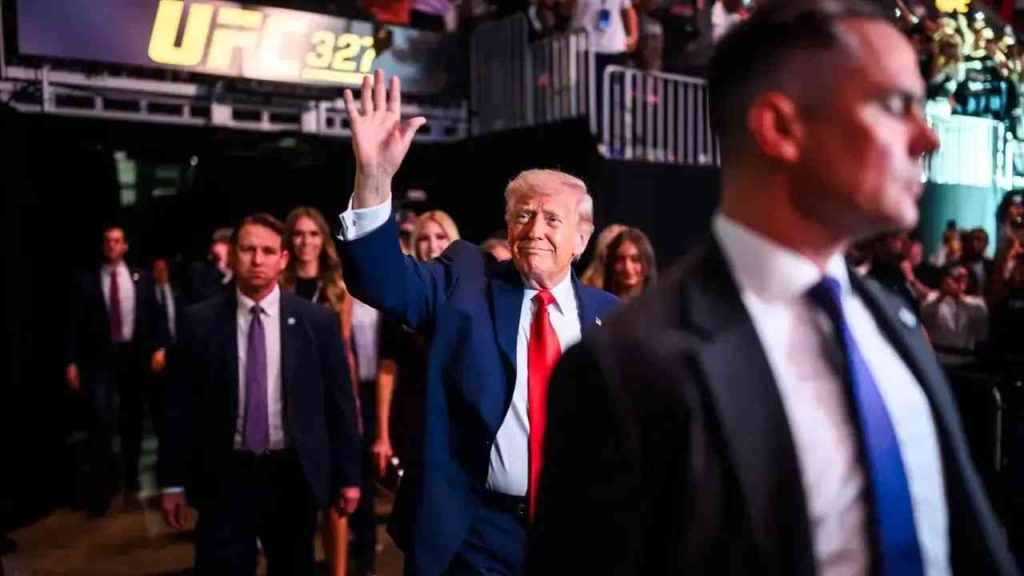
Such a spectacular trampling of promises made to voters on foreign policy, and the unleashing of a war with Iran that may prove hard to end, does not exhaust the problems connected with Trump’s attitude toward his own words — and, more broadly, toward reality — amid the turmoil in the Middle East.
For two months, the world has watched the U.S. president manoeuvre, bend reality and often simply lie, trying at all costs to show that America controls the situation and that a “great victory” is just around the corner. The goal, of course, is to calm the markets and push the price of crude oil down, if only a little.
Until now, business generally believed the U.S. president when he said that Iran was already on the ropes and wanted an agreement, so lifting the blockade of the Strait of Hormuz was only a matter of days. Yet each new assurance, soon mocked by Iran, means that — to put it mildly — the frugal handling of truth by the president of the world’s greatest power, the leader of the West, may have disastrous consequences. The business world may simply conclude that statements from the occupant of the White House mean very little.
When the words of the American president lose value so quickly, the foundation of all negotiations and agreements is also damaged. Can one seriously talk to a man who so openly misses reality and trust that any arrangements will be honoured?
John Bolton, who served as Trump’s national security adviser during his first term and later fell into sharp conflict with him, has his own theory here.
Trump can’t tell the difference between what’s true and what’s false,
Bolton said on CNN during the last presidential campaign.
It’s not that he lies a lot, because to lie you have to do it consciously. He simply doesn’t know the difference.
Bolton was referring to a situation in which Trump, during a press conference, maintained that other people around him had demanded prison for Hillary Clinton, while he himself had never expressed such thoughts and had even been “very protective” of her. Meanwhile, recordings from Trump’s rallies are easy to find online, and in them he said directly that Clinton should go behind bars.
Whatever the truth looks like here — whether Trump consciously uses lies, or whether Bolton is right and, for some reason, Trump confuses reality with his imaginings — the fact remains that the U.S. president’s attitude toward truth may have dangerous consequences.
This was visible long before February this year, before the attack on Iran. After losing the election in November 2020, Donald Trump reached for improbable conspiracy theories, grasping at every chance to overturn the democratic verdict of American voters. And although one cannot point to a statement in which Trump called on his supporters to attack Congress, many of the people who stormed the Capitol in January 2021 ultimately did so because they believed the lie about the “stolen” election.
Worth reading: Started by Tragedy: How Delta Force Became Invincible
Read this article in Polish: Obiecał spokój, wybrał wojnę. Trump ma dziś poważny problem


Journalist with a degree in American studies, writing mainly about foreign policy and history. Author of numerous reports on international issues and interviews with leading experts in the field of economy, geopolitics and history. Since March 2023, editor-in-chief of the monthly "Historia Do Rzeczy".



Zmień tryb na ciemny