Culture
A Life Spent Becoming Someone Else’s Ideal
12 October 2026





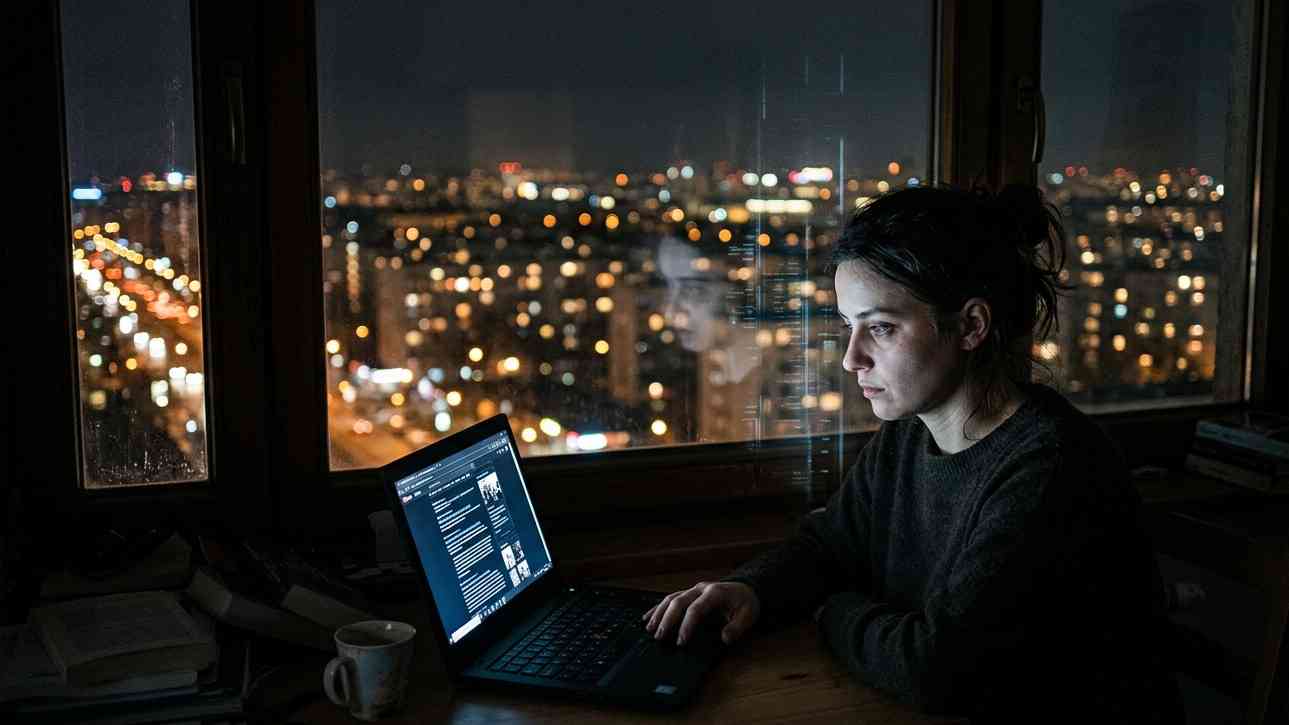
Internet fragmentation no longer sounds like a problem for diplomats, engineers, or policy papers. It begins when a parent’s phone stops warning them that a child’s blood sugar has fallen. Close your eyes for a moment. Think of a small child with diabetes. His parents have an app on their phone that tracks his blood glucose level in real time and sends an alert the moment something troubling happens. One day, the government announces an internet shutdown. The reason? Purely political: security measures, the informational sovereignty of the state, protection against foreign influence. The app stops working. The parents lose access to the data, and their child soon ends up in the emergency room.
For 3 decades, we were sold the internet as a civilizational project. When Tim Berners-Lee designed the World Wide Web in 1989, he imagined a tool for scientists: an instant, horizontal exchange of knowledge across borders. Over the following decades, that project grew beyond anything its creators could have imagined. According to ITU data from November 2025, 6 billion people now use the internet, or 3 quarters of the world’s population. The problem is that the single, shared internet disappeared long ago.
China went first. The Golden Shield is a system for filtering and blocking content, built into the architecture of the network itself. It has operated since the early 2000s. Facebook, X, formerly Twitter, YouTube, and Google are simply absent there. In their place, Beijing has cultivated its own ecosystem: Weibo, WeChat, Baidu. This is a parallel internet, with its own logic, its own hierarchy of values, and, most importantly, its own version of reality, tailored to the party’s command.
Russia chose another path, though the goal remained the same. The 2019 law on the “sovereign internet” created the infrastructure for the full isolation of the Russian network. RuNet formally remains connected to the global web, but it has a “kill switch.” During the invasion of Ukraine, Russia systematically redirected traffic from Ukrainian connections to Russian servers. People living in occupied territories woke up to find, with astonishment, that their internet described an entirely different war.
The West does not build walls in such a crude fashion, but it too has ceased to be neutral. The United States chose an architecture dominated by giant platforms and the advertising model. This is not state censorship, but a ruthless selection of content according to emotion. Algorithms feed us whatever will move us, because only rage or ecstasy keeps us in front of the screen long enough to generate profit. Europe, meanwhile, tries to tame the network through regulation, though its efforts are hardly free from controversy.
Splinternet is the term researchers use for the ongoing breakdown of the global network into isolated, local spheres of influence. Julien Nocetti of the French Institute of International Relations points to 3 layers in which this secession takes place.
The first is the technical layer: routing protocols, domain name systems, connection standards. China has actively lobbied international standard-setting bodies for a new internet architecture with a built-in “stop” protocol that would allow a central authority to cut off any IP address from the rest of the network. The second layer is geopolitical: data localization, internet shutdowns, the exclusion of companies from infrastructure. The third is commercial: Big Tech platforms build closed digital gardens, so-called walled gardens, where they treat the user as a resource to monetize, not as a citizen with rights.
In 2026, we must add a fourth layer to this list: the algorithmic one. This is the condition in which billions of people within a given sphere of influence receive content precisely sifted by algorithms designed by a single government or a single corporate circle. The result? No shared base of facts. In its place, we get parallel worlds built from data that will never meet.
Take a concrete example. The COVID-19 pandemic was a global event: the same virus, the same epidemiological data. Yet in the Chinese information sphere, it became proof of the effectiveness of state discipline and of the superiority of the collective good over individual freedom.
In the Western sphere, it became a battlefield between individual liberty and duty to the community, with algorithms amplifying both poles depending on which one produced more engagement. In the Russian sphere, it became proof of the failure of Western systems and the moral superiority of the Russian model. The same virus. 3 radically different conclusions about how we should live.
A term has made a swift career in geopolitical circles in recent years: cognitive sovereignty. States no longer speak only of territorial or economic sovereignty. They have begun to speak of sovereignty over the way their citizens understand reality.
In April 2026, China’s development commission blocked Meta’s acquisition of Manus, a Chinese artificial intelligence startup. The transaction was reportedly worth 2 billion dollars. The reason for the blockade?
The official answer was national security. A less formal version might sound like this: AI models, engineering talent, and the intellectual property behind algorithms have become inalienable strategic assets, things one cannot sell to an enemy camp without selling something far more valuable along the way. The game, then, was not about billions of dollars. It was about the perception of millions of citizens.
Over the past several years, we have learned how to talk about disinformation. Fact-checking, algorithms that fight false information, turning to reliable sources instead of blindly trusting whatever we see on social media — all of this matters. But it is not enough.
Fake news assumes that a shared information space exists, one in which true and false messages circulate, and that we simply need to learn how to tell them apart. Splinternet removes that shared space. You do not need to lie or pretend anything if you control which questions people ask online in the first place.
Participants at the 2025 SplinterCon conference in Paris put the matter plainly: network fragmentation stopped belonging solely to geopolitics a long time ago. It has moved into our heads. Today, the divisions do not run only across maps, but through the structure of our psyche. Recommendation systems no longer merely select content. They have become attention engineering, designing loops of emotional dependence.
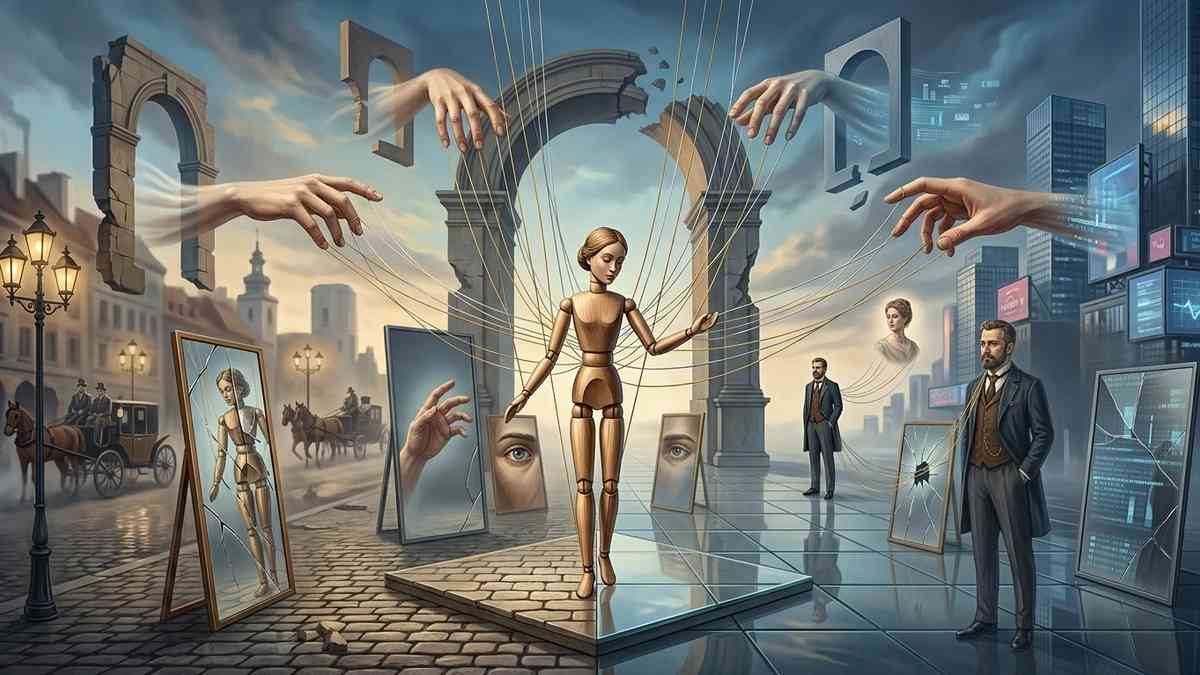
In the digital clash of systems, a brutal asymmetry prevails. Autocracies — Beijing, Moscow, and Tehran — have sealed off their own backyards while freely infecting the Western network with disinformation and algorithmic pressure. As the political scientist Asma Mhalla observes, this “porosity” of democracy allows regimes to interfere cheaply in our societies. Western attempts to build “clean networks” mark only another phase of fragmentation: raising walls in defense of freedom, and in doing so, making ourselves resemble those from whom we are trying to defend ourselves.
The story of the child with diabetes and the disabled app matters precisely because of its banality. It could happen to anyone. The breakdown of the internet is not a cyberpunk war. It is the sum of bureaucratic decisions that cut us off from a shared base of facts.
For decades, we believed the network would become a universal language, one that would bring down the Tower of Babel. Today, as we face global crises, climate challenges, and the regulation of AI, we discover that we have no one to talk to. Splinternet does not take away our voice. It takes away our interlocutor.
We are not merely living through an age of disinformation. We are living through a radical severing of connection. On the other side of the wall, there is the same virus, the same planet, and the same drought. But internet fragmentation has taught us to stop knowing that together.
Read this article in Polish: Cyfrowe getta. Dlaczego internet przestał być wspólnym językiem


Content marketing specialist with his heart in journalism and English translations. An active writer for 20 years. Majored in economy. He has authored several non-fiction books, one of which won an award at the Ladek Mountain Festival. Sports, hard rock, and Italian cuisine afficionado.


Zmień tryb na ciemny