Humanism
What Happens When Winning Stops Being Proof of Worth?
11 October 2026





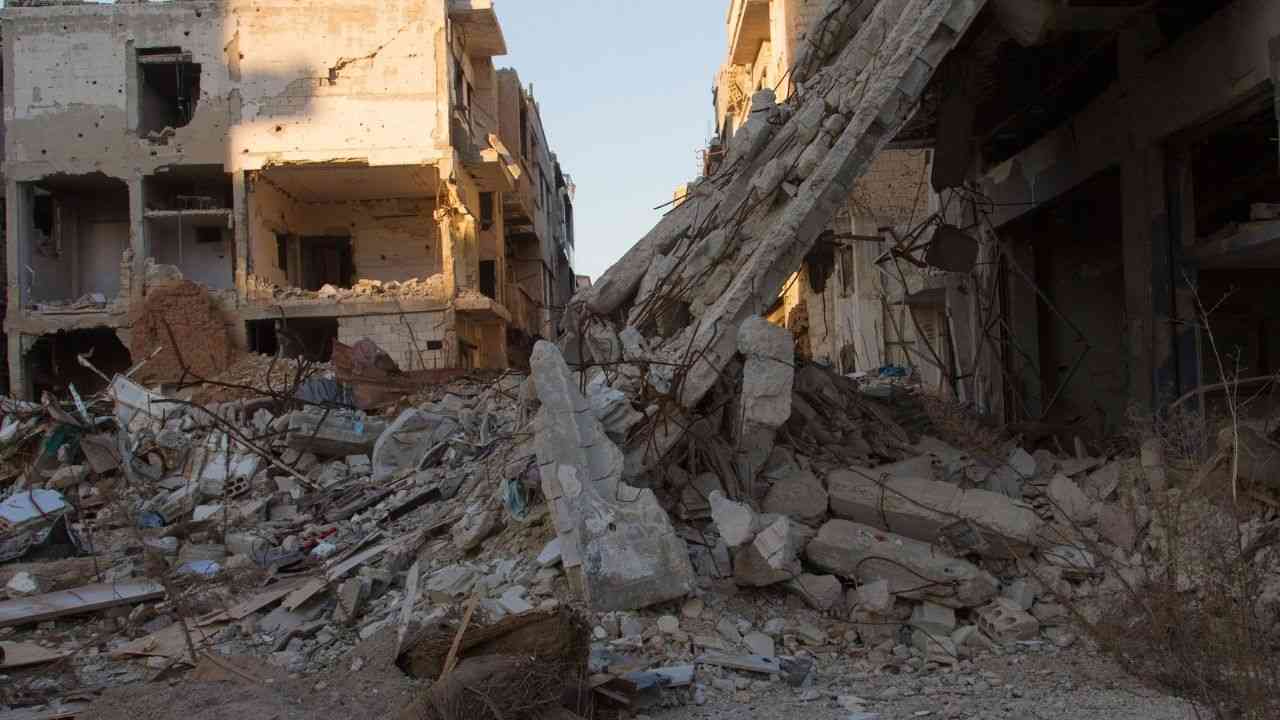
When we think of World War III, we imagine missiles, nuclear weapons, and states drawn into a vast conflict. Yet an analysis of BBC, CNN, and Al Jazeera shows something more interesting: before catastrophe becomes fact, the media give it meaning. And each outlet can do so differently.
A researcher from Mindanao State University–Iligan Institute of Technology analysed how 3 major international media outlets portrayed the escalation of the conflict between Iran, Israel, and the United States. The analysis covered 45 deliberately selected press articles from 3 newsrooms, published between June 2025 and May 2026.
In her research, Christine B. Tenorio asked 1 question: how do media construct images of a potential global catastrophe, including World War III, even when they do not predict that such a war will actually break out? It turned out that, despite clear differences between the 3 newsrooms, 3 kinds of threat appeared especially often.
As we read in the article published in the academic journal Frontiers in Political Science, each newsroom presented the same 3 themes: nuclear anxiety, the risk of the conflict spreading to other regions, and economic disruption. The differences between the individual media outlets were far more numerous.
BBC News built its narrative around a catastrophe linked to the collapse of the international order. Its journalists emphasised the weakening of international rules, threats to the rules-based order, and the failure of diplomacy. According to BBC News, conflict between states is a symptom of a broader instability in the system — the gradual destruction of the principles that regulate relations between countries. In this narrative, voices of experts in international law, diplomats, and institutional analysts appeared frequently.
CNN International took a somewhat different direction. Its journalists focused more on the conflict as an uncontrolled escalation. They emphasised strategic mistakes, leaders’ loss of control, conflicting political objectives, and a spiral of retaliation. The conflict in question was presented as a problem of government, in which political decisions may lead to consequences that can no longer be stopped.
CNN International’s articles devoted considerable space to uncertainty about the further course of the conflict and to possible scenarios for its conclusion. Voices of intelligence officers, military analysts, and strategy experts appeared frequently in the coverage.
The final outlet analysed by the researcher from the Philippines was Al Jazeera English. The service focused above all on the conflict as humanitarian devastation. That is why it placed civilian suffering, displacement, casualties, destruction, and the social costs of conflict between states in the foreground.
Military escalation, in turn, was criticised as a failure of diplomacy and as evidence of the limits of an approach based on force. This perspective was strengthened above all by voices from the Middle East, regional experts, humanitarian organisations, and the communities directly affected by the conflict.
The differences in how media interpreted and approached the Iran–Israel–US conflict show that World War III functions like a floating signifier. The term has no single fixed meaning. Instead, it changes depending on context and on the way the story is told. The media outlets examined in the study differed in how they looked at the same situation. But there is something else as well.
The young researcher from the Philippines also presented the image of catastrophe that media create on their platforms. She showed that the 3 newsrooms analysed do not merely describe the present. They also build images of possible future crises. And these narratives may represent a particularly important form of media influence on public opinion.
Such messages can help shape the way audiences understand geopolitical risk, the future of the international order, and the assessment of political action. Wars are fought not only on the front line, but also at the level of narrative. And narratives have real consequences for politics and public debate. Before World War III becomes a political reality, media narratives may already have taught us what to fear.
Read this article in Polish: Wojna jest ta sama. To, czego mamy się bać, zależy od medium


A graduate of journalism and social communication at the University of Rzeszów. She has been working in the media since 2019. She has collaborated with newsrooms and copywriting agencies. She has a strong background in psychology, especially cognitive psychology. She is also interested in social issues. She specializes in scientific discoveries and research that have a direct impact on human life.

Zmień tryb na ciemny