Culture
A Life Spent Becoming Someone Else’s Ideal
12 October 2026





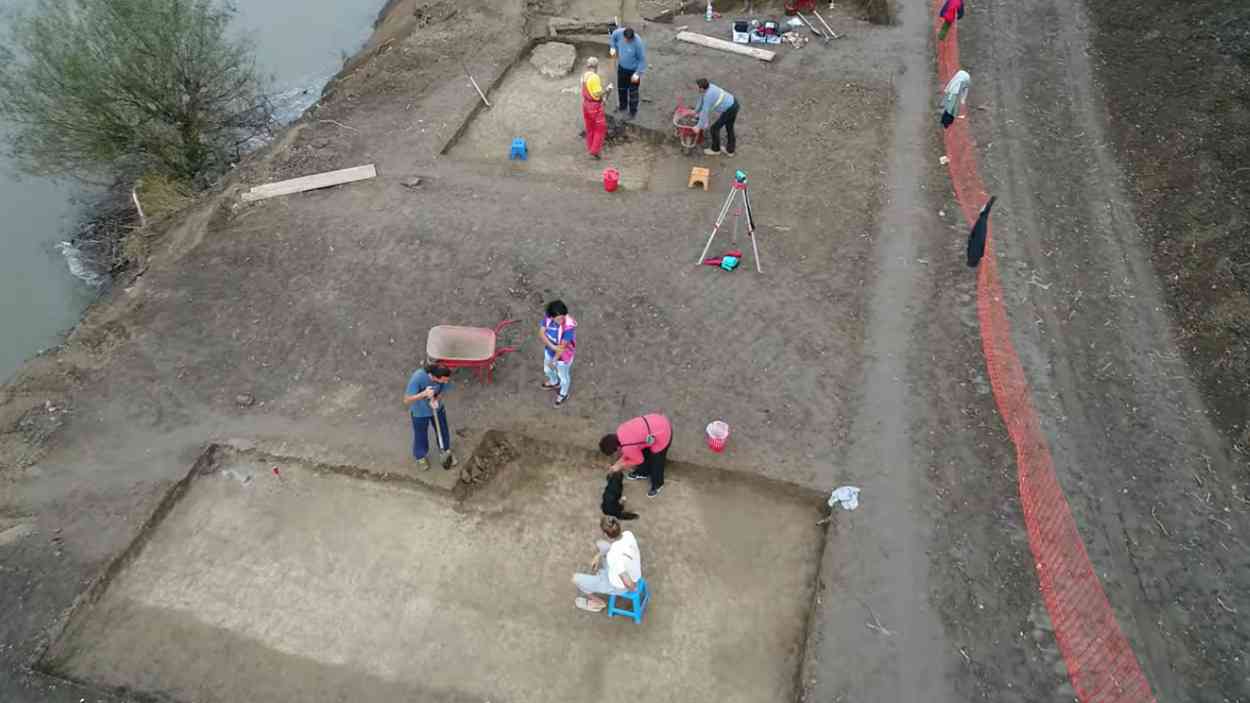
A single pit held 77 women and children—the victims of a brutal, calculated execution carried out 2,800 years ago. For nearly half a century, their bones lay forgotten in a museum basement. Today, we know this was no battle between armies. Cutting-edge DNA testing and trauma analysis have finally unmasked the details of this horrific crime, revealing the secrets of the Gomolava mass grave.
Deep within the Pannonian Basin in Serbia, archaeologists have unearthed evidence of one of prehistoric Europe’s most chilling atrocities. They discovered the Gomolava mass grave, where 77 individuals were interred. This was no haphazard burial; these were the victims of a mass execution during the Iron Age—primarily women and children, with a startling focus on young girls.
For decades, these remains remained anonymous, stored in the Museum of Vojvodina in Novi Sad, Serbia. Only this year, thanks to the latest technologies utilized by researchers, have we finally uncovered the gruesome details of this ancient massacre.
Gomolava was a settlement inhabited multiple times, spanning from the Neolithic to the Roman period. It sits on the left bank of the Sava River, near Hrtkovci. The oldest structures were built of wood and clay. Over the centuries, these buildings burned down, only to be replaced by four successive cultures.
During the Iron Age, a tribe from the east inhabited the area. Remains of ceramic kilns from this era suggest a sophisticated level of craftsmanship. Much later, the site transformed into a vast Roman necropolis.
As successive settlements rose in Gomolava, the region was far from stable. Tensions and land disputes likely led to the mass execution that took place 2,800 years ago. Although the initial discovery occurred decades ago, the remains waited over half a century for science to provide the answers to key questions.
Recently, researchers from the University of Edinburgh and the University of Oxford conducted comprehensive analyses to reconstruct the events. Their findings have brought us closer than ever to solving one of the Iron Age’s most mysterious cold cases.
According to a publication in the journal Nature Human Behaviour, the victims were, for the most part, not related. DNA analysis revealed that they did not even share common ancestral lines. This is a mass grave of individuals who did not belong to a single family or clan, yet were united by the same tragic fate.
Experts examining the Gomolava site determined that the victims died from stabbings and powerful blows to the head delivered with blunt instruments. The angle of the strikes suggests they came from above, most likely from an attacker on horseback. The bones also bear defensive wounds, hinting at desperate attempts to escape or fend off a surprise attack. The evidence is undeniable: this was a deliberate, mass execution targeting the most vulnerable members of a community.
Despite the extreme violence the victims endured, the Gomolava mass grave was prepared with surprising care. Archaeologists found personal items in the pit, including jewelry and drinking vessels. Numerous animal bones lay alongside the human remains.
Buried with the women and children were a dismembered calf, grinding stones for grain, and charred seeds. These items point to a conscious funeral ritual rather than a hurried attempt to hide the evidence of a crime. Notably, the pit was never looted—a rarity for that period.
The selection of the victims remains the site’s greatest mystery. Approximately 87 percent of the deceased were women and girls. This suggests a deliberate selection process rather than a random act of war. In the Iron Age, women were more commonly taken as captives than slaughtered on such a massive scale.
One hypothesis posits that the victims belonged to an elite agricultural class and fell victim to feuds between groups competing for the same territory. Another suggests a strategic motive: a purposeful killing intended to weaken local social networks and sever ancestral lineages in the 9th century BCE.
The brutal killings and the subsequent commemoration of this event can be interpreted as a strong attempt to rebalance power relations and assert dominance over land and resources,
– said Dr. Linda Fibiger, one of the study’s authors, in an interview with the European Research Council portal.
The study’s authors link the mass execution to the period following the Bronze Age collapse. This was an era defined by the influx of mobile groups and the resettlement of various regions. Such migrations often led to intense land conflicts between newcomers and established settlers. While many questions remain, one fact is certain.
Dental analysis revealed diverse diets among the victims, suggesting they came from different backgrounds. Roughly 35 percent of the victims were born outside the Gomolava area. This indicates they may have been forcibly relocated or captured before their eventual execution.
The latest archaeological findings in Serbia complete the story of two distinct pits. Over 50 years ago, not one, but two deep pits containing remains were discovered at this site. The second pit, identified earlier, contained the bones of 36 people—though some sources suggest up to 54. Analysis confirmed that this site, too, held primarily women and small girls.
These findings bring order to the history of the mass burials of women and children in the region. While many questions linger, scientific research is finally restoring the identity of a community whose remains waited nearly three millennia for their story to be told. The Gomolava mass grave stands as a haunting testament to a forgotten struggle for power and survival.
Read this article in Polish: 77 ciał w jednym grobie. Kto wydał wyrok na kobiety i dzieci?


A graduate of journalism and social communication at the University of Rzeszów. She has been working in the media since 2019. She has collaborated with newsrooms and copywriting agencies. She has a strong background in psychology, especially cognitive psychology. She is also interested in social issues. She specializes in scientific discoveries and research that have a direct impact on human life.


Zmień tryb na ciemny