Humanism
The Answer Machine and the Vanishing Art of Doubt
08 July 2026





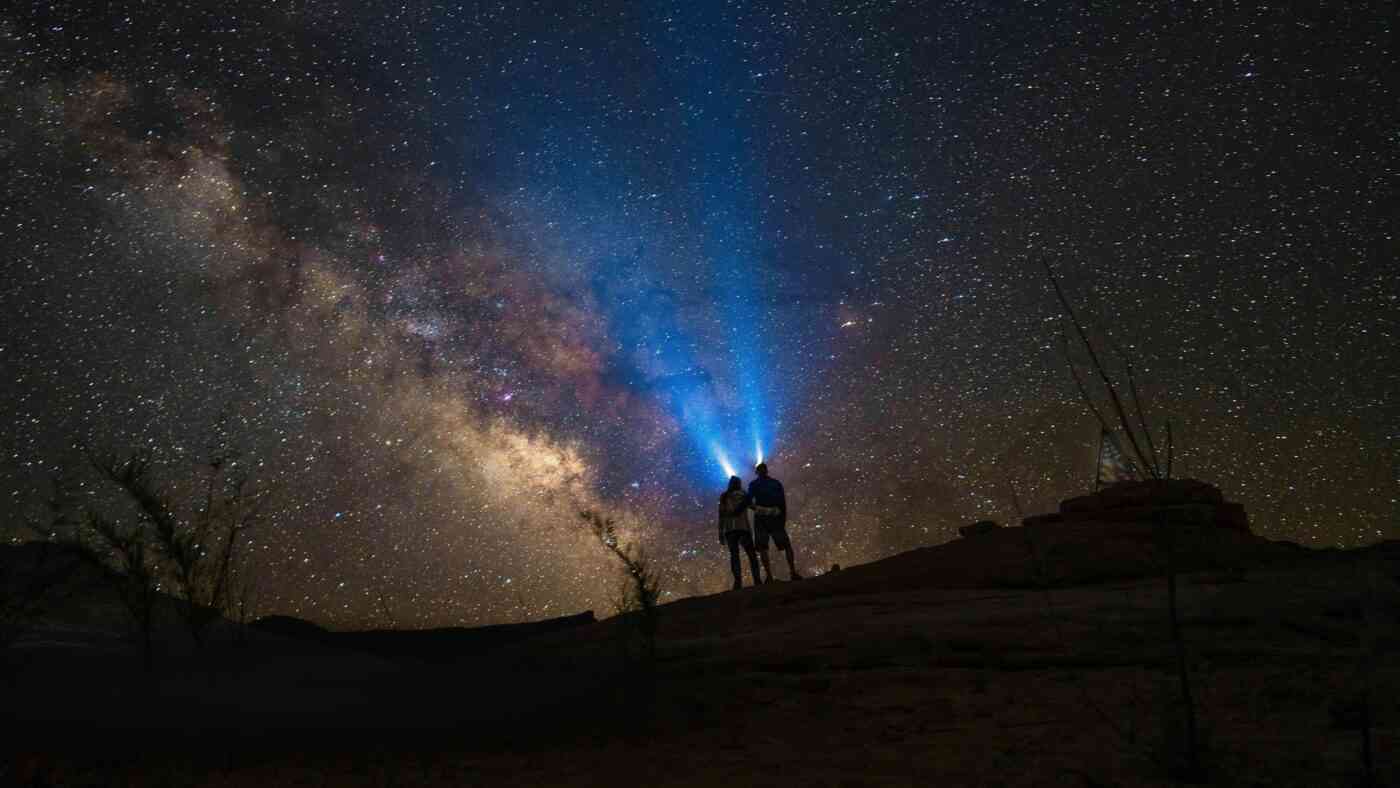
Donald Trump has pledged to release government documents regarding UFOs and extraterrestrial life. This decision came just days after Barack Obama’s viral comments about aliens, immediately sparking worldwide speculation. Do secret archives truly hide something more than classified military experiments? We may finally be close to uncovering the truth about UFOs.
In mid-February 2026, Barack Obama set the imagination of UFO enthusiasts on fire. During a conversation with YouTuber Brian Tyler Cohen, he was asked directly if aliens exist. The former U.S. President replied: “They are real, but I haven’t seen them.” He then clarified: “They aren’t being held in Area 51. There is no underground facility—unless there’s some giant conspiracy that even the President of the United States doesn’t know about.”
Obama further noted that while he hasn’t seen definitive proof of extraterrestrial visits, “statistically speaking, the universe is so vast that the chances of life existing somewhere out there are high.”
A few days after Obama’s viral remarks, Donald Trump announced the disclosure of secret information regarding UFOs. The President of the United States declared that he would direct the Pentagon and other government agencies to begin the process of “identifying and disclosing” documents concerning extraterrestrial life, unidentified flying objects (UFOs), and unidentified anomalous phenomena (UAPs).
Trump admitted to reporters that he “doesn’t know if aliens are real,” but suggested that he would help dispel the rumors by declassifying at least a portion of the materials. Currently, there is no certainty whether the government documents actually contain “hard” evidence of extraterrestrials, or if the President will declassify every secret. Regardless, it was enough to reignite the global debate.
The imagination of UFO enthusiasts is particularly fueled by Area 51, which Barack Obama mentioned. This is the codename for a strictly guarded U.S. Air Force base in the Nevada desert, also known as Groom Lake. For decades, it was a testing site for secret spy aircraft such as the U-2, the SR-71 Blackbird, and the F-117 Nighthawk. For years, any information regarding the base’s existence remained classified, and any “leaks” were denied. It wasn’t until 2013 that the CIA formally admitted that Area 51 exists.
The secrecy surrounding Area 51 served as perfect fuel for conspiracy theories. Over decades, Area 51 has become overgrown with myths related to UFOs and aliens. The most famous narrative links the base to Roswell. According to a popular version, the wreckage of a “flying saucer” from 1947 and the bodies of aliens were allegedly transported to Groom Lake, where the U.S. government supposedly keeps them in locked hangars to this day. These myths were fueled by witness accounts claiming to have seen “alien bodies” and alleged photos of alien autopsies.
A second, equally popular motif is the acquisition of UFO technology. In this story, engineers at Area 51 have spent decades dismantling extraterrestrial craft and copying their propulsion systems. This is claimed to be the source of leaps in stealth technology and aviation development. A separate category of myths involves stories of a massive, multi-level underground base beneath the desert, connected by a network of tunnels to other secret facilities in the U.S., where aliens supposedly live or are held for research.
However, no credible evidence to support any of these theories has ever been presented. Official reports and declassified documents speak exclusively of tests involving aircraft, drones, radar systems, and weaponry. These projects are likely the “strange objects” seen over the desert at a time when civilians had no idea such machines existed.
The U.S. government has never confirmed that any materials of extraterrestrial origin were stored at Area 51. Historians emphasize that the aura of mystery was intended to protect military programs from Soviet intelligence—not to hide aliens. Some commentators suggest that the military actually found the UFO myths useful. There is a documented case of an officer who allegedly provided fabricated photos of “flying saucers” to a local bar owner to divert attention from secret stealth aircraft tests.
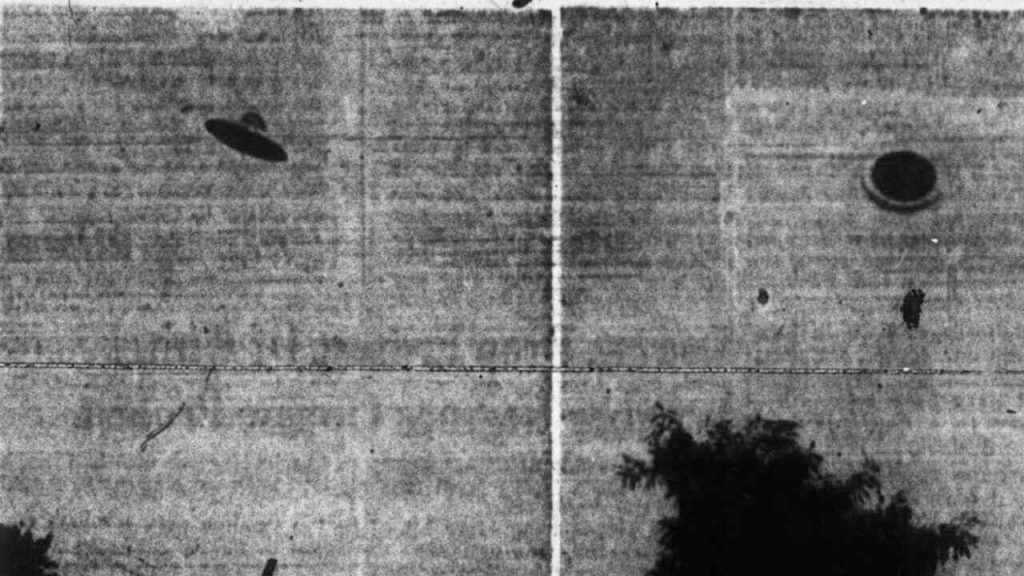
The most legendary encounter allegedly occurred in the summer of 1947 in Roswell, New Mexico. An object crashed on a farm near the town, initially described by local media as a “flying disc.” Shortly after, the army explained that it was a balloon used in a secret program called Project Mogul, designed to monitor Soviet nuclear tests. Since then, Roswell has become an icon for conspiracy theories about covering up a spaceship wreck and alien bodies, despite subsequent military reports consistently contradicting these stories.
After Roswell, the following decades brought hundreds of reports of “unidentified flying objects,” most of which could be explained as meteors, planes, balloons, or optical illusions. However, some cases remain unexplained—such as the 2004 incident, which became one of the best-documented UAP cases.
On November 14, 2004, the USS Nimitz carrier strike group was conducting exercises off the coast of California when radar spotted unidentified objects. For several days, these objects appeared at an altitude of approximately 24 km, dropped to sea level in seconds, and hovered.
One of them, named “Tic Tac” due to its shape resembling the popular candy, was observed by F/A-18 fighter pilots and recorded using an infrared camera. The object had no wings, engines, or visible propulsion, and its movements were unpredictable—ranging from stationary hovering over churning water to instantaneous acceleration. Government reports and independent experts have not yet provided a definitive explanation for the “Tic Tac.” Hypotheses mention sensor errors, atmospheric phenomena, or undisclosed tests of new technology, but hard evidence is missing.
On May 19, 1986, an event unfolded over southeastern Brazil that is still referred to as “UFO Night.” That evening, approximately 20 intense light objects were noticed across several states. The Brazilian Air Force scrambled five fighters that spent several hours trying to close in on them. Pilots reported objects changing colors, zigzagging on radar, and accelerating to speeds of 1000–1500 km/h without a visible propulsion source. The official report remained classified for nearly 20 years. When released, it confirmed numerous radar and visual observations but stopped short of attributing them to “extraterrestrials,” labeling them simply as unidentified aerial phenomena.
On November 11, 2014, a Chilean Navy helicopter recorded an object that remains unexplained. In the infrared footage, an object is seen moving at a speed similar to the helicopter at a similar altitude, which at one point ejects a “cloud” of matter visible only in infrared. Crucially, the object was not registered by civilian radars. After two years of analysis by experts in aviation, meteorology, and astronomy, a government commission recognized the case as “unidentified,” ruling out conventional aircraft, drones, weather phenomena, or space debris.
All these incidents were treated very seriously by governments. The United States has a particularly long history of institutional UFO research. In the 1950s and 60s, the U.S. Air Force conducted Project Blue Book, which analyzed thousands of reports and concluded in 1969 that UFOs did not pose a threat to national security and there was no evidence of “extraterrestrial” origin.
In 2020, the UAP Task Force was formed, followed by the AOIMSG, which in 2022 was transformed into the All-domain Anomaly Resolution Office (AARO). This government body deals with anomalies in the air, space, and underwater. AARO reports emphasize that most analyzed cases have probable explanations (balloons, drones), while the rest lack sufficient data to speak of “aliens.”
Similar structures exist elsewhere. France has the GEIPAN unit within the CNES space agency, and several South American countries have periodically formed UFO commissions. While they analyze radar data and pilot accounts seriously, none have publicly announced “proof of aliens.”
NASA is not formally an “alien hunter,” but it has played an important scientific role in UAP research. In 2022, NASA appointed an independent study team of 16 experts. In their final report from September 14, 2023, the team stated that “currently, there is a limited number of high-quality observations of UAP, which prevents solid scientific conclusions about the nature of such events.” Scientists admitted they found no evidence that UAP phenomena were caused by “extraterrestrial life,” but recommended using AI and machine learning to search for rare anomalies in large datasets.
Modern astrobiology does not focus on UFO reports but tries to determine how often planets conducive to life form in the galaxy. Telescopes like Kepler and TESS have confirmed thousands of exoplanets, including dozens where life could theoretically exist. Statistically, the fact that life exists “somewhere out there” is very likely. Yet, proof remains elusive.
For over 60 years, SETI programs have been listening for radio and optical technical signals from space, so far without confirmed results. It is on this “silence” that researchers like Claudio Grimaldi from EPFL build their models, trying to calculate what the lack of signals says about the density of civilizations in the universe.
Grimaldi utilized mathematical tools and Bayesian statistics to draw conclusions from 60 years of observational silence. In his view, the lack of detected signals doesn’t necessarily mean “we missed something,” but rather that signals from technical civilizations are very rare or far away. His model suggests that for us to have a high chance of detecting a signal today, an unrealistically large number of technosignatures—exceeding the number of potentially habitable planets in our region of the galaxy—would have had to pass through Earth.
In practice, this means our current chances of quickly detecting a signal from a nearby civilization are small. Long-term, wide-area surveys of the galaxy make more sense than hoping for a quick “accidental” signal from cosmic neighbors. Unless, of course, we have already received it. We might learn more about this after the UFO disclosure announced by Trump.
And if it turns out the government is hiding nothing? Will it convince conspiracy theorists? Highly doubtful. It is safe to assume that whatever the U.S. President reveals, the debate over the truth about UFOs will not be extinguished anytime soon.
Read this article in Polish: Trump otworzy archiwa UFO. Co naprawdę wiemy o kosmitach?


A Journalism and Social Communication graduate with 15 years of experience in the media industry. He has worked for titles such as "Dziennik Łódzki," "Super Express," and "Eska" radio. In parallel, he has collaborated with advertising agencies and worked as a film translator. A passionate fan of good cinema, fantasy literature, and sports. He credits his physical and mental well-being to his Samoyed, Jaskier.



Zmień tryb na ciemny