Culture
A Life Spent Becoming Someone Else’s Ideal
12 October 2026





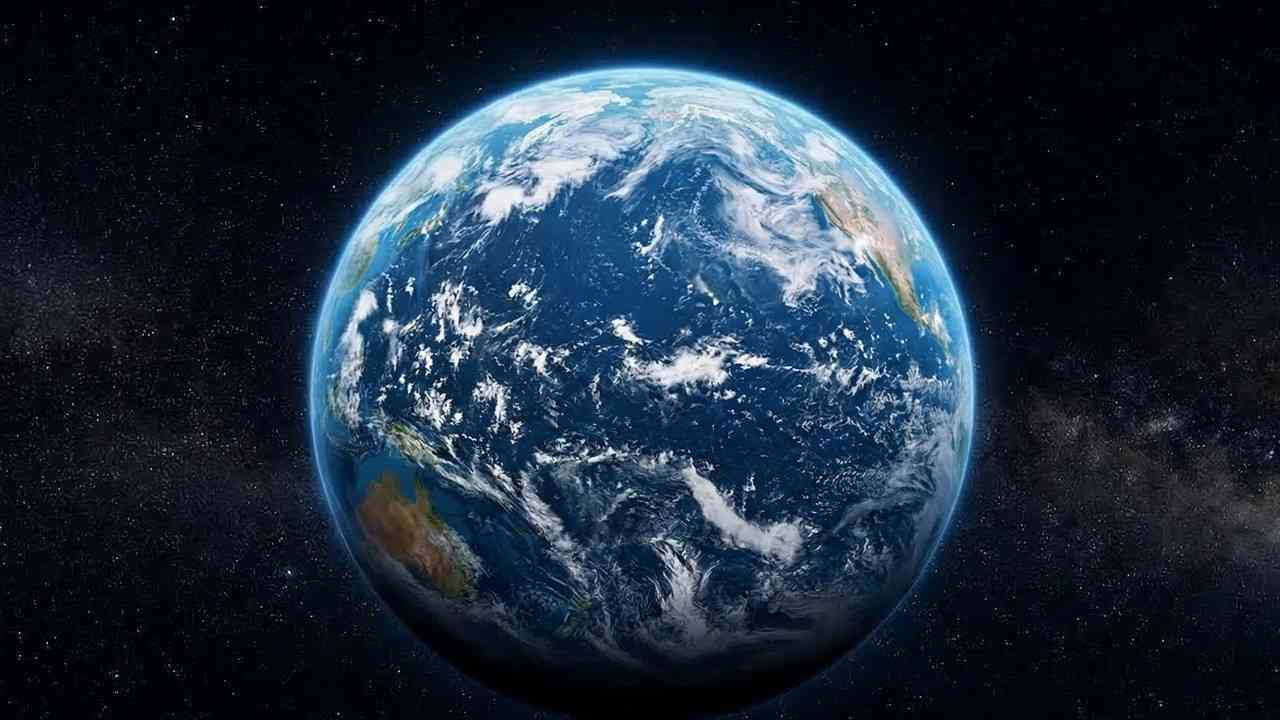
A revolutionary discovery may overturn long-held views on the origin of water on Earth. Could it have been with us from the very beginning? Are the theories claiming that comets and asteroids delivered our oceans finally collapsing under the weight of new evidence?
Researchers led by Dongyang Huang of Peking University decided to investigate the mystery of our planet’s hydration. To do so, they conducted an experiment simulating the extreme conditions present during the formation of the Earth’s core. In their laboratory, they recreated the crushing pressures and searing temperatures that once existed within deep magma oceans.
During the experiment, the researchers squeezed microscopic samples of iron (representing the liquid core) and hydrated silicate glass (corresponding to the ancient magma ocean) between diamond anvils. They heated these samples to nearly 5,000 degrees Celsius under pressures reaching 111 gigapascals. Subsequently, they extracted needles just 20 nanometers in diameter from these samples and subjected them to rigorous analysis.
This approach allowed them to directly observe how hydrogen bonds with iron, silicon, and oxygen under conditions mimicking the birth of the Earth’s core. The key finding revealed that the ratio of silicon to hydrogen in structures resembling the core sits at nearly 1:1. Since previous seismic studies provide a relatively clear picture of the core’s silicon content, the scientists could estimate the hydrogen levels based on these new findings.
The results proved startling. Estimates indicate that hydrogen constitutes between 0.07 and 0.36 percent of the Earth’s core mass. This represents a staggering volume—if we converted this hydrogen into water, it would fill between 9 and 45 Earth oceans. This figure reframes the Earth’s core as the largest reservoir of hydrogen on our planet, far surpassing the surface oceans, the lithosphere, and the atmosphere in this regard.
This really changes the way we think about the origin of our water,
– commented Professor Hilke Schlichting of the University of California in an interview with Scientific American.
This new discovery challenges the theory that comets and asteroids delivered the vast majority of our water after the planet had already formed. If the traditional theory held true, hydrogen should dominate the planet’s outer layers—the mantle and crust—rather than hiding deep within the core.
The fact that the largest hydrogen reservoir remains hidden in the core suggests that hydrogen entered the Earth’s interior while the core was still forming. The study’s authors argue for a more likely scenario: Earth “acquired” its hydrogen locally, harvesting it from the primordial, hydrogen-rich atmosphere and solid material originating from the early solar system.
Furthermore, this discovery carries profound implications for our understanding of the Earth’s magnetic field—the invisible “shield” that protects us from the solar wind. The movement of molten metal in the outer core generates this magnetic field. The composition of this metal dictates its density, circulation patterns, and heat exchange.
If the core contains far more hydrogen than we previously assumed, scientists must redesign the models describing how the Earth’s magnetic field forms and evolves over time. This indirectly touches upon the critical question of how long a planet can retain an atmosphere and sustain conditions hospitable to life.
These findings also resonate far beyond our own world. Until now, when assessing whether a distant exoplanet might harbor water, scientists focused heavily on whether it received enough ice from external sources like comets or icy asteroids. The discovery of significant hydrogen reserves in Earth’s core suggests that internal processes matter just as much. This shifts the criteria we use to search for potentially habitable planets. It turns out that a planet’s location within the “habitable zone” around a star matters, but so does the deep history of its interior.
While this discovery does not settle the debate, it certainly shifts the focus toward a new understanding of the origin of water on Earth. It moves the center of gravity from “comets that brought the oceans” to a “planet that was water-bearing from the start.” It also raises a host of new questions. How much of the hydrogen trapped in the core could have leaked into the mantle and reached the surface over eons? How did this change the climate and volcanic activity? Do similar processes occur on other planets? We do not yet know the answers, but they will eventually reveal whether the history of our water is a rare fluke or a universal blueprint for planets like our own.
Read this article in Polish: Skąd mamy wodę na Ziemi? Badacze odkryli „drugie dno” oceanów


A Journalism and Social Communication graduate with 15 years of experience in the media industry. He has worked for titles such as "Dziennik Łódzki," "Super Express," and "Eska" radio. In parallel, he has collaborated with advertising agencies and worked as a film translator. A passionate fan of good cinema, fantasy literature, and sports. He credits his physical and mental well-being to his Samoyed, Jaskier.



Zmień tryb na ciemny