Truth & Goodness
Played for Money. Gambling Addiction Was Taking a Life
13 September 2026





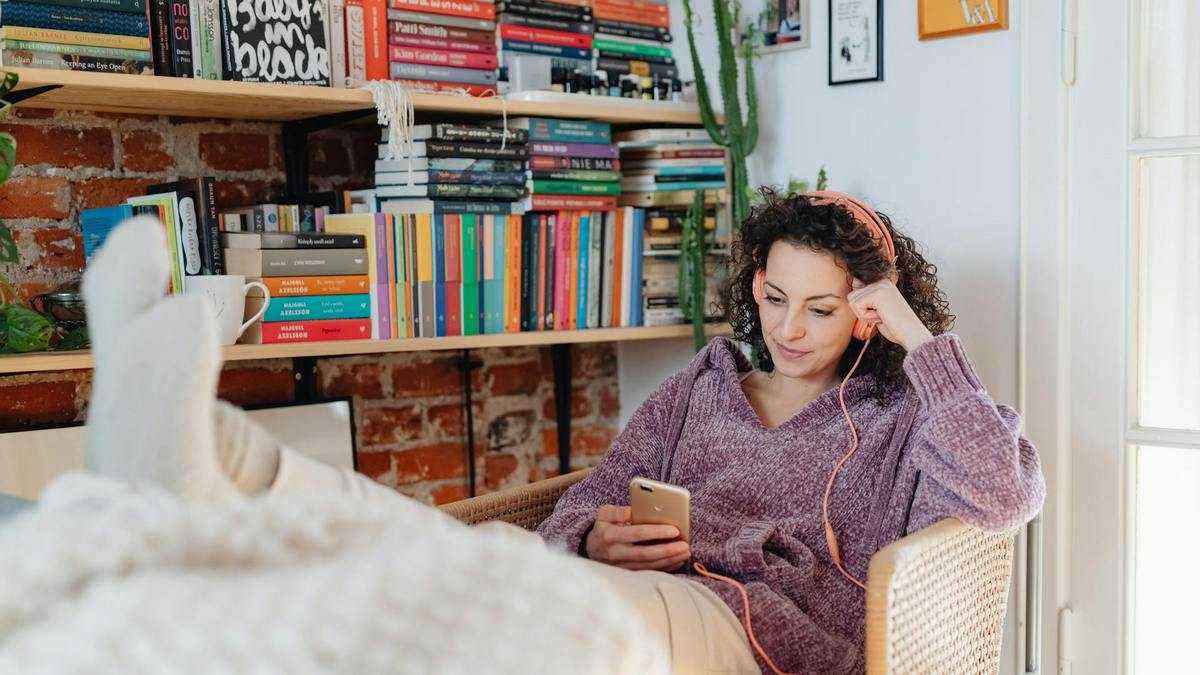
Do you feel like reading a new novel? Or would you rather listen to it? Audiobooks are now one of the biggest phenomena in the global book market. In recent years, they have also grown steadily more popular among Polish lovers of literature. But is listening to books just as valuable as reading in the traditional sense?
Books in audio form make up a very broad category. It includes both audiobooks, meaning recordings of a book read aloud by a narrator, and audio dramas, where the text is divided into roles and often accompanied by additional sound effects. More recently, the category has expanded to include audio series, that is, multi-episode productions designed for listening. Today, publishers sell and buy audiobooks in digital form, but books made available through streaming platforms are also gaining increasing recognition among listeners and readers alike. What lies behind the appeal of this medium, at once new and old?
As data published by Statista show, the global rise in interest in audiobooks began around the turn of 2020 and 2021. That trend was clearly linked to the outbreak of the COVID-19 pandemic. The need to remain within 4 walls for long periods pushed many of us to look for something that could partly compensate for forced isolation from the world and from other people. During the bleak everyday life of the lockdown era, series, video games and audiobooks became a form of escape.
Jacek Piekara, a fantasy writer and author of the bestselling Inquisitor Cycle, has also pointed to the link between the pandemic and the sharp rise in sales of spoken books. In a comment given to Holistic News, he recalled:
Covid was when I truly realised the power of audiobooks. Until then, the income they brought me had been pleasant, but not life-changing. Then it suddenly rose so sharply that at first I thought it had to be an accounting error. Later, I began meeting more and more readers who told me: ‘I haven’t read any of your books, but I’ve listened to all of them.’ Why is that? In my view, above all because of the lack of time. People listen to books while driving or using public transport. In the first case especially, it is hard to imagine using a paper book, even while stuck in traffic. Listening, by contrast, is perfectly safe.
The popularity of audiobooks did not fade with the end of the pandemic. According to authors of a report prepared for Statista, revenue from audiobook sales in Poland is expected to reach around 47.59 million dollars in 2025, while the global market is projected to reach 9.84 billion dollars. By 2029, those figures are expected to rise by 7.1 percent in Poland and 7.2 percent worldwide, reaching 62.84 million dollars and 13.03 billion dollars respectively. These data suggest that the pandemic was not merely a brief renaissance of audiobooks. It marked the beginning of their broader expansion across the world.
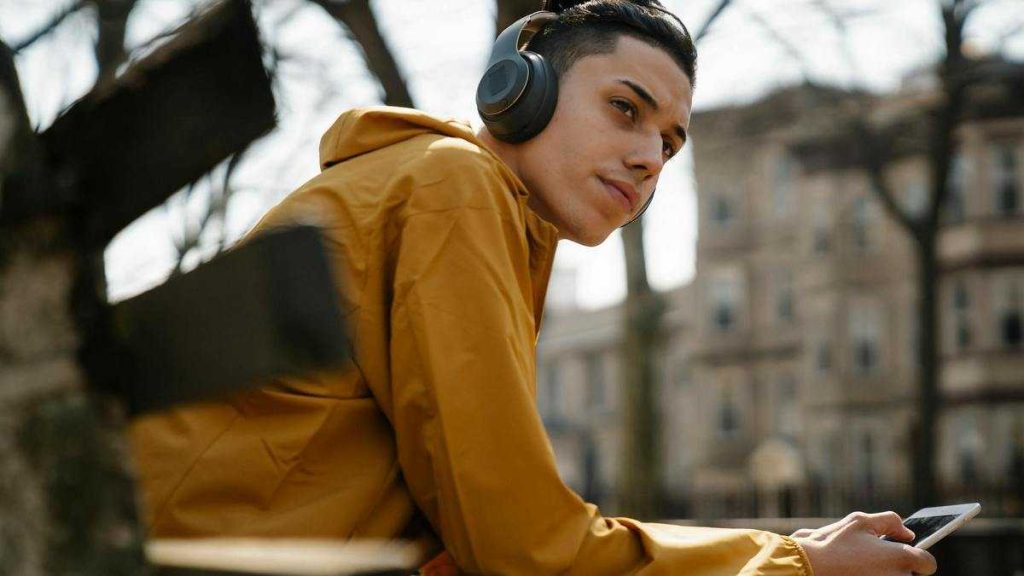
The contemporary love of listening to literature can be linked to the growing pace of life and to the recent cult of multitasking. In the chaos of everyday duties, it has become extremely difficult to find even a brief moment for reading. The almost mythical evening spent quietly with a favourite novel feels even less attainable. Listening to books allows us to manage time more efficiently. It lets us enjoy literature in situations where ordinary reading is impossible. As Paulina* explains, the choice between reading and listening depends largely on personal preference:
In fact, a lot depends on us and on the way we receive audiobooks. I am a visual learner, so I cannot really absorb more demanding books in audio form. For listening, I choose typical comfort reads—books driven by plot or lighter popular-science titles. But I have a friend who is the exact opposite. She is an auditory learner, so when a book is difficult, she reaches for the audiobook. That actually helps her get through more demanding texts.
In his article Tolstoy and Chill, published in The Atlantic, Sam Apple cites a number of critical opinions from scholars about audiobooks. According to Professor Daniel T. Willingham, a psychologist at the University of Virginia, there are reasons to suspect that reading books engages the brain more fully and more critically than listening to them.
Maryanne Wolf, a literary scholar at the University of California, Los Angeles, speaks in a similar tone. Although she sees clear benefits in listening to audiobooks, she still believes that reading the text remains the best way of encountering literature because it allows readers to grasp meaning on a deeper level. Against these voices, however, Apple asks a pointed rhetorical question: must every encounter with literature always be a critical exercise?
As Dr Dominik Antonik argues in his article Audiobook: From the Sound of Words to the Voice of the Author, listening to books can allow a fuller immersion in the world of narration than visual reading does. The 2 forms of reception appeal to different areas of human experience. According to Antonik, reading is closer to an intellectual activity. Listening to books, by contrast, is more closely tied to the sphere of emotion and subjective experience.
Does that mean listening is less valuable than reading in the traditional sense? Research in literary studies conducted in recent years, especially within the affective turn and the methodology known as sound studies, suggests quite the opposite. Today, scholars are especially interested in the issue of readerly empathy, that is, the ability to enter emotionally into the inner world of a literary character. As Antonik writes:
The strong presence of the voice and of the person producing it means that with every spoken book we discover not only a new story, but also enter into a lasting acquaintance with the narrator.
In that sense, the narrator of a spoken book becomes a guide through the world of the text. Thanks to that presence, reading turns into something more than a passive act of reception. It creates the illusion of an empathetic relationship with the person who reads the text for us.
But what do readers and writers themselves think about audiobooks? Can listening to books ever be more cognitively valuable than reading in the traditional sense? In a comment given to us, Jacek Piekara stresses that there is no need to rank textual and audio forms of literature against one another:
I believe that every form of contact with the written word is a good one. Whether we listen to books, read them on a smartphone or computer, or stay with the standard printed form. Any way that allows literature to reach us is a good one.
The author of novels and stories about Mordimer Madderdin also shared some thoughts on the audio adaptations of his own work:
For me, an audiobook is a very intriguing confrontation between the writer’s vision and the vision of the actor reading the text. The actor often gives the content a somewhat different character, places emphasis differently, interprets it differently. It is genuinely fascinating to see your own work through the sensitivity and talent of another artist. And true pleasure comes with the so-called superproductions—audio dramas involving a dozen or several dozen actors. I have also been fortunate when it comes to outstanding performers. Most of my books are read by Janusz Zadura, who is adored by listeners, while the main character in the huge, many-hour superproduction I, Inquisitor. Journal of the Plague Time was played by Leszek Lichota, of whom I say that before he became a healer, he was an inquisitor.
Listening and reading are equally valuable cognitive activities, and dividing them into better or worse forms seems pointless. Whatever medium we choose, the most important thing is that reading brings us pleasure and teaches us something new.
* Details known to the editorial team.
Read this article in Polish: W słuchawce zamiast na półce. Audiobooki zmieniają rynek książki

Literary scholar, PhD. Studies the evolution of Polish cultural myths, romanticism and its ties with modernity. Deeply interested in the 19th century. Devourer of SF and pop culture works, which he probes in search of ideas that shape our reality.

Zmień tryb na ciemny