Science
Before There Are Planets, There Is Dust
16 October 2026





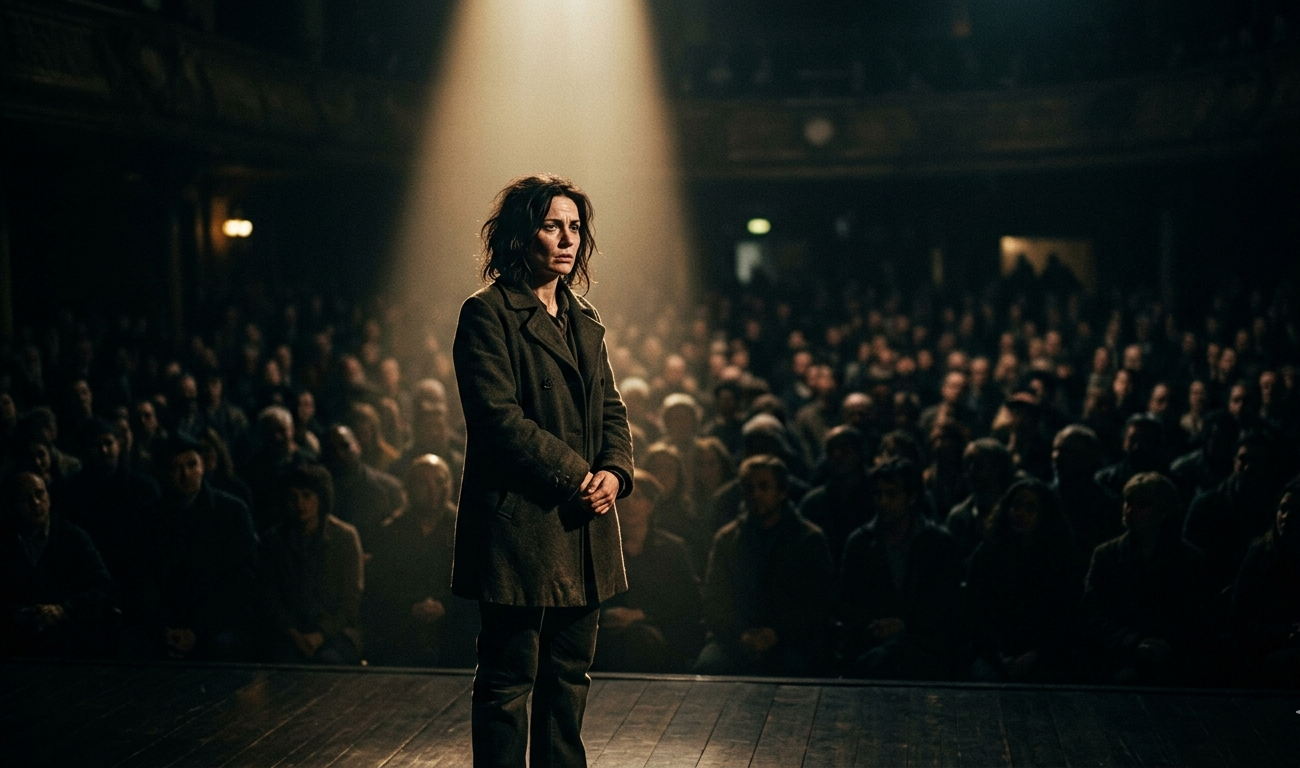
The greatest conflicts do not unfold between people, but within them: between the need to survive and the refusal to lie. History shows that those who reject compromise rarely win. Yet it is they who reveal the meaning of moral courage and mark the boundaries of humanity.
Conscience, often the only final line of defence against the loss of humanity, can become in times of conformism not only a cause of suffering, but also the foundation of individual freedom. Human history is full of literary and historical figures who paid the price for fidelity to truth, for refusing to lie and for rejecting conformity.
In 399 BC, a 70-year-old philosopher stands before the court of the Athenian people. They accuse him of “corrupting the youth” and “not believing in the gods.” He could flee; his friends have prepared a ship. He could beg for mercy, or at least promise to stop asking uncomfortable questions. Instead, he delivers a defence speech in which he says: “I cannot keep quiet, because that would be disobedience to the god.” His conscience was not an abstraction. He had his daimonion, an inner voice that never told him what to do, but restrained him from evil.
Socrates’ truth was simple and radical: not to know oneself is the greatest lie. This accords with the maxim inscribed at the temple of Apollo at Delphi: “Know thyself” — in Greek, γνῶθι σεαυτόν, gnōthi seauton. Athens, meanwhile, represented democratic conformism: the majority is always right, and whoever questions the consensus becomes an enemy of the people.
Socrates remains one of the most important symbols of the struggle for truth. His life and death tell the story of a conscience that refuses compromise, even in the face of death. The ancient Greek philosopher was not a revolutionary in the political sense, but his fidelity to truth and his steadfast defence of his own convictions became decisive for philosophy and for the history of human thought.
His stance was radical. He not only questioned traditional values, but also criticised the institutions that supported them. At the trial that ended with his death sentence, he firmly refused to renounce his views, although he could have avoided punishment by agreeing to compromise or to lie. His conscience told him that truth was a higher value than life, and that the only life worthy of a human being is one lived in accordance with reason and truth.
In the context of our own time, his stance can remind us that, regardless of social and political pressure, conscience should guide us — not fear of other people’s opinions, nor the well-worn paths of reasoning accepted by the crowd.
Alexandria, AD 415. A mob of Christian monks, incited by the local bishop, Cyril of Alexandria, rages through the streets. Hypatia, a 50-year-old mathematician, astronomer and Neoplatonist, rides in her chariot toward the library. She is dragged down, beaten to death, and her body is torn apart and burned.
Why does she fall victim to such a horrific and brutal murder? Because she taught that truth is accessible to reason, not only to dogma. She did not yield to pressure to adjust her teachings and convictions to the demands of the moment. Her stance stood in conflict with a growing ecclesiastical authoritarianism that sought to dominate intellectual life.
As a woman, she dared to run a philosophical school and advise the prefect Orestes, with whom she was friends, and who was the enemy of the later Saint Cyril. Cyril bore the greatest share of responsibility for the murder of the thinker. In fact, Cyril’s attitude and conscience deserve a separate paragraph here.
The historian and classical philologist Maria Dzielska, who studied the case of Hypatia, wrote in her dissertation:
The charges brought against Cyril concern a deeper aspect of the matter than mere participation in external manifestations of hostility and falsehood. They touch the sphere of his psychology and morality. Cyril did something that could be described as a violation of the principles of the Christian moral order he was supposed to serve. This happened because he could not reconcile himself to defeat. He wanted to be the leader of the Alexandrian community, while in elite circles that place was occupied by Hypatia… This stirred his ambitions, led to frustration and pathological envy.
Today, the scholar from Alexandria can remind us how high a price one may have to pay for preserving independence of thought in the face of imposed conformity. Her death shows that intellectual freedom is not given once and for all, and that sometimes one must fight for the right to seek truth in conditions hostile to every other form of freedom.

Dietrich Bonhoeffer, the German Protestant theologian, offers one of the most important examples of conscience under a totalitarian regime. The stance of this Christian pastor stands in sharp contrast to that of the bishop of Alexandria mentioned earlier.
Germany, the 1930s and 1940s. Pastor and theologian Dietrich Bonhoeffer watches as the Evangelical Church salutes Hitler. He helps found the Confessing Church — a small, illegal resistance movement. In 1940, he joins the Abwehr in order to sabotage the regime from within. He takes part in a plot against the Führer’s life. Arrested in 1943, he writes letters from prison in which he asks: “Who is Christ for us today?”
Bonhoeffer felt that his conscience imposed on him a duty to resist the criminal policies of the Third Reich. As a Christian who believed in love and justice, he refused the moral compromises offered by the German authorities. He became involved in opposition activity, cooperating with the resistance against Hitler. His decisions were deeply considered and grounded in his faith in truth and in the ethical duty to oppose crimes.
On April 9, 1945, just weeks before the end of the war, he was hanged at Flossenbürg. His last words were: “This is the end — for me, the beginning of life.” Conscience triumphed over the instinct for survival. Bonhoeffer reminds us that there is no greater sacrifice than giving one’s life out of fidelity to conscience and truth, even in the face of a totalitarian regime.
In his novella Billy Budd (1891), Herman Melville created an almost mythical figure. A young, handsome sailor serves on a British warship. He is absolutely good: he knows neither evil nor lies. When the treacherous Claggart falsely accuses him of mutiny, Billy cannot defend himself in words; he stammers. In a burst of helpless fury, he strikes and kills his accuser. Captain Vere, a man of law and convention, sentences him to death, although he knows Billy is innocent.
The main character of the novel pays the price for his unshakeable sense of justice and conscience. His story, in turn, tells us how often truth itself cannot survive a collision with power and conformity. Billy’s conscience is the conscience of nature: pure, naive, incapable of compromise, especially when paired with a hot temper and the strength of a fist.
He cannot lie, even to save himself. The conformity he confronts is military and legal conformity: regulation matters more than justice, order more than truth. Billy hangs from the yardarm, whispering, “God bless Captain Vere!” And in that moment, Melville shows us that innocence is the currency of humanity. Sometimes truthfulness alone is not enough. Often truth cannot defeat a system built on conformity, hierarchy and power.
Salem, 1692. The witch trials. In The Crucible (1953), Arthur Miller gives us John Proctor — a farmer who betrayed his wife, but will not betray himself. Accused of witchcraft, he has a chance to save his life: all he has to do is sign a false confession. He tears up the document.
The hero of The Crucible offers another example of a literary figure who pays the price for fidelity to truth. At the beginning of the story, Proctor hides his own faults. But in the face of the mass hysteria surrounding the Salem witch trials, he decides to take responsibility for his sins and refuses to give false testimony. In the end, he chooses death so that he will not lie and will not contribute to the false accusation of others.
He shows how social conformity — in this case, fear of being accused of witchcraft — can force the individual into lies and moral collapse. Proctor demonstrates that the decision to remain faithful to oneself, even in the face of fear for one’s life, is not only a moral act, but also an act of liberation.
She receives the gift of prophecy, but when she rejects Apollo, who is in love with her, she is punished: she will know the future, but no one will believe her. She warns against the wooden horse. No one listens. She predicts the fall of the city. Laughter follows. She dies at the hands of Clytemnestra.
Cassandra, a figure from Greek mythology, is one of the most tragic heroines in the history of literature. She could foresee the future, but those to whom she delivered her prophecies rejected them. Unable to change fate, Cassandra became a symbol of truth that cannot break through the ignorance and conformity of those around her.
She symbolises the situation of a person who possesses absolute certainty about the truth, yet has no way to communicate it effectively. Her life is a constant struggle against the wrong reception of truth, a struggle that leads her into isolation and tragic death.
Across the centuries, great thinkers and philosophers have argued and offered different concepts of conscience and truth. Socrates saw morality as the fruit of constant self-examination. Plato went further and recognised that the good is not merely a human agreement or the mood of an age. It is something objective, something that exists above our whims.
Aristotle was more realistic. For him, morality is neither a pure abstraction nor a single heroic choice. It is a matter of character, habit and practice. Saint Augustine moved the weight of reflection into the interior of the human being. For him, conscience is the place of encounter with a truth that exceeds us.
Thomas Aquinas tried to unite reason, nature and faith. In his thought, morality arises from an order inscribed in human nature. Immanuel Kant made morality a matter of dignity and duty.
David Hume was much more sceptical about the dominance of reason. He argued that morality is born, to a large extent, from feeling. Jean-Jacques Rousseau believed that the human being has a natural capacity to sense the good, but that civilisation often deforms it. Friedrich Nietzsche looked at traditional morality with deep suspicion. He believed that what we call conscience often turns out to be internalised fear and social training.
When these voices are gathered together, several great disputes become visible. Some thinkers believe that morality flows above all from reason; others, that it arises from feeling. Some believe that conscience discovers an objective good; others, that it can be a product of upbringing, culture or power.
Some emphasise duty, others virtue, and still others responsibility for another person. Yet from these differences, a common core emerges: conscience is not comfort. It is, rather, an inner difficulty that prevents a person from selling themselves completely to the crowd, to interest or to fear. The heroes who refused to lie show that fidelity to truth and conscience are values that society does not always reward. Often, one pays the highest price for them: life, reputation, peace. Yet their stories teach us that conscience, costly as it is, can become the last line of defence for humanity.
Today, conformity wears different faces: cancel culture, political correctness, fear of “inconvenient facts,” algorithmic bubbles. But the mechanism remains the same: pressure from the majority, fear of exclusion, the temptation to say, “after all, everyone does it.”
Conscience is not the voice of the majority. It is the voice of what remains most deeply human in us. And as long as there are people willing to pay the price for refusing to lie, moral courage keeps humanity from losing completely.
Read this article in Polish: Gdy prawda kosztuje życie. Dlaczego jedni milczą, a inni nie?


Television and press journalist, publicist. He published reports, investigative materials, and interviews in outlets such as Gazeta Wyborcza, Tygodnik DoRzeczy, Tygodnik Przegląd, and on the Onet portal. He collaborates with the Warsaw Enterprise Institute. Author of two editions of "Black Book" – a publication dedicated to the waste of public money, and the book "Myths and Spells of the 21st Century." Laureate of the Polish Chamber of Electronic Communication's Crystal Screen award for his report titled "Monsters," focusing on the issue of violence against children.



Zmień tryb na ciemny