Truth & Goodness
Circadian Rhythm and the Quiet Order of the Day
04 September 2026





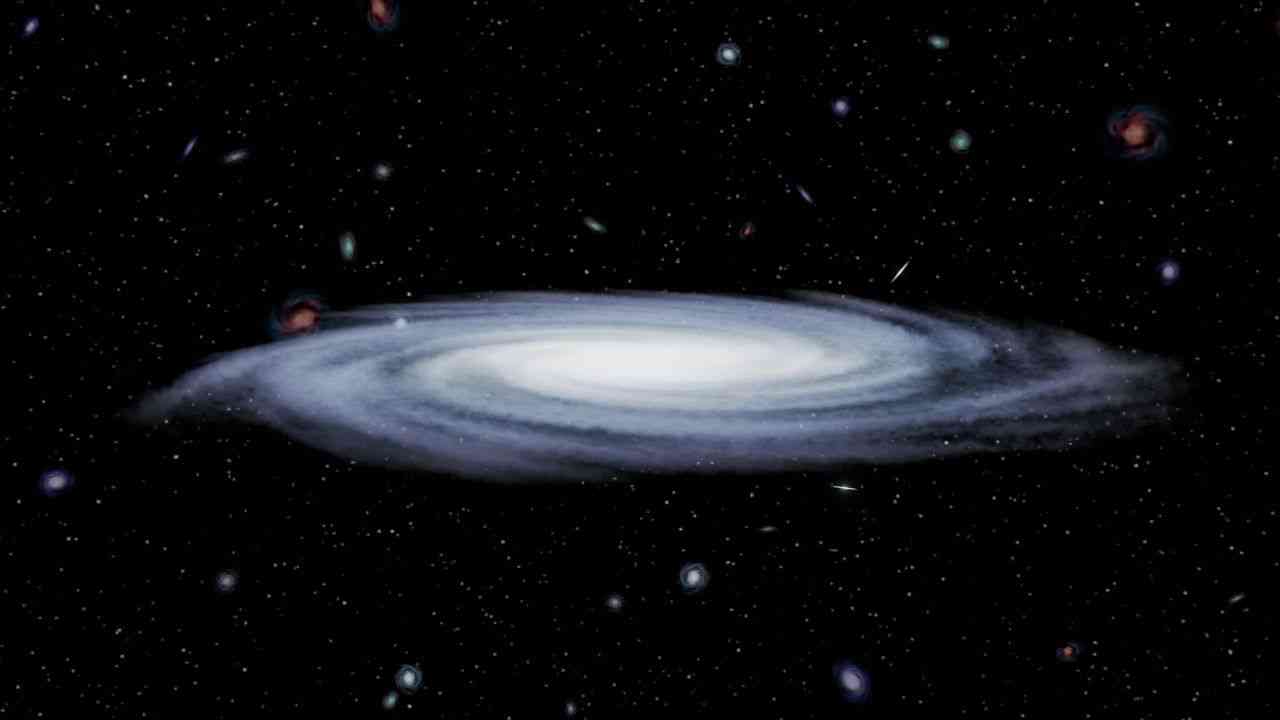
The black hole has long served as our ultimate symbol of finality—the point where time, matter, and meaning collapse into absolute nothingness. Yet fresh empirical data forces us to confront a more unsettling reality: in the economy of the cosmos, the end is often merely the prologue to a grander catastrophe. A rigorous analysis of 153 gravitational wave signals suggests that the most monstrous black holes in existence are not primary cosmic entities. Rather, they are generational ghosts born from hierarchical black hole mergers, emerging from the violent collisions of their predecessors.
An international consortium of astrophysicists at Cardiff University and Northwestern University brought us this profound shift in perspective. The team interrogated an observational catalog containing 153 highly confident signals of black hole mergers. Through this work, they tapped into the subtle, primordial vibrations of spacetime. Albert Einstein first conceptualized these phenomena over a century ago.
The researchers set out to test a specific, radical hypothesis. They wanted to know if the ultra-massive black holes detected between 2023 and 2024 constitute a second generation of cosmic anomalies. These beasts did not collapse cleanly from the death throes of a single, isolated star. Instead, they appear to be the products of cosmic pileups. These events occur within the dense, claustrophobic hearts of star clusters. In these crowded fields, celestial bodies pack together up to a million times more tightly than in our own solar neighborhood.
The findings, published in Nature Astronomy, reveal that the cosmos harbors two distinct demographics of black holes. The first, lower-mass population aligns seamlessly with the classical model of stellar collapse. The second, heavier population defies this norm.
Their spins—the speed and direction of their rotation—behave precisely as predicted. They match the expected outcomes of sequential, high-energy collisions in crowded stellar nurseries. This heavier lineage, forged through successive cosmic unions, upends our established assumptions.
What surprised us most was how clearly the high-mass black holes stand out as a distinct population,
– notes Dr. Isobel Romero-Shaw, one of the study’s principal authors.
The data partially validates the team’s hypothesis, though with nuanced caveats. The more massive black hole systems spin rapidly. Their axes point in seemingly random directions. This is the exact signature we expect when independent black holes collide. The immense gravitational pressures of a dense cluster repeatedly force them into shotgun marriages. Conversely, the lighter systems rotate slowly, preserving the orderly momentum of their birth.
Beyond refining our understanding of cosmic evolution, this research provides compelling evidence for an elusive concept. It illuminates the upper stellar mass gap in modern astrophysics.
According to the theory of pair-instability, exceptionally massive stars cannot transition quietly into black holes. Instead, the runaway production of electron-positron pairs in their cores triggers a massive thermonuclear explosion. This event completely obliterates the star and leaves no remnant behind. For decades, physicists have maintained that a specific mass range exists where primary black holes simply cannot form from single stars.
Experts place the lower boundary of this forbidden zone at roughly 45 solar masses. Any black hole exceeding this threshold must be an artifact of synthesis. It is a creature stitched together from the wreckage of previous unions.
The implications of this study extend far beyond the taxonomy of dark matter. They offer a rare window into the agony of the universe’s largest stars. They also expose the chaotic dynamics governing regions where stellar corpses jostle for space in near-infinite density. In these cosmic crucible points, one disaster inevitably fathers the next.
Above approximately 45 solar masses, the spin distribution shifts in a way that is difficult to explain solely through conventional binary star systems. However, it becomes entirely natural if these black holes have already survived prior collisions in dense clusters.
– Dr. Romero-Shaw explains.
By measuring the boundaries of this mass gap, the research also sheds light on fundamental nuclear reactions. Specifically, it reveals what occurs during helium burning within the core of a dying star. Ultimately, these gravitational whispers do more than map the graveyard of the cosmos. They bridge the macro-universe with the micro-dynamics of nuclear physics. They prove that even in the cold finality of a singular event, hierarchical black hole mergers leave a legible, tragic genealogy of the universe’s own destruction.
Read this article in Polish: Jedna katastrofa rodzi następną. Nowe dane zmieniają obraz kosmosu


A graduate of journalism and social communication at the University of Rzeszów. She has been working in the media since 2019. She has collaborated with newsrooms and copywriting agencies. She has a strong background in psychology, especially cognitive psychology. She is also interested in social issues. She specializes in scientific discoveries and research that have a direct impact on human life.



Zmień tryb na ciemny