Education
What Children Learn When They Count on an Abacus
25 September 2026





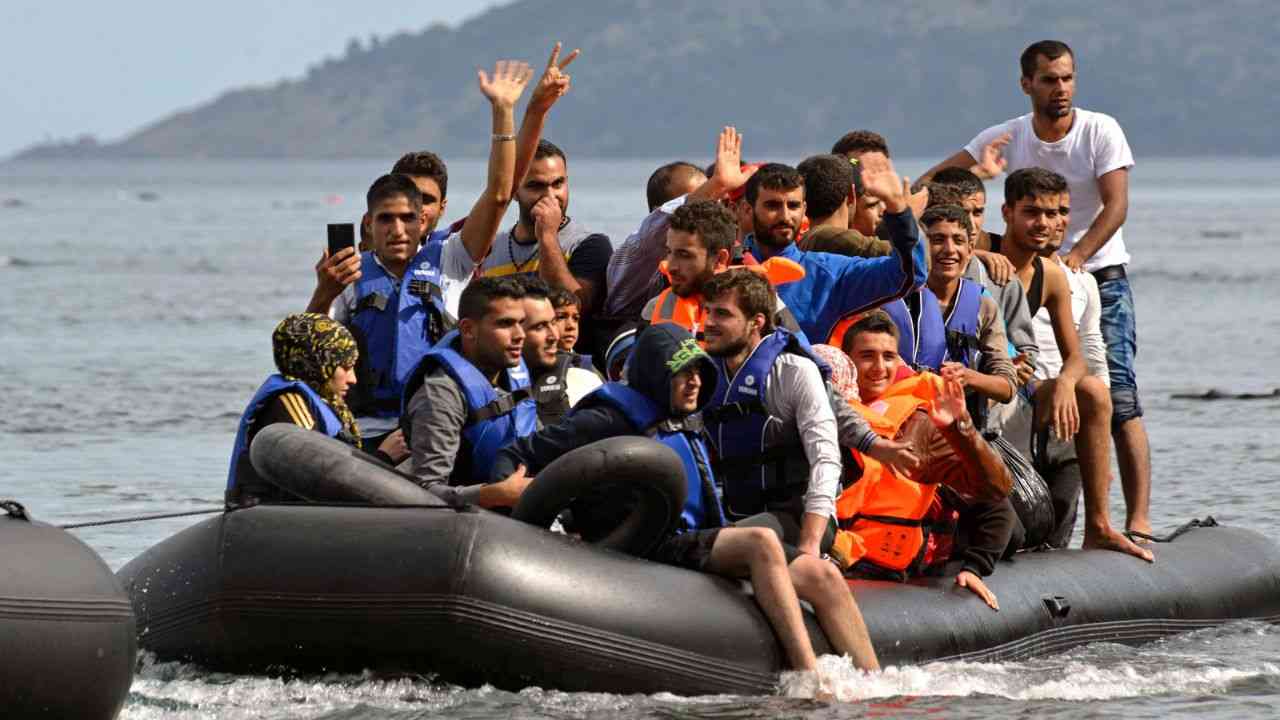
Clean streets, safe metros, a sense of security after dark — often taken for granted. The EU Migration Pact now tests whether Poland can avoid the mistakes Western Europe made amid rising migration and social challenges.
Patrycja Krzeszowska: On June 12, 2026, the EU Migration Pact will come into force. Do you think adopting the pact with its solidarity mechanism is a real response to the migration crisis in the EU? Should it take effect?
Michał Bruszewski*: Any proposals like this face the challenge that it is very difficult to properly verify people. In countries where uncontrolled, illegal migration has occurred, it is extremely hard to ensure security, let alone reverse social changes that have already taken place, such as the emergence of a “state within a state” or the ghettoization of parts of society. There is a lack of counter-strategies. Attempts at large-scale deportations in Germany have failed. The German government also failed to convince the new Syrian authorities to implement a solution in which Syrians would return voluntarily rather than being deported.
In Western countries with large Muslim diasporas, these trends, visible in legal frameworks or more decisive police actions, can no longer be stopped. Poland, of course, is not immune to similar threats but remains relatively less affected. We do not have as large a Muslim diaspora as Western countries. The only thing we can do is not repeat the mistakes of countries that have experienced noticeable social crises. Therefore, I am skeptical about implementing similar solutions — but I want to stress that this is my personal opinion.
You say Poland is not yet at the center of these developments. For now, we do not need to accept migrants because of the large number of refugees from Ukraine. That may change in a few months. Meanwhile, the number of Muslims in Europe is growing rapidly. How could this affect Poland?
We had to accept Ukrainian refugees — people culturally and linguistically close to us. Of course, there are social tensions stirred up by some groups, but I oppose such agitation. I don’t want the Third Republic to repeat the mistakes of the Second Republic. Ukrainians are very similar to us in many areas of life.
Will Poland be forced to accept migrants? Parliamentary elections are coming next year, so I think no major party, except strictly leftist ones, will openly support this. Public opinion shows that people are largely against it.
I believe Poland should do everything to avoid Western mistakes, because their cost has been a noticeable drop in security. You can see this even in everyday life: footage from Warsaw metro is shown in the UK, the US, or France almost like a curiosity — clean platforms, order. For us, this is still normal. For many in the West, it is increasingly surprising.
But what if the European Union forces us to accept migrants?
I don’t know if such coercion will actually happen. It’s important to remember that forcing states to accept migrants effectively treats people like commodities. If someone is already in one country and is administratively moved to Poland, this is a problem for them as well.
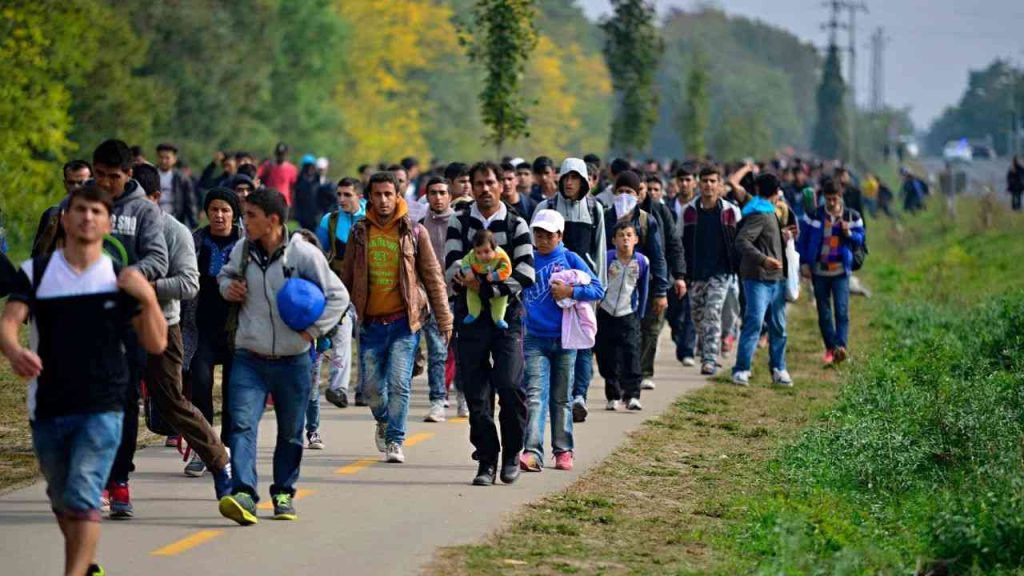
Many migrants who cross the Polish-Belarusian border and storm the barrier are doing so to reach Western Europe. Often, nobody asks them for consent.
Poland should primarily avoid sanctioning illegal migration. If someone wants to work legally, there are procedures, visas, and border control. It is possible to come to Poland for work legally. I also read that the Ministry of Interior is working on tightening citizenship rules. I think that is a good measure.
Regarding migrants: no one wants lower security, riots, or gang activity from migrant communities, such as Mocro Mafia in the Netherlands or DZ Mafia in France. Europe is seeing a rise in crime, which worries Polish citizens as well.
As a security analyst, I believe it is impossible to verify all people during large-scale migration. Illegal migrants have already broken the law. If we sanction lawbreaking, we shouldn’t be surprised when it continues.
You mentioned Spain and gangs. We cannot discuss Islam and Europe without asking about jihadists. In Spain, young people born in Europe are radicalizing online. Is it possible to stop jihadist actions in Europe in this context?
Intelligence agencies are already successfully preventing many such actions. For example, they foiled planned attacks during Taylor Swift’s tour. ISIS has been defeated in the Middle East, but remains active and dangerous. They also change tactics: formerly explosives and firearms, then vehicles or simple tools like knives and hammers, and even taking officers’ weapons. We cannot rule out further strategy changes by ISIS .
Large-scale illegal migration facilitates recruitment, indoctrination, and embedding of members within migrant flows, with the objective of carrying out terrorist acts. We see most attacks where migration is uncontrolled.
The Middle East is in conflict again. Could this increase Muslim migration to Europe?
It cannot be ruled out. There are 800,000 Afghan refugees in Iran. The country will be economically destabilized. Before Operation Epic Fury, there was already an economic crisis, including currency collapse. People closed stalls, began protesting. The war does not directly show the internal crisis, but it exists. Refugees may be pushed onward, and Russia could use them as part of hybrid warfare, potentially reaching the Polish-Belarusian border.
Uncertainty also surrounds the Gaza Strip. There is a theoretical ceasefire, but Hamas retains power “beyond the yellow line,” so the future of Palestinians is unclear. This could trigger another migration crisis.
While European countries need labor, it must be linked to serious security analysis. In theory, some migrants could be recruited for work, but often they end up in welfare systems, not the workforce. Therefore, I cannot rule out another migration crisis.
Why are Poles more worried about migrants from the Middle East, though crime from the eastern border is also significant?
Illegal migration is illegal regardless of origin. Subsequently, criminal groups exploit migrants as labor. These individuals often end up on society’s margins, making them easily recruited into criminal activity.
In Western Europe, parts of the “local crime market” have been taken over by groups from the Middle East and North Africa, especially the Maghreb. In Dijon, conflicts arose between Maghreb and Chechen groups. Large diasporas facilitate these groups’ operations.
You also mention the growing political role of Muslims in Europe. Could this affect governance and legislation?
Their political influence will grow due to demographics and ongoing migration. European societies also face demographic challenges, so it is natural that politicians from these communities will emerge.
Political parties will seek their votes, sometimes offering privileges in exchange. Imams and religious organizations have real influence over some voters. Some politicians support Sharia law, some openly, some hoping for gradual change. In the UK, Muslim communities already influence foreign policy. This is now a practical reality.
Which method is more effective: accepting migrants or helping them in their home countries?
I have long supported aid in situ. I volunteered directly. It is in the countries’ interest that people stay home and contribute locally. Investments in schools, jobs, and infrastructure can help prevent migration. Otherwise, future generations will continue to migrate.
Poor people unable to leave are the most affected, yet often overlooked. Smuggling and human trafficking remain major issues. Long-term economic support for the Middle East and Africa is essential.
Is Europe waking up?
Europe is waking up, but a generation too late. The scale of the problem is already enormous. Mass deportations are almost impossible and could destabilize states or lead to civil war.
States define the problem socially but have no ready solutions. Mass deportations are off the table, and assimilation is difficult without coherent strategy. We cannot force people to change beliefs. Fighting jihadism will remain a core challenge. Intelligence agencies have learned lessons; more attacks are prevented than succeed. But the social problem persists.
Suppose migrants from Muslim countries settle nearby, or a Muslim cultural center opens in a neighborhood, like in Kraków. What would be your reaction?
I distinguish illegal from legal migration. If people learn that a center or settlement for illegal migrants is planned nearby, their concern is not automatically xenophobia. We do not know who the illegal migrants are. They broke the law to arrive here. Warsaw is multicultural; legal migrants live and work here without issues.
Muslim countries, and the Middle East and North Africa more broadly, are often better organized to counter radicalization than European states. Europe could learn from them. Local imams are often government-supervised to prevent youth radicalization; the only region without such oversight is Europe.
Could Poland become a main destination for migrants?
I think not. Migrants tend to go where relatives already live, where they speak their language, and have established networks. They flee to Europe to implement solutions they were escaping from — a paradox. Sometimes, refugees import the logic of war into Europe. In Sweden, for instance, some areas are divided by clan influence, which may be in conflict. Ethnic and sectarian tensions persist within Islam. Sharia illustrates this: some flee its realities in home countries, others seek to implement it in Europe.
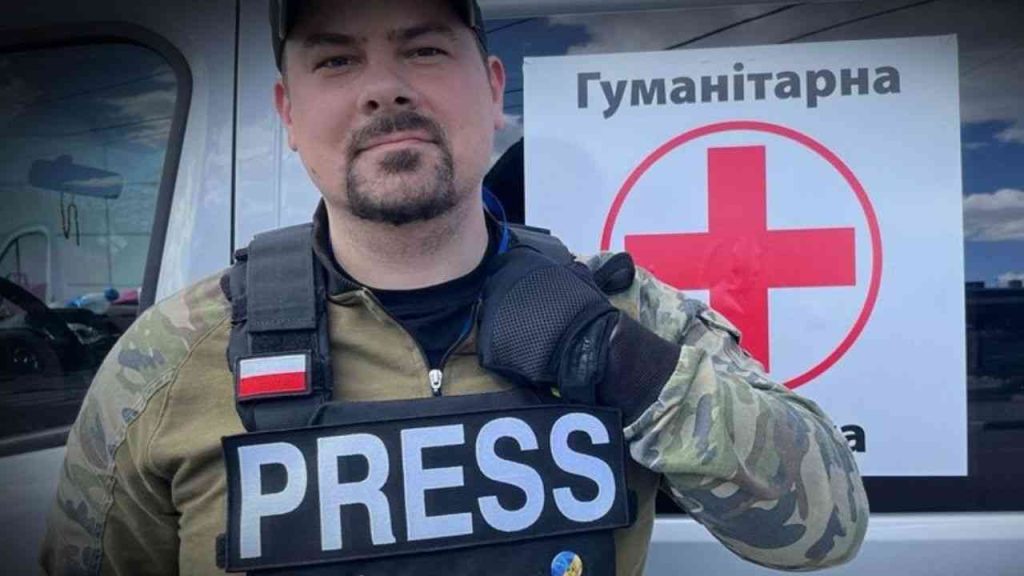
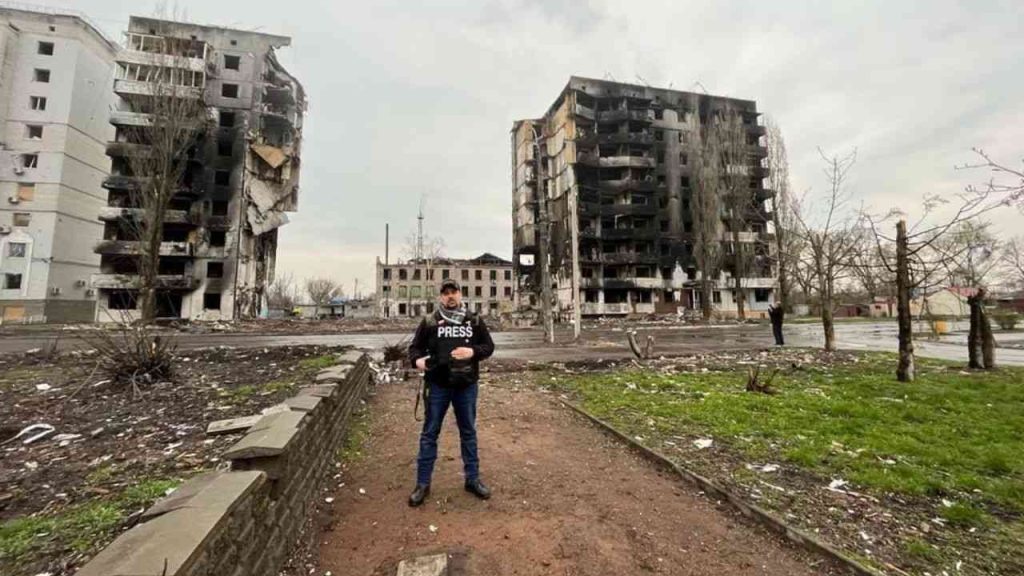
* Michał Bruszewski – author of Eurocaliphate: Jihad, Gangs and the Islamization of Europe, security expert, journalist, and war reporter. He has produced reports from conflict zones, including Iran and Ukraine.
Read this article in Polish: Autor „Eurokalifatu”: Europa obudziła się za późno

A graduate of journalism and social communication at the University of Rzeszów. She has been working in the media since 2019. She has collaborated with newsrooms and copywriting agencies. She has a strong background in psychology, especially cognitive psychology. She is also interested in social issues. She specializes in scientific discoveries and research that have a direct impact on human life.


Zmień tryb na ciemny