Education
What Children Learn When They Count on an Abacus
25 September 2026





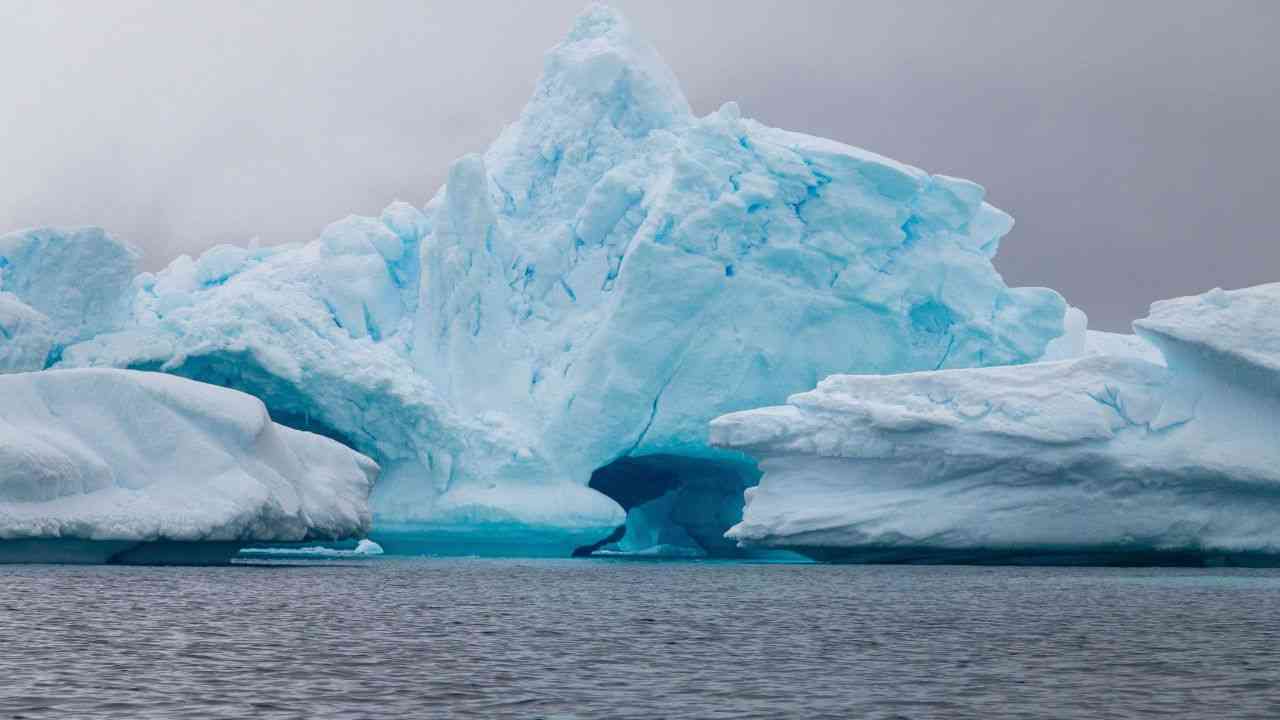
For millions of years, this world remained hidden beneath the ice. From the surface of Antarctica, nothing can be seen but whiteness, wind, and an apparently motionless ice sheet. Only geophysical data revealed that, deep below the ice, there lies a newly identified structure of enormous scale. This Antarctic discovery may help explain how the present geological layout of Antarctica and the regions around it came into being.
Researchers from the University of Genoa, Durham University, and other institutions have identified a vast system of subglacial basins beneath East Antarctica. There are about 30 of them, and they do not lie there at random. They spread out like a fan toward the coast. On a map, it looks as though ancient Antarctica had once been stretched around a point hidden deep inside the continent.
The team led by Egidio Armadillo named this structure the East Antarctic Fan-Shaped Basin Province, or EAFBP. The study’s authors suggest that it may have formed before the breakup of the supercontinent Gondwana, and later created a zone of weakness that influenced the separation of Antarctica and Australia. Although we are speaking about events from many millions of years ago, their significance does not end in the distant past.
Because these basins lie beneath roughly half of the East Antarctic Ice Sheet, they probably exert a substantial influence on both ice flow and landscape evolution, making them important for Antarctic glacial and hydrological processes.
— the study says.
The shape of the bedrock described in the article published in Nature Geoscience is not just another Antarctic discovery. The ice there does not rest motionless. It moves, and its path depends on what lies beneath it. If researchers better understand the hidden landforms below, they will find it easier to predict the speed and direction of ice flow. The second reason is the history of the planet, written beneath kilometers of ice.
The continent covers nearly 10 percent of Earth’s land surface. Even so, Antarctica’s geology remains one of the largest gaps in our knowledge of Gondwana, continental breakup, the evolution of Earth’s crust, and ancient mountain-building processes. It is a kind of “Antarctica-shaped hole”: an enormous area into which one cannot simply look deep inside the continent.
The researchers examined what the eastern part of Antarctica would look like if the ice were removed. This matters because the continent is covered by about 27 million cubic kilometers of ice. And that ice does not lie there passively.
It presses down on the rock and pushes it downward. If the entire ice cover disappeared, the land would begin to rise. In some places, that rebound could reach as much as one kilometer. When the researchers gathered the data and combined them with reconstructions of the topography after ice removal and after this uplift of the crust, they saw a pattern that is hard to dismiss as accidental.
Among the roughly 30 identified subglacial basins, many shared a similar shape. They did not look like random depressions, but like parts of a larger structure. They radiated fan-like from a common point near the South Pole. The researchers described this arrangement as a coherent, radial pattern on a continental scale. Although the EAFBP was described for the first time, its geometry resembles a sphenochasm, a type of tectonic structure known since 1955.
The study’s authors analyzed the processes that could have shaped the subglacial basins in the rocks of East Antarctica. Such basins can form in different ways: as traces of earlier stages in crustal development, through glacial erosion, or as a result of the stretching of Earth’s crust. To test which mechanism best fits the East Antarctic Fan-Shaped Basin Province, the researchers compared several possible scenarios. One proved the most likely.
The basins hidden beneath the ice radiate from a single point, and their arrangement corresponds to changes in crustal thickness and terrain relief. Such a pattern resembles an opening fan. It suggests that Antarctica’s crust may, in the distant past, have been stretched outward from a central area.
If this interpretation is correct, the EAFBP may preserve traces of tectonic activity from before Gondwana broke apart. It may also indicate how the later separation of Antarctica from Australia unfolded. The researchers also argue that the structure could help explain the history of the Transantarctic Mountains and the Gamburtsev Mountains, which lie near the basin system.
Although geophysicists, through this latest Antarctic discovery, have moved closer to understanding the mysteries of one of the most inhospitable continents on Earth, many questions remain unanswered. One of them is whether the researchers’ hypotheses truly reflect reality, and exactly how these processes unfolded. Even so, with each discovery, specialists come 1 step closer to a fuller understanding of the secrets of the frozen continent.
Read this article in Polish: Pod lodem znaleźli ślad dawnego świata. Antarktyda skrywała go miliony lat


A graduate of journalism and social communication at the University of Rzeszów. She has been working in the media since 2019. She has collaborated with newsrooms and copywriting agencies. She has a strong background in psychology, especially cognitive psychology. She is also interested in social issues. She specializes in scientific discoveries and research that have a direct impact on human life.



Zmień tryb na ciemny