Culture
A Life Spent Becoming Someone Else’s Ideal
12 October 2026





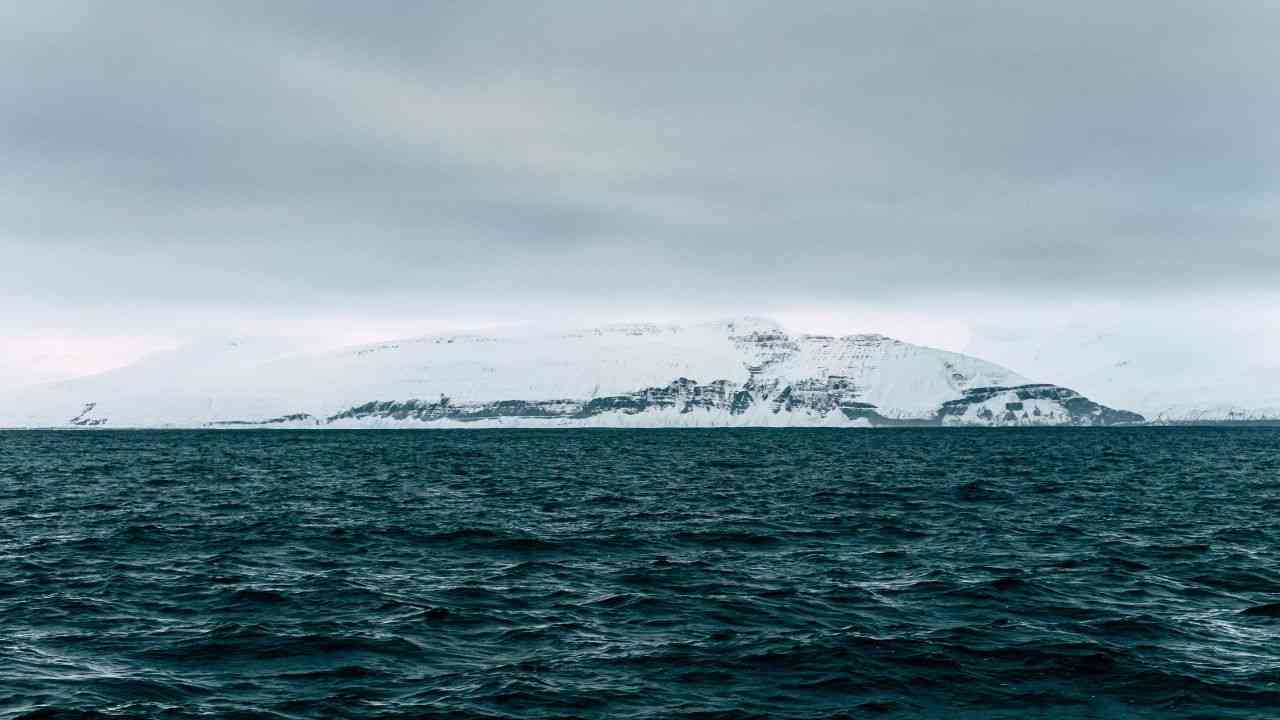
A patch of ocean south of Greenland, known as the Atlantic cold blob, has been cooling for years even as the planet sets new temperature records. New research is unsettling because it suggests that less warm water may be reaching this region than before. That means the Atlantic cold blob may be a signal of changes in the workings of the great ocean currents.
The area in question is a part of the North Atlantic located just south of Greenland. At first glance, one might think this is good news. If the world is warming and some part of the ocean remains cooler, perhaps nature is trying to maintain balance? Unfortunately, the matter is not that simple.
An analysis by scientists from, among others, the Potsdam Institute for Climate Impact Research and the Institute of Atmospheric Physics indicates that the Atlantic cold blob may be an important signal of changes taking place in the ocean.
But let us start at the beginning. The researchers went back as far as 1955. They analyzed about 70 years of data to answer 1 question: why is global warming not swallowing this part of the Atlantic, even as the rest of the world heats up?
There were 2 main possibilities. The first assumed that the ocean in this region was releasing more heat into the atmosphere than other areas. The second suggested that less heat was reaching the area through ocean currents. The results, published in the journal Geophysical Research Letters, indicate that the second option is more likely.
This means that the most important problem may not lie at the boundary between the ocean and the atmosphere, but deeper down, in the movement of the water itself. In other words, less warm water may be reaching this region of the Atlantic than before.
These unusual climate changes on Earth are occurring near one of the most important systems of ocean currents. This is the Atlantic Meridional Overturning Circulation, or AMOC. It is an immense system of water circulation that carries warm water from the tropics northward and sends cooler water back south.
For now, the Atlantic cold blob alone does not prove that we are facing a sudden collapse of the climate system, or even a nearby tipping point. The latest work by scientists from Germany, China, and Iceland does suggest, however, that changes in the movement of water are real and can be observed. It is important to keep in mind that the pace and scale of these climate changes on Earth, and even their future trajectory, have not yet been precisely established.
That is why the latest findings from the Atlantic matter to climatologists as an important signal, but not yet as a forecast of catastrophe. They help us understand much more clearly how the ocean itself works, as well as how heat moves through the global climate system.
Read this article in Polish: Słaby punkt globalnego ocieplenia? Fragment Atlantyku się ochładza


A graduate of journalism and social communication at the University of Rzeszów. She has been working in the media since 2019. She has collaborated with newsrooms and copywriting agencies. She has a strong background in psychology, especially cognitive psychology. She is also interested in social issues. She specializes in scientific discoveries and research that have a direct impact on human life.



Zmień tryb na ciemny