Culture
A Life Spent Becoming Someone Else’s Ideal
12 October 2026





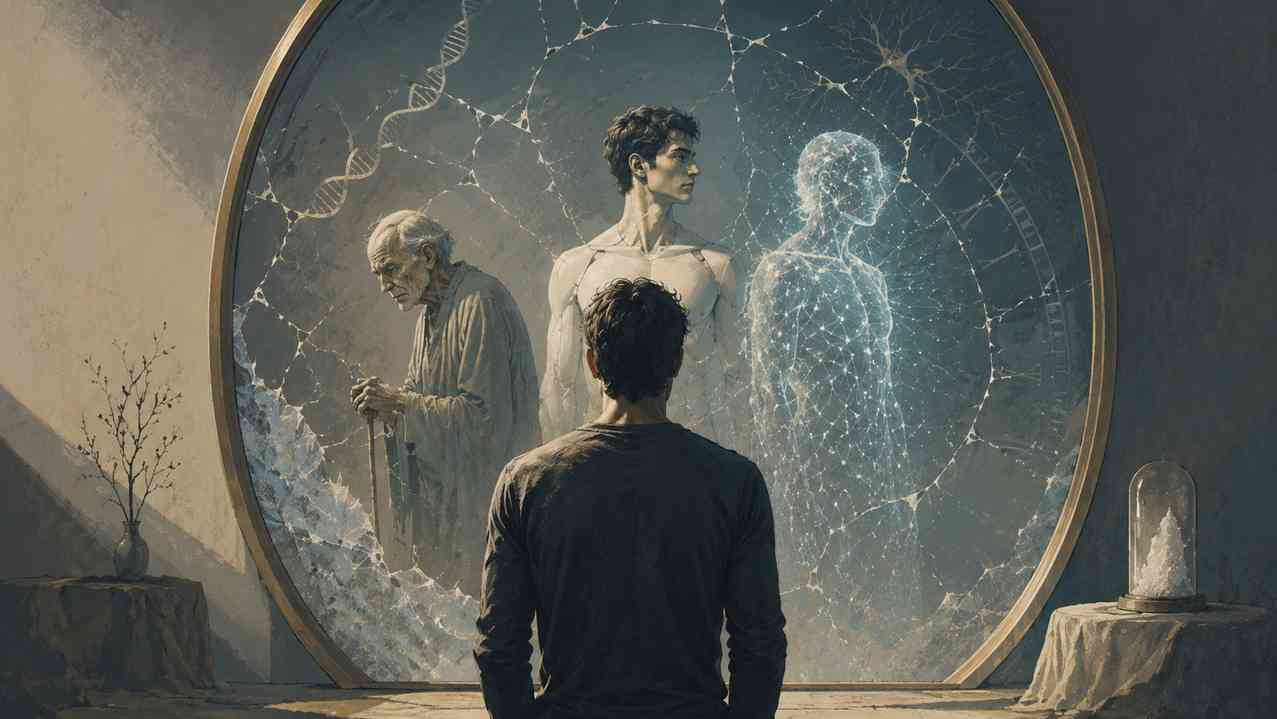
Two weeks ago, I wrote about the myth of immortality and about our eternal, civilizational desire to prolong earthly human life or, if that proves impossible, at least to believe that another form of being awaits us after death: that we will not vanish without a trace, and that even if the body falls apart, the mind or soul will either exist in another dimension or undergo some kind of evolution.
As I wrote in my previous essay, the search for immortality or eternal youth usually ended tragically for those who pursued it. That should not surprise us, since even today, in the 21st century, we are nowhere close to guaranteeing people not only immortality, but even truly long life. Will human beings ever become immortal? Statistics for average life expectancy have climbed dramatically. At the beginning of the 19th century, average life expectancy stood at just over 30 years. Today in Poland, it is 79 years.
But we owe those vastly improved statistics not to an extension of the maximum human lifespan, but mainly to excellent perinatal care. In the past, child and infant mortality, as well as the mortality of mothers giving birth, reached terrifying levels. As the Polish historical portal Wielka Historia writes: “According to data from 1930, an average of 143 children per 1,000 died in their first year of life. That rate was 37 times higher than it is today.”
Let us pause over that difference: 37 times. It is an almost unimaginable gulf, and barely 100 years separate us from that terrible time. Meanwhile, the maximum length of human life has not changed very much. True, the world now has more and more old people, thanks to medicine and pharmacology, which allow them to survive in situations where even 50 years ago they would almost certainly have died. But from earlier centuries, we have documented reports of 90-year-olds and 100-year-olds. In the 21st century, a 90-year-old or a centenarian still counts as an old person who has somehow endured extraordinarily long.
How, then, has this happened? With all the extraordinary scientific and technological progress of recent years, why do we still fail to extend the maximum human lifespan to 150 years, 200 years, not to mention the 969 years supposedly lived by our biblical ancestor Methuselah?
Some biologists once suspected that our genome contained a “death gene”: that the body follows a design programmed to last for a fixed span and contains a kind of switch. Until we eliminated that “death gene,” we would continue to age and die. But the matter turned out to be far less simple. Many factors cause aging and death, and pacifying one harmful gene would not be enough.
When we speculate about immortality, we must remember one more very important thing, something Gulliver, the hero of Jonathan Swift’s novel, failed to remember. Readers know Gulliver best from his journey to the land of the Lilliputians, but Swift described many other adventures as well. One of them takes him to the island of Luggnagg, where children sometimes come into the world with a mark on their forehead, a mark that signifies immortality.
At first, Gulliver delights in this feature and cannot understand why the islanders regard such people as cursed. He understands only when they show him that immortality does not mean eternal youth. Those afflicted with immortality grow old, become helpless, and fall into dementia. They can no longer function independently in any way. Gulliver then understands that such immortality truly brings not a blessing, but a curse.
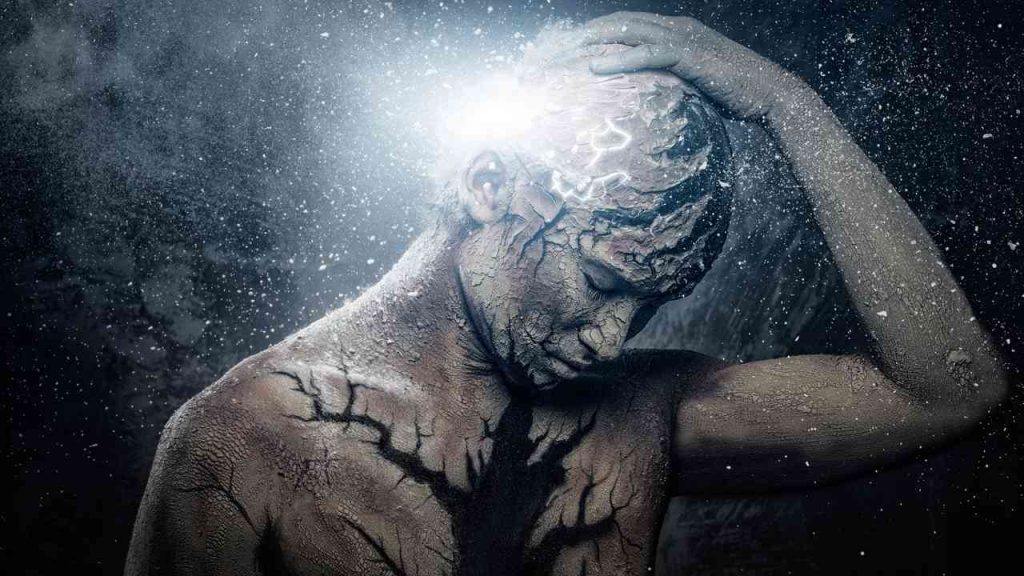
A hibernation chamber — in many science fiction stories and films, it appears as a familiar invention. It does not make eternal life possible, and it does not rejuvenate anyone. Instead, it allows us to “move through time” with mind and body left intact. When 100 years pass in the world, for example, a single second passes for the hibernated person. Thanks to this, such a sleeper can not only travel across the vast distances of space, but, if hibernation takes place on Earth, also come to know the future, as the characters in the Polish film Sexmission do.
Can humans hibernate with our current knowledge? In theory, we cannot rule it out, and many institutes pursue advanced research in this field. But the scientific community usually discusses human hibernation in the context of relatively short-term medical support, not many years of space travel.
People who choose to have their bodies, or only their heads, frozen after death at around −200 degrees Celsius must reckon with another problem: scientists argue that freezing damages cells so severely that we may never restore them to function. Nevertheless, the cryonics business continues to thrive. Despite the high price, many people decide to join a project that offers a chance, perhaps an illusory one, of life in the future.
Brain transplantation: here we have a sick person with a capable, brilliantly functioning mind. We take that person’s brain and implant it into a new, strong, healthy body. Science fiction has used this motif many times. Could it ever work in practice?
At the moment, and probably for a long time to come, no. The main problem lies in the sheer number of connections in the brain. No one can disconnect them from one body without loss and then connect them to another. The brain is not a simple muscle, like the heart. If medicine ever reached such a level, we could imagine projects emerging around the invention: clone factories, for example. Bodies without brains, waiting for volunteers. We could then choose the body in which our brain would find itself this time. A woman’s? A man’s? A Black person’s? A white person’s? And so on, and so forth.
Head transplantation — of all the methods I describe here, this one seems closest to practical realization, although it raises enormous ethical doubts. Indeed, most countries in the world would treat work on transplanting the head of a living human being as a crime.
The famous and controversial Italian neurosurgeon Sergio Canavero has shown great enthusiasm for research in this field. The procedure, however, presents two basic medical problems: correctly reconnecting the spinal cord and preventing transplant rejection. At the moment, we can do neither.
The brain as a hard drive — imagine that we could record any information onto the brain and also transfer it to another medium, whether another human brain or an electronic device. In this way, we could live a second, third, or hundredth life in another body: human, mechanical, electronic, or perhaps that of a humanlike android. Of course, given the current state of science, we have no real idea how we could “copy” information from one brain to another. Still, science fiction creators love the motif.
Information is eternal — one axiom of physics says that neither matter nor energy ever simply disappears. But note this as well: quantum physicists often speak of information as something that does not vanish either. What would that mean in practice? It would mean that everything we are — the structure of the body, the mind, our memory — does not disappear forever, but persists somewhere.
We can neither locate it nor, of course, recover it. But in a thousand years? Why not. Perhaps we will learn how to find and “assemble” the minds of all the people who died before us.
Cell regeneration — scientists working in genetic engineering are intensely studying ways to regenerate and rejuvenate cells, and the results look very promising, although for now only within narrow areas involving specific organs. For example, researchers have reported successes in reversing retinal degeneration. Billions of dollars now flow into this segment of the medical business.
I am convinced that in x years, though I would not dare predict how large that x will be, representatives of our species will gain the ability to live for several hundred, perhaps even several thousand years. How this will change the psychology of the human mind, social relations, economics, and politics is a fascinating game of philosophical and futurist reflection and speculation.
But immortality and eternal youth — or at least a very, very long life in full intellectual and physical health — belong to the future of our species. It is a pity that neither I nor you will live to see that beautiful future.
Read this article in Polish: Jacek Piekara: Będziemy żyć setki lat. Pytanie tylko, kiedy

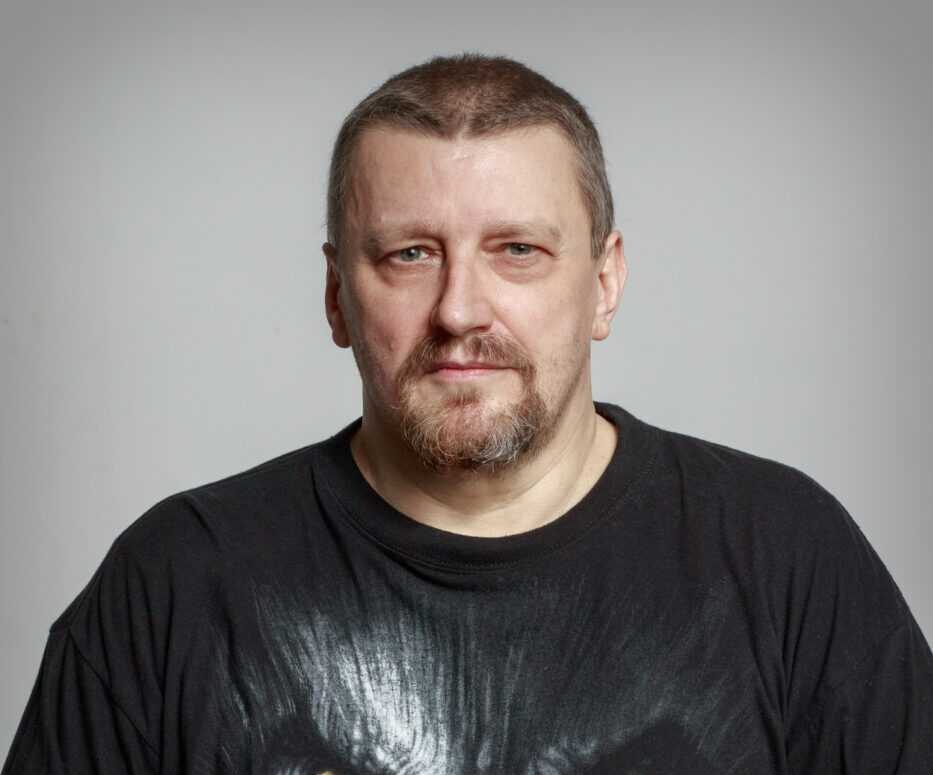
Jacek Piekara: One of Poland's most popular fantasy writers, a journalist, and a columnist. He is the author of the widely acclaimed "Inquisitor Series" (Cykl Inkwizytorski), dozens of books, and numerous short stories. Piekara has also contributed to specialized and popular press, including the magazines Click! and Gambler. In addition to literature, he writes scenarios for computer games and works as a publicist.


Zmień tryb na ciemny