Science
Whose Side Is the Expert On?
30 September 2026





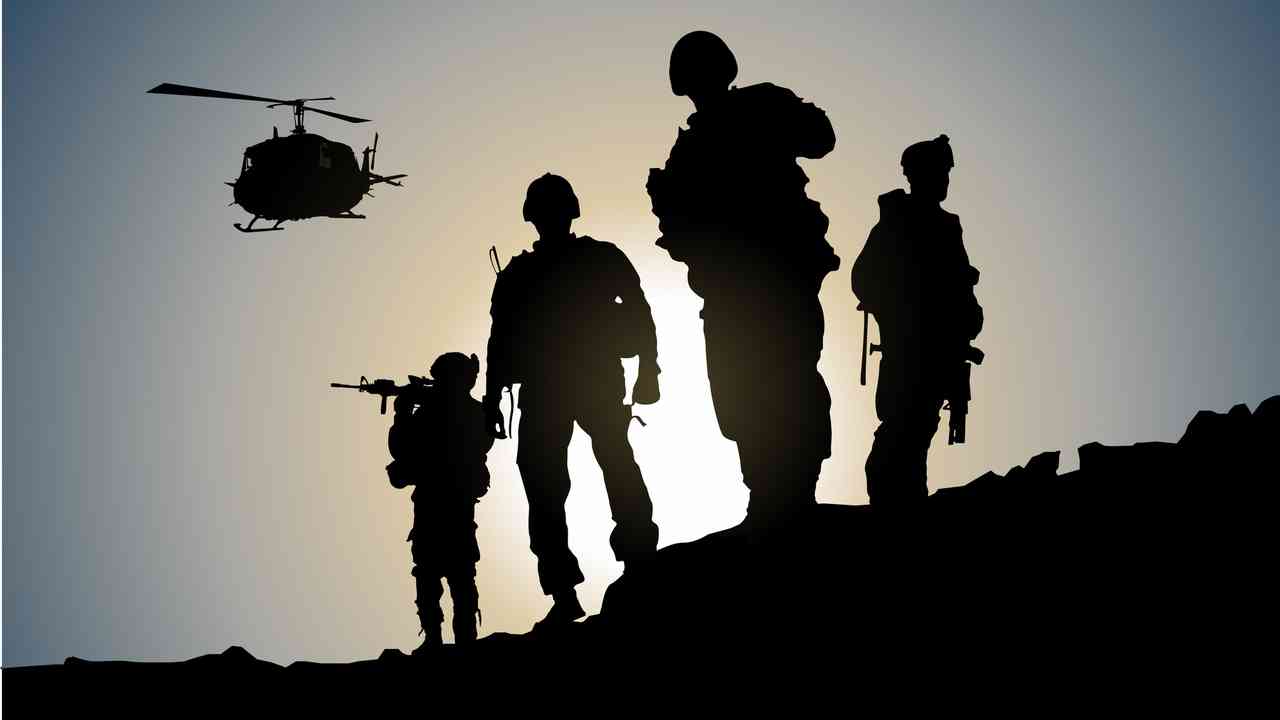
Modern warfare does not begin with the roar of gunfire. First, language breaks down: a blockade becomes “pressure,” blackmail becomes “a tool of influence,” and violence becomes “an incident.” Then, suddenly, markets tremble, trade routes close, and the world discovers that it missed the beginning of the conflict.
May 2026. The Strait of Hormuz is once again making headlines around the world. Experts count tankers, commentators analyze warship movements, and one question keeps returning in television studios: is Iran winning?
At first glance, the answer seems obvious. Tehran is blocking one of the world’s most important shipping routes, unsettling markets, and forcing its adversaries to respond. Yet framing the question this way often leads us astray. While the world follows the latest incidents at sea, the blockade also hurts Iran itself, restricting its own oil exports and increasing economic pressure.
The question itself conceals another assumption. We assume that we are dealing with a conflict that has just begun and will end with a clear victory for one side. Both assumptions, however, may be wrong.
Supporters of US actions and their most vocal critics often assume that the current conflict began with the latest escalation in early 2026. Yet assigning decisive importance to a single date is like trying to identify the exact day a cliff began to collapse. We see the moment it cracks but ignore the process that undermined its foundations for years.
In his essay Words of War, political scientist Eliot A. Cohen argues that contemporary societies are increasingly struggling to understand prolonged conflicts. The 24/7 news cycle has accustomed us to immediate answers, clear turning points, and swift resolutions. We have reduced war to a series of events, losing sight of a process that unfolds over years, sometimes entire decades. Little wonder, then, that we increasingly struggle to answer a seemingly simple question: when does a war really begin?
Western strategic thinking has long favored clear dates. A war is supposed to begin when tanks cross a border and the first missiles strike cities. Only then do we recognize that a conflict has begun. Yet states increasingly wage war in other ways.
Before soldiers appear, years of struggle may already have taken place over influence, the economy, infrastructure, and the adversary’s perceptions and beliefs. Cyberattacks, intelligence operations, disinformation campaigns, and operations by armed groups acting on behalf of states do not fit the conventional image of war. Increasingly, however, they form an integral part of it.
Iran offers a clear example of this process. It is difficult to argue that the current confrontation began only in 2026. Its roots reach back to the Islamic Revolution of 1979 and decades of rivalry pursued both openly and through methods that remained below the threshold of full-scale conflict.
History repeatedly challenges our attachment to fixed dates. World War II did not begin at the same time for everyone. For Europeans, September 1939 remains its symbolic beginning. In American collective memory, Pearl Harbor dominates as the point of reference. From an Asian perspective, however, the war was already underway following Japan’s aggression against China in 1937.
The same was true of Vietnam. The conflict that most people associate with American helicopters hovering over the jungle had its origins many years earlier. Wars do not always begin with a roar. Sometimes they begin with a murmur.
Our attachment to dates leads to another mistake. We keep asking when the next war will break out, as though it lies somewhere in the future. Yet many contemporary conflicts have been underway for a long time. Rivalry between major powers increasingly resembles a permanent state of tension. The front line runs through power grids, server rooms, seaports, and trade routes. Under these conditions, war becomes a process of sustained pressure.
This changes how we think about security. Preparing an army for the day the first shots ring out is no longer enough. Societies must also be able to function in a reality where conflict can continue for years without a formal declaration of war.
Another habit inherited from the 20th century is the obsessive search for a winner. Every day, the media try to answer the same questions: who is winning today? How many kilometers of territory have they gained? How many ships have they sunk? Who has inflicted greater losses on the enemy? This approach works well in sports. It works far less well in geopolitics.
Cohen, a former adviser to the US secretary of state, observes that contemporary conflicts very rarely end in an unequivocal triumph for one side. More often, adversaries achieve some of their objectives while also bearing some of the costs.
The War of 1812 remains a textbook example of this ambiguity. The British believed they had succeeded because they retained control of Canada. The Americans also considered themselves victors, pointing to their growing influence and their country’s stronger position. Both interpretations can be true at the same time.
Japan offers an even more intriguing case. In 1945, it suffered a complete military defeat. Its cities lay in ruins, and the country had to surrender unconditionally. Even so, the war accelerated the collapse of European colonial empires in Asia—a process consistent with one of Tokyo’s long-term goals. History shows that war rarely fits neatly into a simple accounting of victories and defeats.
Another word keeps returning in Western strategic debates: “quagmire.” Any mention of increased military involvement immediately brings comparisons with Vietnam, Afghanistan, or Iraq. We begin to interpret every new conflict through the lens of past failures. This is understandable. History should teach us. The trouble begins when it becomes our only point of reference.
The conflict around the Strait of Hormuz does not resemble the Vietnam War. There is no jungle, no vast expeditionary army, and no prolonged guerrilla war against hundreds of thousands of troops on land. Naval forces, air power, technology, and control of strategic trade routes play the central roles here.
Yet public debate continues to rely on the same metaphors, as though we were trying to describe a smartphone using the language of a landline telephone manual.
The most serious consequences of these mistakes extend beyond language itself. Words shape how societies perceive reality.
If we portray every conflict as an endless quagmire, reluctance to get involved grows. If we present every side as equally responsible for violence, it becomes harder to understand who is the aggressor and who is responding to aggression. If we depict war solely as a series of spectacular events, we lose the ability to recognize the processes unfolding in the background.
As a result, democratic societies begin to respond to simplified media portrayals rather than reality. Polarization, information fatigue, and distrust take hold. Debate increasingly becomes a clash of ready-made narratives that exclude one another but rarely help us understand the situation.
Perhaps the West’s greatest problem today is not a lack of information but an abundance of concepts that describe the contemporary world less and less accurately.
We try to interpret 21st-century conflicts through language shaped by the experiences of the 20th century. We look for starting dates, unequivocal victories, and familiar historical analogies, even as reality fits these categories less and less comfortably. War does not always begin with troops crossing a border. It does not always end with the signing of a surrender. Increasingly, it does not even resemble war in the traditional sense. It can continue for years without attracting widespread attention.
That is why the debate over words has consequences far beyond language. How we interpret reality depends on it. If we continue to describe contemporary conflicts using a vocabulary inherited from the 20th century, we will increasingly mistake symptoms for causes, episodes for processes, and media noise for real geopolitical change.
And in a world overflowing with information, losing our bearings can be as costly as making the wrong decision.
Read this article in Polish: Wojna starych słów. Dlaczego nie rozumiemy współczesnych konfliktów?


Content marketing specialist with his heart in journalism and English translations. An active writer for 20 years. Majored in economy. He has authored several non-fiction books, one of which won an award at the Ladek Mountain Festival. Sports, hard rock, and Italian cuisine afficionado.


Zmień tryb na ciemny