Humanism
What It Means to Believe We Have a Choice
02 October 2026





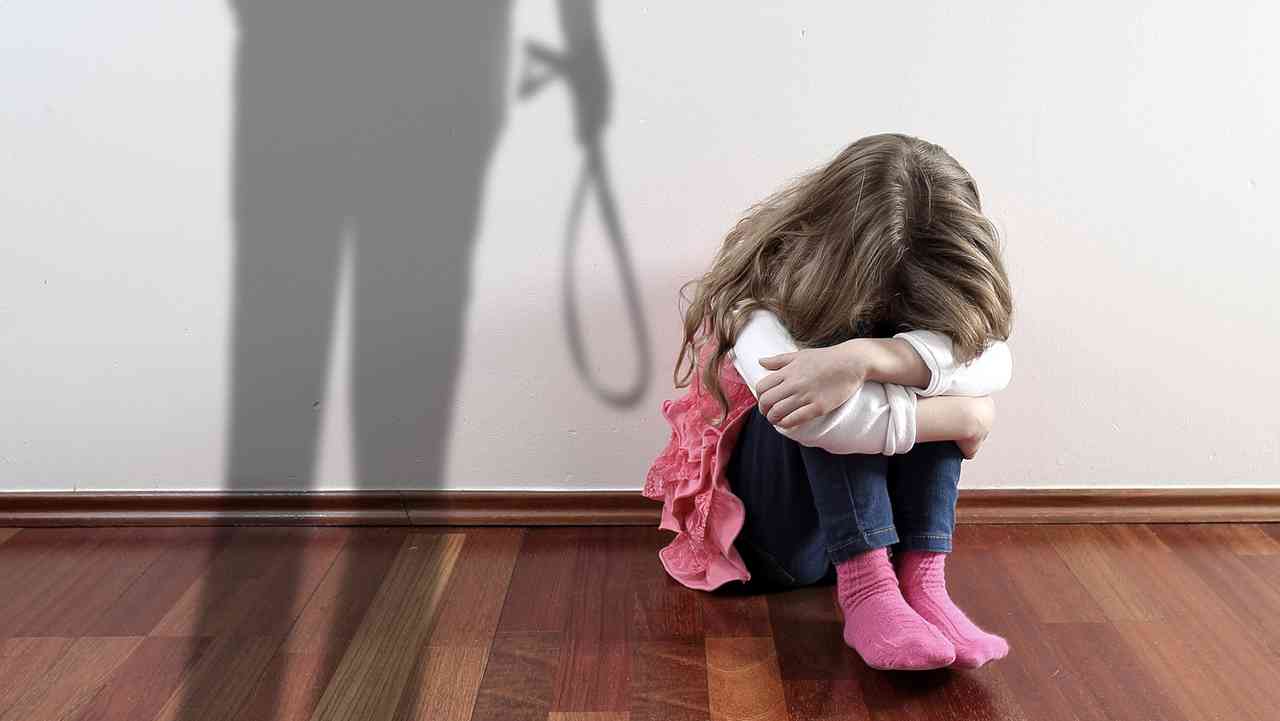
A spank lasts a moment. The effects of spanking can linger far longer than the sting on the skin. Long-term research shows that violence against children can resurface years later in places a parent least expects: in the classroom, in relationships with others, and in the way a child experiences emotions and responds to the world.
If scientists published a long-term study in 2026 showing that employees performed worse and made more mistakes when their boss slapped them in the face for arriving late, we would all look at one another in bewilderment. No employer in a civilized country would try to argue that slapping an employee was simply a traditional form of discipline or a sign of concern for the team’s performance.
Yet when it comes to relationships between parents and children, we still have to involve leading universities, devote substantial funding to research, and follow thousands of people over 17 years to establish essentially the same point.
The UCL analysis is not another cursory survey of a few hundred people. Dr. Anja Heilmann of the Research Department of Epidemiology and Public Health drew on the Millennium Cohort Study, a project that followed nearly 19,000 children born in the United Kingdom around the turn of the millennium for almost two decades. The analysis examined physical punishment in early childhood and later outcomes, including GCSE exams typically taken at age 16. The wider dataset followed children from infancy to age 17.
The figures speak for themselves. Children who experienced physical punishment at ages 3, 5, and 7 were 5.7 percentage points more likely to fall short of 5 passing GCSE grades, including English and mathematics. Almost half of that group failed to reach this benchmark: 48 percent, compared with 42.3 percent among children who had not experienced physical punishment, after accounting for other factors.
At age 14, children who had experienced any physical punishment between ages 3 and 7 were 33 percent more likely to engage in risky behavior toward others, including bullying and hitting, pushing, or shoving someone. Rather than learning how to build relationships, they could be reproducing a familiar pattern: the stronger person uses force to demand obedience.
Across the outcomes examined, the researchers found no evidence that hitting children offered any benefit as a form of discipline. As Dr. Heilmann emphasized in remarks reported by the BBC, the observed effects pointed to harmful outcomes.
The authors acknowledge that the study is observational. It shows a clear association between physical punishment and later difficulties but does not establish straightforward causation. Nevertheless, the UK Department for Education maintained that the government had no plans to change the law.
The UCL report documents consequences but does not explain the mechanisms that may underlie them. Other researchers have explored those mechanisms by studying brain responses in children and adolescents.
Over a 2-year period, Kreshnik Burani and Greg Hajcak of Florida State University studied how 149 adolescents’ brains responded to making mistakes and receiving rewards. EEG electrodes recorded their brain activity. Adolescents who had experienced corporal punishment showed stronger neural responses to their own errors and weaker responses to rewards. These patterns are associated with vulnerability to anxiety and depression, respectively.
Jorge Cuartas, then at the Harvard Graduate School of Education, added another piece to the puzzle. His research linked physical punishment to heightened responses to threatening stimuli in several brain regions, including the dorsal anterior cingulate cortex, which helps detect threats and process significant information. A child who never knows when the next spank will come may learn to remain constantly on guard.
When that child sits down in a classroom, their nervous system may continue doing what it does at home: scanning the surroundings, staying alert, and looking for warning signs. There is no switch that instantly moves a brain from survival mode into learning mode. A child preoccupied with potential danger has fewer resources available for geometry.
Stress physiology may also play a role. Physical punishment can trigger the body’s stress response, including the release of cortisol. Prolonged exposure to excessive stress can interfere with developing systems involved in memory, learning, emotional regulation, and planning, including the hippocampus and prefrontal cortex. The studies described here do not establish that spanking itself damages these structures. They do suggest that its effects may reach beyond marks on the skin to the developing nervous system.
It is easy to dismiss England as an island exception. Along with Northern Ireland, it remains among the few jurisdictions in Western Europe where parents can invoke “reasonable punishment” in court—a legal defense with roots in an 1860 case that permits some forms of physical punishment. Scotland abolished its equivalent defense in 2020, and Wales followed in 2022. Proposals for a ban in England did not become law. But blaming everything on British traditionalism would be a convenient distortion.
In the United States, some forms of parental corporal punishment remain legal in all 50 states, subject to limits that distinguish permitted punishment from unlawful abuse. In 19 states, teachers or public school principals can physically punish students. According to the 2024 General Social Survey, 56 percent of American adults still believe that children sometimes need a good spanking. That is more than half the adult population of the world’s most powerful country.
UNICEF’s global figures from June 2024 are even more sobering: around 330 million children under age 5 regularly experience physical punishment at home. Slightly more than 1 in 4 mothers and primary caregivers worldwide believe that physical punishment is necessary to raise and educate children properly.
Poland banned corporal punishment in 2010. Yet the Empowering Children Foundation’s annual survey of attitudes toward child maltreatment shows how far the law has moved ahead of social attitudes: more than 1 in 3 Poles still accept physical punishment in some form.
Researchers have also identified a telling pattern. When asked about hitting children, the overwhelming majority say no. When the question uses the word “spanking,” resistance falls sharply. A single word moves the same action out of the category of violence and into a drawer labeled “discipline.” That label is misleading, yet it remains remarkably entrenched in our culture.
Opponents of bans insist that the law cannot reach behind closed doors. Research suggests a more complicated picture. An analysis by the Center for Global Development found lower average levels of parental approval and use of corporal punishment in countries with bans, while also emphasizing that legislation alone is not enough.
A separate study of 6 European countries found that the odds of parents reporting occasional to frequent corporal punishment were 1.7 times higher where the practice was legal, after accounting for sociodemographic factors. That is an association, rather than proof that a ban alone caused the difference.
Laws can also help establish new social norms by making clear that hitting children is unacceptable. In Poland, the proportion of people who completely oppose physical punishment rose from 35 to 62 percent over 2 decades. Change is slow, but it is moving in the right direction.
Researchers led by Jorge Cuartas at NYU Steinhardt examined 189 studies from 92 low- and middle-income countries and published their findings in Nature Human Behaviour. Their conclusion was clear: physical punishment was associated with harmful outcomes, with no evidence of beneficial effects across the outcomes examined. It is troubling that we still have to repeat this in 2026.
Defenders of “traditional parenting” have a favorite argument: in our own home, we decide how to raise our children. Yet the consequences do not remain within those 4 walls.
Research links physical punishment in childhood to poorer educational outcomes and difficulties that can extend into adult working life. Years spent on alert for threats may also increase vulnerability to anxiety and depression. A spank delivered to a 3-year-old at the kitchen table can echo years later: in disappointing exam results, in a therapist’s office, and in the labor market.
That is why UCL researchers analyzed data following a cohort of around 19,000 children through age 17. More evidence in a case where evidence has long been abundant. Another publication that will make headlines for a week and then disappear. Another report destined for an archive while a new research team is already preparing a grant application for further analysis.
The children these studies concern are not waiting for the results. They are growing up now, in homes where the decision to spank often rests entirely with their parents. In 2026, after hundreds of studies and dozens of bans, it still too often does.
Read this article in Polish: Dorośli nazywają to klapsem. Dzieci dorastają, skutki nie znikają


Content marketing specialist with his heart in journalism and English translations. An active writer for 20 years. Majored in economy. He has authored several non-fiction books, one of which won an award at the Ladek Mountain Festival. Sports, hard rock, and Italian cuisine afficionado.



Zmień tryb na ciemny