Education
The Same Problem Feels Different in Another Language
15 October 2026



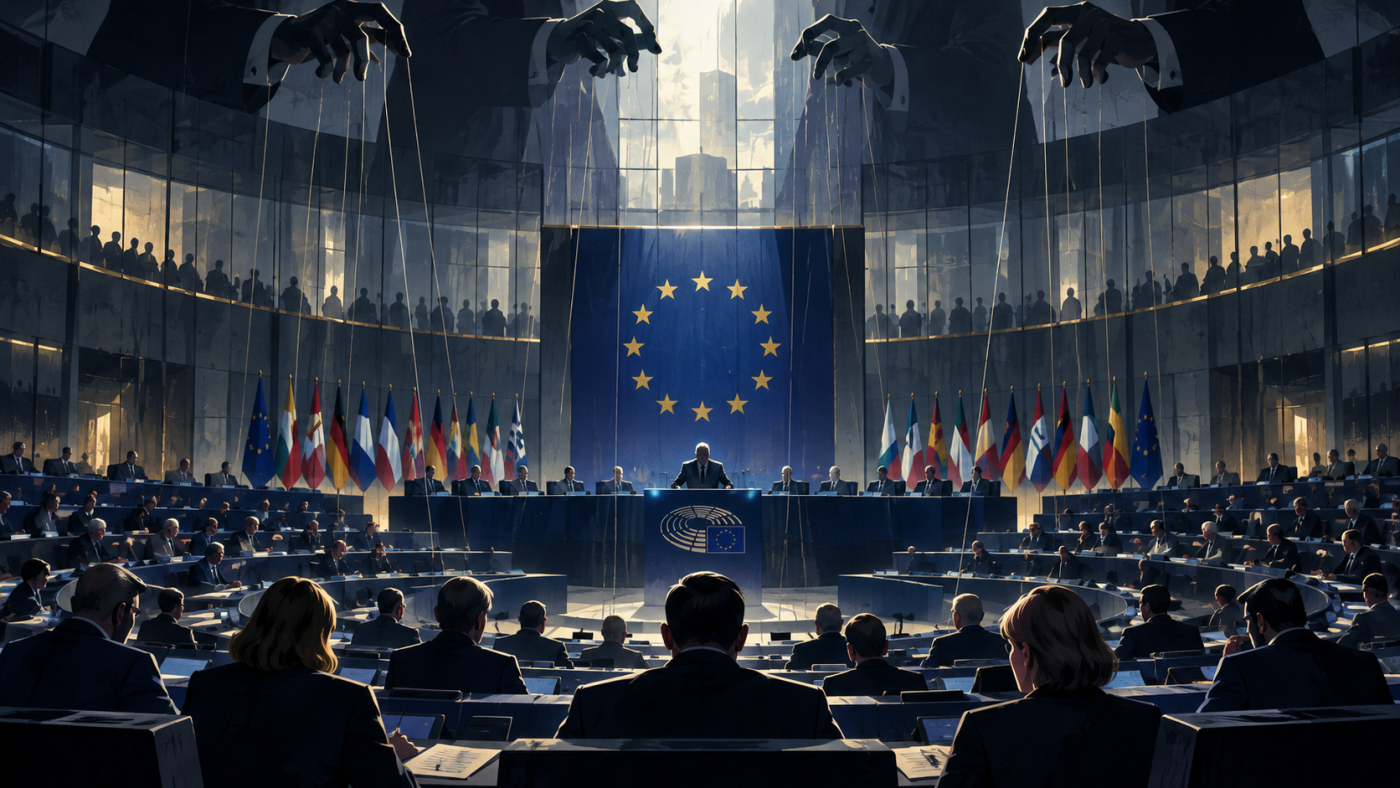
The political order that long seemed almost unshakable in Europe is beginning to wobble. If European Parliament elections took place today, the established centrist bloc could lose its majority. Does that sound like the beginning of a political earthquake? Not necessarily. Dariusz Lipiński, former vice-president of the Parliamentary Assembly of the Council of Europe, explains why even a major shift in Parliament might not immediately reshape the EU power structure - and why 2027 could prove far more consequential.
In August, projections by the election analysis and media platform Europe Elects, published by Euronews.com, caused something of a stir over the possible future composition of the European Parliament. They suggested that, if elections took place today, the establishment parties that have governed Europe since World War II would lose their majority at the EU level for the first time. This is undoubtedly a strong signal of growing anti-establishment sentiment across European societies. But does it mean anything more?
For now, only potentially. Even if it actually happened, an anti-establishment majority in the European Parliament, though psychologically revolutionary, would not in itself change who holds power in the EU. Parliament has limited powers, more restricted than those of national parliaments in the member states.
For example, it has no right to initiate legislation, its oversight powers are more modest, and, most importantly, it cannot remove the executive from office. This is largely because executive power has no single, clearly defined institutional home. Broadly speaking, in the member states, a government headed by a prime minister exercises executive power. To put it plainly, if necessary, everyone knows what can be brought down, who can be removed, and which procedure to use.
The European Union does not have Montesquieu’s separation of powers. There is nothing unusual about this as long as the EU operates as the organization it was created to be: an international organization acting within the limits established by its treaties. Problems with Montesquieu’s model arise when the Union tries to claim the attributes of an independent, sovereign state.
The EU’s system of power consists of two types of mechanisms: supranational and intergovernmental. Its supranational institutions are the European Commission, the Court of Justice of the European Union, and Parliament itself. At least formally, the members of these bodies represent the Union as a whole rather than their individual countries.
“Citizens are directly represented at Union level in the European Parliament” (Article 10(2) of the Treaty on European Union, or TEU).
“In carrying out its responsibilities, the Commission shall be completely independent. Without prejudice to Article 18(2), the members of the Commission shall neither seek nor take instructions from any Government or other institution, body, office or entity” (Article 17(3) TEU).
Judges of the Court of Justice must be chosen from people whose independence is beyond doubt (Article 253 of the Treaty on the Functioning of the European Union, or TFEU). Since we are dealing here with treaty provisions, we can set aside the numerous counterexamples to the supposed independence of the Court’s judges.
Intergovernmental mechanisms remain in the hands of the member states. Their presidents and/or prime ministers represent them in the European Council, while their governments, through the relevant ministers, represent them in the Council of the European Union, known simply as the Council. Most matters can be decided by qualified majority, but some—including foreign policy, defense, taxation, and the admission of new member states—require unanimity.
Voting follows a double-majority rule: 55 percent of member states, currently 15, must vote in favor, and they must represent at least 65 percent of the EU’s population. Both conditions must be met simultaneously. The second clearly favors larger countries: Germany and France alone account for approximately 34 percent of the Union’s population, more than half the population share required for a qualified majority.
The EU’s supranational institutions, particularly the Commission and the Court of Justice, show a very strong tendency toward competence creep: the gradual, informal expansion of their powers, authority, or scope of activity beyond the treaties into areas where they formally have no competence.
The Commission has the characteristics of a public administration and an executive, but it also holds an almost exclusive right to initiate legislation and the power to impose penalties. It is therefore an executive-legislative hybrid with elements of judicial power. The Council of the European Union, conversely, is a legislative-executive hybrid: it holds legislative powers, usually jointly with Parliament, as well as decision-making powers in certain areas.
As already noted, Parliament is not a legislature in the same sense as the legislative bodies of democratic states. The Commission puts forward draft legislation, and Parliament does not even adopt it independently, but jointly with the Council.
The Court of Justice of the European Union exercises not only judicial power but often legislative power as well. It does so beyond the treaties—competence creep again—but effectively, through interpretations that change their substance. Parliament’s influence over the Court’s composition is minimal and indirect. It proposes one of the seven members of the Article 255 panel, which assesses candidates for judicial office, and it also has a say in the rules governing the Court’s operation. The governments of the member states, however, nominate and jointly appoint the candidates. Formally, the Article 255 panel does not have to deliver a favorable opinion. Parliament’s influence over the appointment of the Court’s judges can therefore be described as virtually nonexistent.
Its influence over the appointment of the European Commission is somewhat greater. The European Council proposes a candidate for Commission president, who must secure the support of an absolute majority of Members of the European Parliament: the number of votes in favor must exceed half the total number of MEPs. The president elected in this way works with the Council to draw up the list of commissioners and assigns their portfolios. The candidates come from member-state governments, following the principle of “one country, one commissioner.”
After the relevant parliamentary committees hold hearings, Parliament votes on the Commission as a whole; it cannot reject individual nominees. Unlike Poland’s Sejm, for example, which can pass a vote of no confidence in an individual minister, the European Parliament has no such power over an individual commissioner. Parliament’s influence over the Commission’s composition is therefore limited and essentially passive.
If Parliament has little influence over the EU’s supranational institutions, it has none over its intergovernmental bodies. The composition of the European Council and the Council reflects the political landscape within the member states and has no connection whatsoever to the composition of the European Parliament. Parliament does not choose the national executives that make up the intergovernmental component of the EU’s governing system.
For a shake-up of the entrenched EU establishment to become possible, results like those projected by Europe Elects would therefore have to occur in national elections, especially in the largest member states. Those elections determine the composition of the European Council and the Council, as well as which candidates countries nominate to the European Commission and the Court of Justice.
We will find out whether this shake-up happens in the coming year, 2027. France will hold a presidential election, while eight other member states will hold parliamentary elections. These include three of the five largest: Poland, Spain, and Italy.
Given Germany’s considerable political instability, an early parliamentary election there cannot be entirely ruled out either. If that happened, 2027 would offer the possibility of major political changes in the EU’s five largest member states and five others.
Only then might deeper political changes to the EU power structure become possible. And even then, they would remain only a possibility. Although anti-establishment parties share a critical view of how the Union currently operates, they also differ significantly from one another.
There is still a long way to go before the European Union changes its existing political, economic, and ideological course.
Read this article in Polish: Stary układ słabnie. Ale UE nie zmieni się tak łatwo


A columnist and former member of parliament specializing in European affairs. He served as Vice-President of the Parliamentary Assembly of the Council of Europe. In his writing, he analyzes the future of European integration, relations between member states and EU institutions, and the challenges facing European democracy.



Zmień tryb na ciemny