Science
Before There Are Planets, There Is Dust
16 October 2026





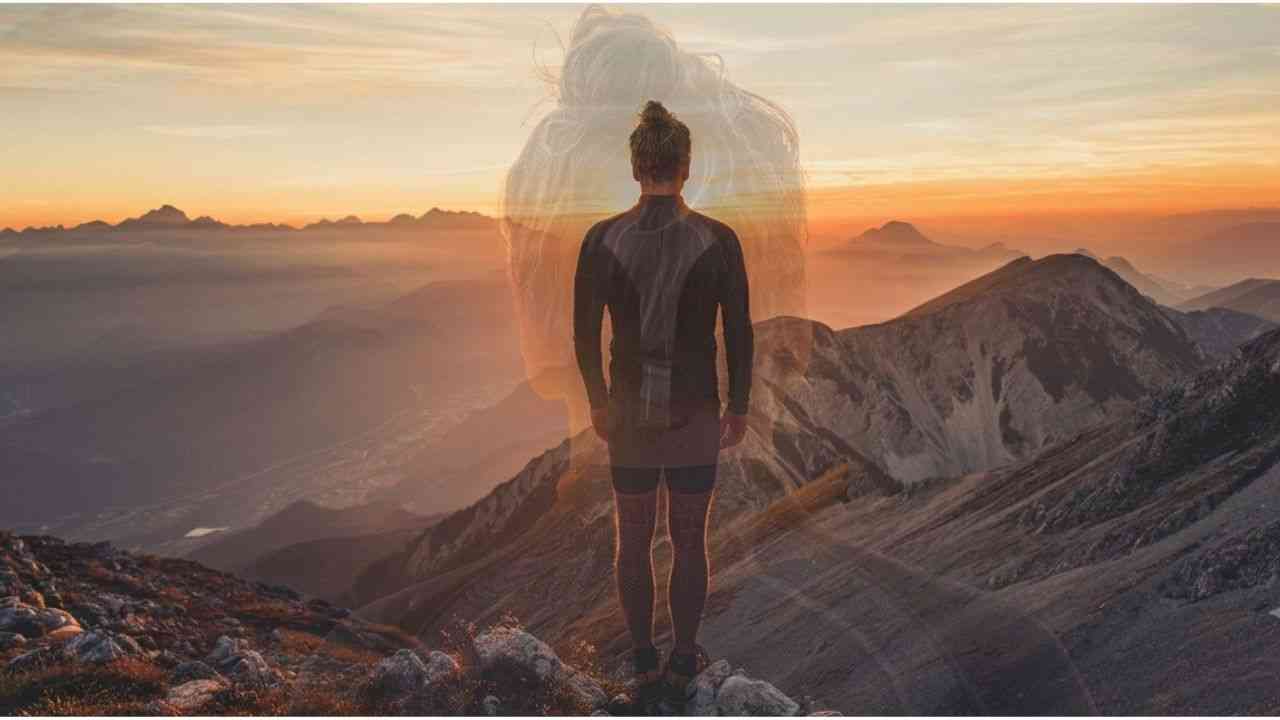
We are used to thinking of consciousness as something human: an inner voice, pain, memory, fear, a sense of “I.” Yet a new paper by two philosophers suggests that we should not confine consciousness in advance to the human brain, or even to biology as we know it on Earth. Consciousness beyond humans might arise in other organisms — and perhaps, one day, in artificial systems.
Can one be conscious without physical experience of the world? The question seems absurd, because in theory we know the answer from our own experience: such experience may be necessary. That is precisely why the problem has kept returning for years in philosophy of mind, neuroscience, and the debate over artificial intelligence. It is hardly surprising, then, that someone has now suggested, while appealing to scientific reasoning, that we should look at the matter much more broadly.
The philosophers in question are Jeremy Pober of the University of Lisbon and Eric Schwitzgebel of the University of California. In their latest philosophical paper, they argue that consciousness cannot be limited only to the biology we know on Earth.
The researchers do not claim that artificial intelligence is conscious. Nor do they announce the discovery of conscious aliens. They ask a different and far more interesting question: who has consciousness, and must it be tied to one type of biology that evolved on our planet?
In the article Substrate Flexibility and the Copernican Principle of Consciousness, their argument rests on the idea of “substrate flexibility.” The point is that some properties can be realized by different materials. A cup can hold water whether it is made of plastic, glass, or metal. The same applies to music: it can be stored on a CD, on vinyl, or in a computer’s memory. According to the authors, consciousness may work in a similar way.
Viewed as a physical process, consciousness does not necessarily have to depend only on neurons built from Earthly biochemistry. At first encounter, that sounds speculative.
The philosophers, however, point to the scale of the observable universe and the number of galaxies. On such a vast scale, even extremely rare phenomena may occur many times.
To support their claim, the authors assume that at least one thousand advanced civilizations have existed in the history of the cosmos. If even some of them arose in conditions significantly different from those on Earth, it would be difficult to expect every conscious organism to rely on exactly the same biochemical solution.
Here, their thinking comes close to the tradition of Nicolaus Copernicus. Successive discoveries have shown that our planet does not occupy a particularly privileged place in the universe. Eric Schwitzgebel and Jeremy Pober propose extending that principle to consciousness as well.
According to the authors of the paper, we should not assume in advance that conscious experiences belong only to organisms that evolved on Earth, unless we have strong evidence for that claim.
This argument also matters for the discussion of AI, although the authors remain highly cautious on this point. They believe that different substrates of consciousness are possible, but that does not mean every kind of matter could automatically support consciousness. The lead author of the study thinks that complex silicon systems might one day be better candidates for consciousness than contemporary artificial intelligence. Both philosophers emphasize, however, that for now we have no hard evidence that AI systems are conscious.
The same is true of their scientific work: it does not give a clear answer to the question of which systems are conscious and which are not. It does, however, challenge the conviction that consciousness can belong exclusively to one kind of biology. If the authors are right, future discoveries may one day show that nature can create conscious minds in more than one way. Consciousness beyond humans would then no longer be a fantasy about aliens or machines, but a serious question about our place in the universe.
Read this article in Polish: Czy tylko człowiek ma świadomość? Ta teoria zabiera nam wyjątkowe miejsce

A graduate of journalism and social communication at the University of Rzeszów. She has been working in the media since 2019. She has collaborated with newsrooms and copywriting agencies. She has a strong background in psychology, especially cognitive psychology. She is also interested in social issues. She specializes in scientific discoveries and research that have a direct impact on human life.

Zmień tryb na ciemny