Science
Before There Are Planets, There Is Dust
16 October 2026





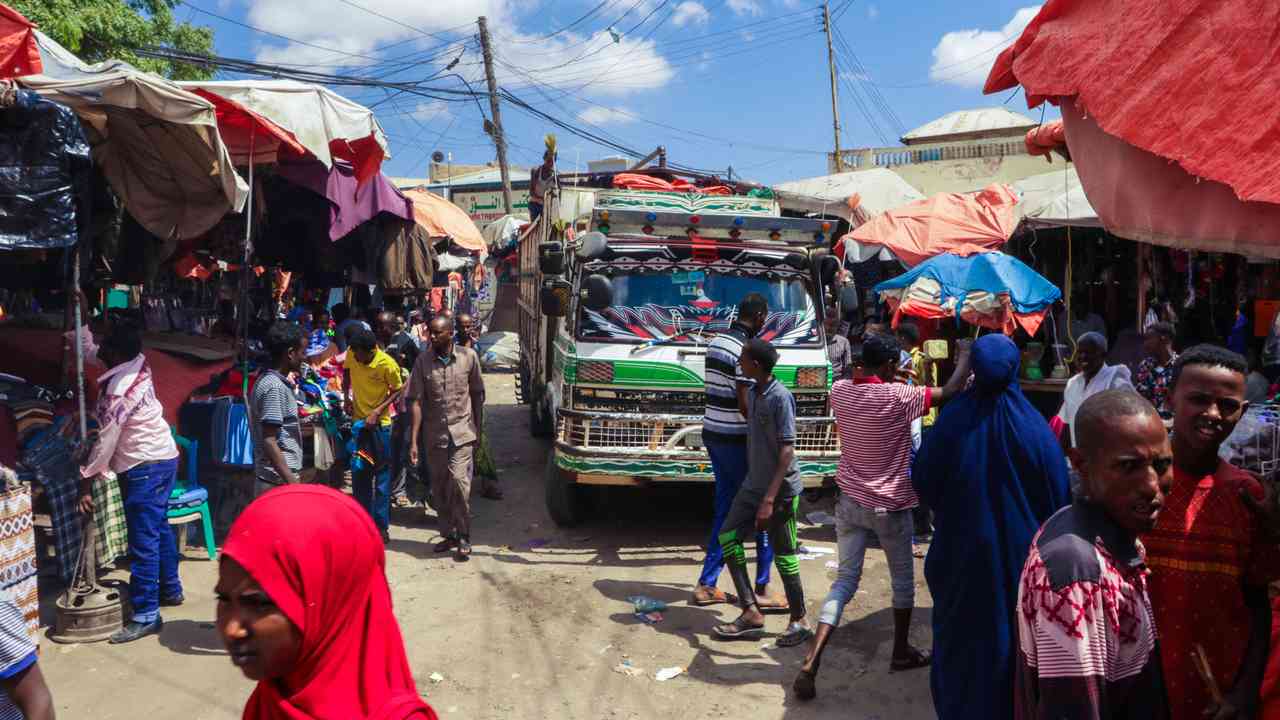
On maps, they look like printing errors: a piece of land, a flag with no seat at the table, a border that part of the world pretends not to see. In reality, they can obstruct great powers, strain alliances, and draw major states into conflict. Unrecognized states are returning to global politics because powerful players have rediscovered how useful their ambiguous status can be.
Until December last year, not a single UN member state recognized this strip of territory in the Horn of Africa. In Europe, it would be a fairly substantial country — about half the size of Poland, with approximately 5 million inhabitants — but in Africa, it is a small player. Were it not for its location, we would probably not be reading about it in the world’s leading media. Geography is precisely what has recently turned Somaliland, which broke away from Somalia in 1991, into a subject of geopolitical debate.
On December 26, 2025, Israel became the first UN member state to recognize Somaliland as an independent and sovereign country. The decision prompted opposition from Somalia, the African Union, and numerous governments across the region.
Somaliland lies on the Gulf of Aden, at the southern “gateway” to the Red Sea, with the Suez Canal at the opposite end. Its position makes it a natural base for forces seeking to counter the Houthi rebels across the gulf in Yemen. Since rebel attacks began disrupting traffic on this route, which is vital to global trade, in 2023, it has become clear that Somaliland’s territory can serve as a lever of regional influence.
That is why Israel’s recognition of Somaliland in December 2025 caused a wave of discontent both within the region and far beyond it. What connects the Jewish state with this Muslim quasi-state? In practical terms, very little beyond a shared interest in a narrow but strategically important set of issues. Somaliland has built relatively effective state institutions and hopes to attract foreign investment and gain recognition from additional countries. Israel, meanwhile, wants a strategic foothold from which it can counter the Houthis, allies of its long-standing enemy Iran.
This matters especially today, as Israel and the United States seek to “knock out” Iran. It also forms part of Israel’s rivalry with its powerful northern adversary, Turkey, which maintains close relations with Somalia and has a military presence there.
In order to limit Iran’s influence in the region, Israel established, for example, a naval base on Eritrea’s Dahlak Archipelago. The base was attacked by the Houthis in 2023.
— the Polish Institute of International Affairs writes in its analysis.
The existence and reported attack on the Dahlak installation have appeared in analyses of Israel’s strategic presence in the Horn of Africa, although details concerning such facilities remain difficult to verify independently.
From this perspective, Somaliland’s proximity to the Houthi-controlled part of Yemen made it an attractive partner — one that might agree to host military installations in return for help in breaking its diplomatic isolation. Its agreement with Ethiopia in January 2024 pointed in this direction. Under the arrangement, Somaliland agreed to lease part of its coastline for Ethiopian naval access. Israel reportedly began negotiating a similar agreement that same year. At the same time, public discussion tested whether Somaliland might accept Palestinians displaced from Gaza.
Diplomatic recognition, which can appear to be an elevated act of relationship-building between 2 nations, thus becomes a cynical move intended to advance particular interests.
Reactions to this move naturally depend on geopolitical perspective. The United States, although it has not recognized Somaliland itself, argues that Israel’s decision presents no inherent danger. States in the region, along with the overwhelming majority of Arab countries, condemned the move. By entering the strategically crucial Horn of Africa, Israel is sending another signal that it wants to reshape the region’s map of political influence and strengthen its control over the Red Sea.
Somalia claims the move marks the beginning of a forced exodus of Palestinians from Gaza. Despite denials from the other side, Somalia’s president has warned of a political earthquake in the Middle East. He alleges that, in exchange for diplomatic recognition, Somaliland agreed to accept Palestinians from Gaza and allow Israel to open military bases.
These allegations have circulated in diplomatic and media discussions, but Israel has defended its recognition decision and rejected claims that it forms part of a plan to forcibly relocate Palestinians.
Significantly, China strongly criticized Israel’s recognition of Somaliland. Chinese Foreign Ministry spokesperson Lin Jian said that countries from outside the region should refrain from inappropriate interference and that no state should support separatist forces in another country for its own selfish benefit.
China has a particular interest in ensuring that such “quasi-states” do not gain recognition. We will return to the reason shortly.
In our part of the world, Russia has become the leading specialist in exploiting quasi-states. Its primary objective is to “infect” neighbors that the Kremlin considers a threat. I visited one such entity not long before the outbreak of Russia’s full-scale war against Ukraine: Transnistria. The experience hovered somewhere between absurdity and grotesque theater.
This narrow strip of land, approximately 200 kilometers long, cuts like a Russian knife into the Ukrainian-Moldovan borderland. Recognized by no country in the world — not even Russia — this quasi-state functions as a permanently bleeding wound. Its purpose is to obstruct Moldova’s integration with the West. Transnistria broke away from Moldova in 1990.
It also serves as a threat against Ukraine. Russian troops remain stationed in Transnistria, ensuring that power in the territory does not fall into the “wrong” hands.
Transnistria survives thanks to economic support from Moscow. Virtually every important branch of its economy is controlled by a single company: Sheriff, founded by former security-service officers. Sheriff owns supermarkets, gas stations, media outlets, construction companies, car dealerships, and even a soccer club.
Everywhere one looks, one sees another “Sheriff.” The company’s ubiquity makes the absurdity of this quasi-state unmistakable: it resembles an oligarchic banana republic created primarily to protect Russian interests.
In mid-May, the Kremlin reminded Europe that Transnistria remains a card in its hand. Putin signed a decree allowing residents of the quasi-state to obtain Russian passports more easily. And the distribution of Russian passports has long been a warning sign for neighboring countries.
The May 15, 2026 decree allows eligible permanent residents to bypass several standard citizenship requirements. Moldova’s leaders criticized the measure, while observers compared it with Russia’s previous policy of “passportization” in separatist territories.
No officially recognized state recognizes Transnistria. But does that mean it has no official relations with anyone at all? Not quite. It is recognized by other unrecognized quasi-states, including South Ossetia and Abkhazia.
Russia, incidentally, did a great deal to bring these 2 separatist territories into existence and ensure their survival, thereby complicating Georgia’s political situation. Above all, their presence has made Georgia’s integration with the West more difficult. In Russian strategy, both quasi-states therefore play a role similar to that of Transnistria.
The so-called Donetsk People’s Republic and Luhansk People’s Republic showed us where Russia’s game with quasi-states can lead. Created with Russian support in 2014, the 2 “people’s republics” poisoned eastern Ukraine for the next 8 years while advancing the Kremlin’s interests. In September 2022, Russia decided that both entities had fulfilled their purpose and simply annexed them.
More recently, this pattern has caused considerable anxiety farther north, in Estonia. In 2026, an online campaign began circulating in Russian-language spaces that presented the Estonian city of Narva as the “Narva People’s Republic.” Narva has approximately 50,000 inhabitants and lies directly on the Russian border. Western analysts have long identified it as one of the potential flashpoints in any confrontation between Russia and NATO.
The campaign began circulating widely in early 2026, using invented flags, borders, coats of arms, and separatist rhetoric similar to narratives previously deployed in Ukraine. Analysts have described it as a possible test of Estonia’s defenses against hybrid threats.
The Kremlin bases its hopes regarding Narva on the fact that approximately 90 percent of the city’s inhabitants speak Russian. Many Estonians fear that the “Narva People’s Republic” campaign may represent the beginning of an operation designed to separate Narva from Estonia.
The result would be another quasi-state designed to “infect” NATO’s northeastern flank. Russia has already shown that such scenarios must be taken seriously. The Kremlin has become highly skilled at using quasi-states as geopolitical weapons.
Let us return, finally, to China’s forceful opposition to Israel’s recognition of Somaliland. Beijing is, of course, protecting its own interest: bringing Taiwan under the control of the People’s Republic of China.
For this reason, China has long presented itself as an opponent of separatism. It has also done everything possible to discourage other countries from recognizing Taipei.
Taiwan is sometimes classified as a quasi-state, although compared with the Russian-backed entities discussed above, it looks like a fully stable state structure. The problem is that the government in Taipei currently maintains formal diplomatic relations with only 12 countries. Most of them are small states unfamiliar to much of the wider public.
At the beginning of May, Taiwan’s president traveled to one of them: Eswatini, formerly known as Swaziland, in southern Africa. His journey gave “ammunition” to those who describe Taiwan as a quasi-state.
Lai Ching-te had to find an unconventional way to reach Taiwan’s only African diplomatic partner. Two weeks earlier, his planned journey had been disrupted after several countries withdrew permission for his plane to cross their airspace — a decision Taipei attributed to pressure from China.
The cancellation of the first visit dealt a considerable blow to Taipei’s image. It made Taiwan’s president appear effectively trapped on the island and unable to visit his country’s partners.
Lai therefore did everything possible to make the visit happen. In an operation resembling a scene from a spy film, Taiwan eventually managed to outmaneuver China. Taipei celebrated; Beijing reacted with fury. But does Lai Ching-te’s tactical victory carry any lasting significance?
Lai arrived in Eswatini on May 2, 2026, after the earlier trip was canceled when Seychelles, Mauritius, and Madagascar withdrew overflight permissions. Reports indicate that he ultimately traveled using an aircraft provided by Eswatini’s King Mswati III.
The most recent Xi-Trump summit in Beijing demonstrated the importance of Taiwan in the relationship between the world’s two superpowers. China’s president told his American counterpart directly that mishandling the Taiwan question could lead the two countries into collision or even conflict, pushing the entire China-US relationship into dangerous territory.
The Americans understood the warning. The United States does not formally recognize Taipei diplomatically. It has no embassy there, only the American Institute in Taiwan, which operates in much the same way as a quasi-embassy.
At the same time, Washington treats Taiwan as a kind of partner whose existence limits China’s ability to expand freely toward the Pacific. US officials stated after the summit that Washington’s Taiwan policy had not changed and that it remained committed to preserving the status quo.
Today, this quasi-state has become the most important issue in relations between the world’s 2 most powerful countries. China is making it increasingly clear to the United States that Taiwan’s ambiguous status — its continued existence on the border between statehood and diplomatic isolation — cannot last forever.
In Beijing’s vision, the quasi-state must disappear and become a province of the People’s Republic of China. This is why unrecognized states are not merely cartographic curiosities. Their uncertain borders and disputed sovereignty can become pressure points through which regional rivalries escalate into global conflict.
Read this article in Polish: Państwa widma. Mogą wciągnąć świat w wojnę


Journalist with a degree in American studies, writing mainly about foreign policy and history. Author of numerous reports on international issues and interviews with leading experts in the field of economy, geopolitics and history. Since March 2023, editor-in-chief of the monthly "Historia Do Rzeczy".



Zmień tryb na ciemny