Humanism
What Happens When Winning Stops Being Proof of Worth?
11 October 2026





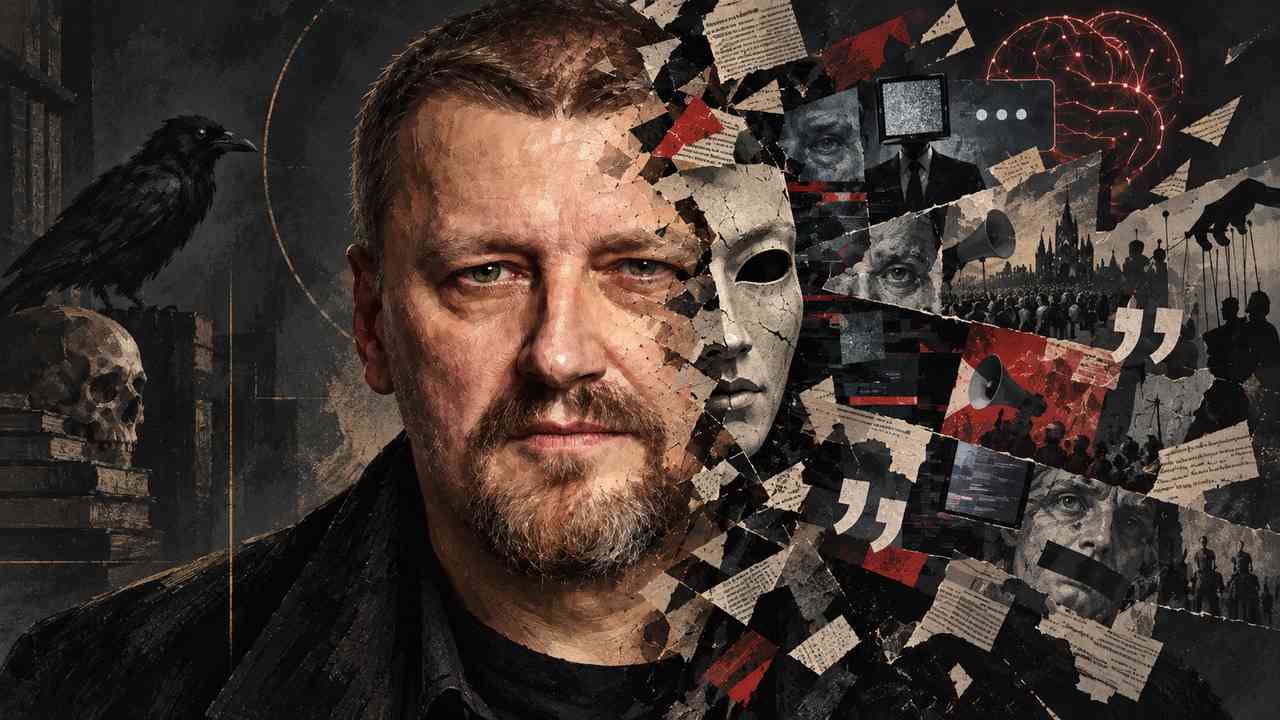
Truth in the age of AI has a difficult opponent. Artificial intelligence can fabricate, humans have done so for thousands of years, and propaganda, advertising, and pop culture learned long ago that a good story can prove stronger than truth. Jacek Piekara therefore returns to Dr. House’s old rule: do not believe. Check.
I do not know whether dr. House came up with the saying “everybody lies” himself or borrowed it from someone else, but it proved useful to him in many of the cases he handled. That caution in accepting things on faith, that overpowering desire to check personally whether words correspond to facts, helps not only in medicine, and not only dr. House. It helps all of us. Of course, that is if we want to be full participants in life, people who understand the mechanisms that govern the world, rather than puppets pushed this way and that by some puppeteer, depending on what serves his interests.
In today’s world, a world of ever-faster-developing artificial intelligence, our sense of control must stay especially alert. AI is an extraordinarily useful tool, one that often helps us quickly orient ourselves in certain matters and answer both trivial and complicated questions.
The problem, however, lies not only in the fact that AI sometimes makes mistakes. It lies in the fact that it displays behaviors we politely call “hallucinations,” but which are, no more and no less, fabrications. And AI can go beyond merely making things up. It can also prove and support those fabrications with further fabrications — for example, by creating a bibliography that does not exist.
Another fairly common AI behavior is the desire to satisfy the user. In other words, it not only gives wrong answers, but also supports and praises the user if the user himself states a false thesis. Of course, this does not always happen. In everyday use, AI can be a very helpful tool. Yet mistakes and distortions occur often enough that they are now signaled as one of the serious problems in using this type of technology.
It is not the case, however, that only modern technology has led us into a world of all-encompassing falsehood. We have lived in that world for a long time. It has been created not only by state or ideological propaganda, but also by pop culture. When it comes to political propaganda, one only needs to recall communism or fascism, where societies enslaved by dictatorships were bombarded with lies from morning to night.
People lied in descriptions of the faraway world and the world close at hand. They lied even when presenting statistics. Indeed, lying became so widespread that the people within the circle of lying power were often themselves bewitched by those lies and began to believe them. Today, North Korea can be named as one of the few countries that isolates its citizens from the rest of the world, terrorizes them, and deceives them.
The lies of those in power, or of the media that serve them, occur everywhere, including in Poland. But unlike the inhabitants of North Korea, we can verify the data. If we only want to, we can reach the truth about a given event, or learn different interpretations of it and different opinions about it. The inhabitants of closed, isolated countries have no such possibility. They must rely only on the official, deceitful message.
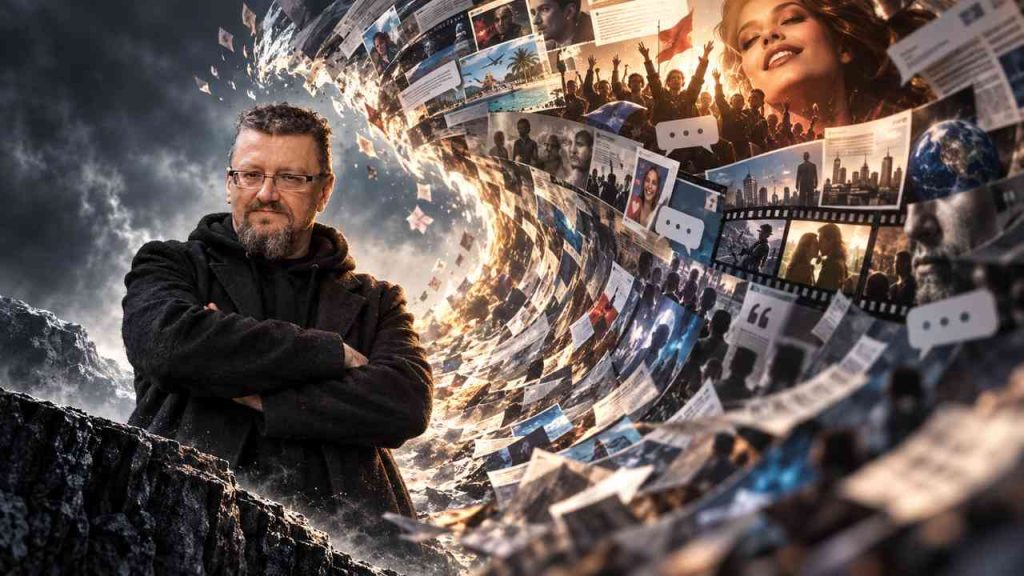
Systemic lying, born of the enslavement of society and the media, can sometimes be easier to fight than the lie that arises in free societies but comes wrapped in such force and attractiveness of presentation that it completely drowns out the truth. In this case, it is not that the citizen has no way to verify the data. He absolutely does. Yet the message he has received is so convincing that, first, he feels no need to verify it, and second, even if he does verify it, the false message still leaves a strong mark on his memory and on his attitude toward the event.
Here we have two ways of stupefying society. One is very obvious: through advertising and marketing tools. The other is less obvious: through the influence of pop culture. I will not dwell at length on advertising and marketing, but I will give you just 1 example. For many years, tobacco companies in the United States ran campaigns not only praising their own brands, but also denying that smoking cigarettes could cause deadly diseases, including cancer. Doctors also took part in those pro-tobacco campaigns.
Many people draw their knowledge of the world from pop culture. Above all, from films, but also from computer games, literature, and statements by celebrities — which is all the more frightening, since they rarely have anything wise to say. It is precisely this pop-cultural flood that causes certain messages to become permanently fixed. In such cases, I always give the example of slavery: a historical, terrifying, entirely real social problem that affected the whole world, yet has been completely appropriated by Black people as their tool in the struggle against white people. Once that struggle was literal; today it is mainly propagandistic.
And yet the enslavement of Black people is barely a drop in the ocean of slavery as such. Our ancestors would have had much to say on the subject, since for centuries they fought the Tatars and Turks who raided Slavic lands in search of the so-called “jasyr,” meaning slaves.
Along the Italian, French, and Spanish coasts, meanwhile, pirate ships from North Africa ran rampant, specializing in the abduction of people. Chroniclers and historians claim that hundreds of villages were depopulated in this way. In Poland and Russia, the problem was serious enough — the Tatars not only abducted hundreds of thousands of citizens of both states, but in 1571 even burned Moscow — that both countries discussed a joint expedition against Tatar Crimea. Unfortunately, nothing came of those plans.
Pop-cultural abuses and lies about history can serve, and do serve, contemporary politics as well as the strengthening of some countries’ brands and the weakening of others. In short, the point is to make certain countries, nations, and phenomena evoke positive associations, while others evoke the opposite.
For many years, Germany has done a great deal of work in this field, trying to prove that Germans were victims of World War 2, enslaved by Hitler, and that a strong democratic opposition existed in Germany. One of the works meant to persuade audiences of this vision was the Hollywood blockbuster Valkyrie, starring Tom Cruise, which told the story of Colonel von Stauffenberg’s attempt to assassinate Hitler.
The problem is that this von Stauffenberg, praised also by present-day German governments, was a racist piece of s***** who hated Jews and Slavs and saw them as slaves of the Reich. He really did hate Hitler, but only because he believed Hitler’s bad decisions were causing defeats in the war and because he opposed a German war against the West. On the other hand, and I emphasize this again, he had nothing against the slaughter of Jews and Slavs.
A funny, though in truth pitiful — pitiful because of human stupidity — example of society being misled by pop culture may be Wakanda. Wakanda is the fictional African country created in the Marvel universe, which in the story is hidden from outsiders and possesses extraordinary technological capabilities.
Imagine that when the first films about Wakanda appeared between 2016 and 2018, Black American citizens reportedly contacted travel agencies en masse, wanting to book holidays in that very country. Representatives of those agencies spoke about it, and statistical data were also gathered to confirm their reports.
Interestingly, other Black people firmly believed that the technologically advanced, magnificent Wakanda had really existed, but that vile white people had destroyed it. Well, that is what happens when one refuses to believe that, for millennia, Black Africa’s greatest technological achievement was, and still is, a hut made of straw and buffalo dung.
I always repeat that we should not take anyone’s word for anything. Let us check, confront, and examine. We have the internet at our disposal, and if we use it skillfully, we can verify almost any fact. Let us not surrender to lies and propaganda. Let us not repeat common idiocies. And let us not fear standing with an open visor against everyone who strikes at truth. In truth in the age of AI, that is what I sincerely wish both myself and you.
Read this article in Polish: Jacek Piekara: Prawda ma dziś trudnego przeciwnika


Jacek Piekara: One of Poland's most popular fantasy writers, a journalist, and a columnist. He is the author of the widely acclaimed "Inquisitor Series" (Cykl Inkwizytorski), dozens of books, and numerous short stories. Piekara has also contributed to specialized and popular press, including the magazines Click! and Gambler. In addition to literature, he writes scenarios for computer games and works as a publicist.


Zmień tryb na ciemny