Humanism
When Spirituality Promises Answers but Takes Away the Questions
30 August 2026





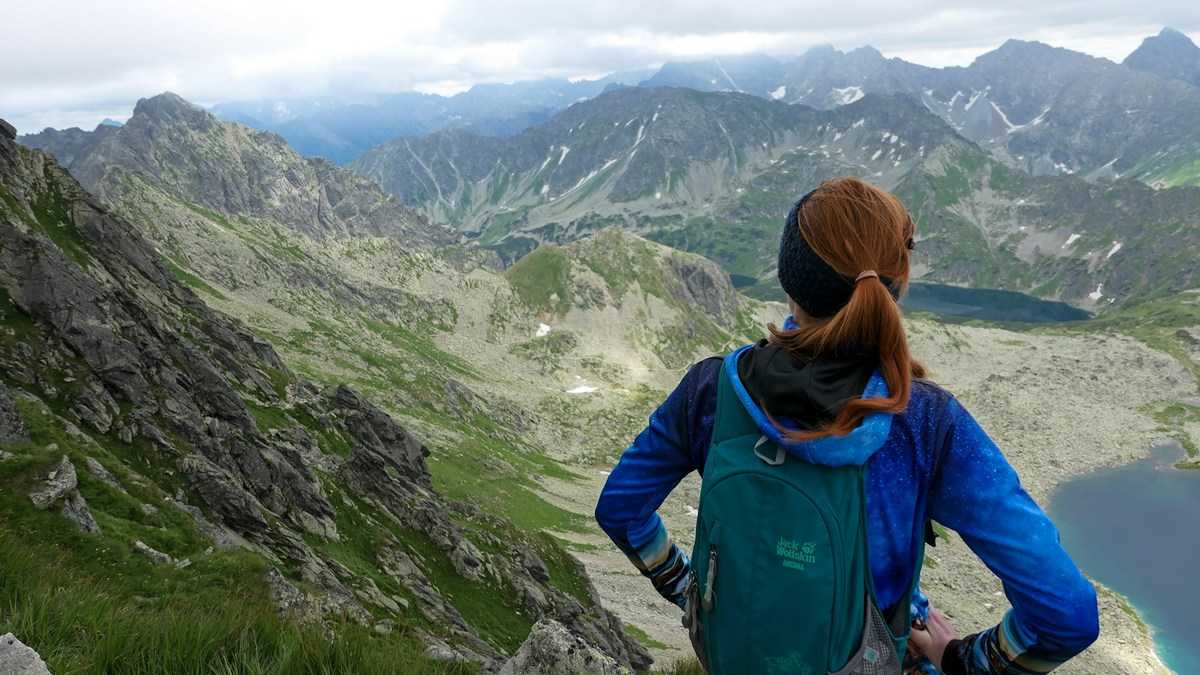
A wall of white clouds gathers over the peaks. For the inhabitants of the Polish Highlands, it is a clear warning—a sign that a warm southern wind will soon cascade down into the valleys, melting snow, toppling trees, and sometimes severing power lines. For some, however, it signals something far more sinister. This violent surge of hot air is said to carry anxiety, madness, and outbursts of rage that escalate into violence. According to local lore, it can even drive the soul to self-destruction. But what do the psychological effects of foehn wind really amount to, and has the Halny truly earned its dark reputation?
The Halny is the local name for the foehn wind—a strong, warm downslope wind that descends from mountain peaks into the valleys. This atmospheric phenomenon is by no means unique to southern Poland; it appears across the world wherever terrain and weather conditions align. In the Alps, it is known as the Föhn; in the mountainous regions of Spanish Valencia, it is called the Ponentà; and in Northern California, residents fear the Diablo winds.
The Halny isn’t just about the Tatra Mountains,Where we live, we call it the halniok. Ever since I was a child, the elders warned that it muddled the minds of both humans and animals.
– says a resident of Istebna in the Silesian Beskids.
Behind these names lies one atmospheric mechanism and one recurring belief in the wind’s hidden power. The term “Diablo winds” corresponds strikingly with the Highland proverb: “When the devils dance, the Halny blows in the mountains.” Whether in the Carpathians or the Rockies, the wind’s origin and impact often seem to elude rational explanation, edging into the supernatural.
They used to say that when the Halny came, cursed souls crawled out of hell. Riding on frenzied horses and stirring up criminal urges, they disturb the mind. They bring out the worst in a person. When you are surrounded only by forest and the wind shakes your cabin, it is hard not to believe in those demons.
– recalls a farmer from Łomnica.
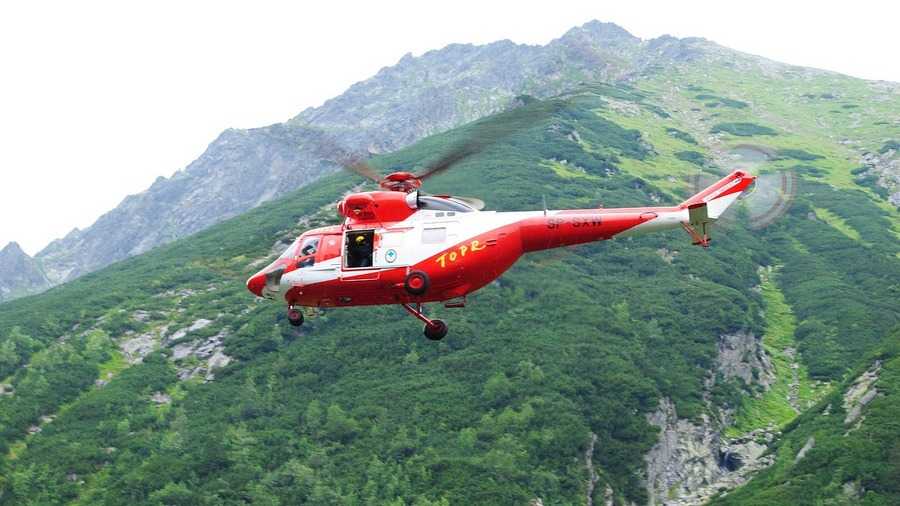
Gusts reaching several hundred kilometres per hour, together with the ominous “Halny wall” of clouds hanging above the peaks, inevitably stir the imagination. It is no surprise that in the collective memory of southern Poland the wind is associated with danger and unease. Many people connect its arrival with low mood, headaches and—among those with cardiovascular problems—a rise in health complications. Medical experts often point to sudden changes in atmospheric pressure as part of the explanation.
“When I worked in the Emergency Room, patients with coagulation disorders would arrive just before the Halny,” Sylweriusz Kosiński recalls in Dawid Góra’s reportage Halny: The Wind That Carries Madness. He remembers one taxi driver who could not stop a nosebleed: “We spent hours using tampons and haemostatic agents, trying to lower his blood pressure. We would finally manage it, and he would go back to work—only to return after 2 fares. We had no doubt a powerful Halny was coming.”
The wind’s influence seems to reach even further. The intensification of violent behaviour—aggression, domestic conflicts, brawls—during sudden weather shifts is often seen as more than mere coincidence. Highland folklore explains it through the demonic origins of the wind. Figures such as the White Lady or dancing devils became enduring symbols of this malevolent force in the cultures of both Poland and its southern neighbours.
Contemporary Slovak writer Jozef Karika, in his novel The Wind, turns the foehn into the story’s central antagonist. Much like in old Highland tales, the diabolical gust takes the form of an old woman wandering mountain roads, driving people towards paranoia and suicide. Karika draws heavily on Carpathian folklore, showing that such imagery remains alive. But is there any truth in it? Can science confirm at least part of what legend has long claimed?
Dr Adam Perek, a physician and Zakopane resident whose doctoral thesis explored the wind’s effect on childbirth, argues that the evidence is substantial. In his view, gusty weather has a negative effect on both the body and the mind.
Heart attacks, strokes and psychological changes are not myths. They intensify significantly before the Halny arrives. You also see more intoxicated people in town. The reason is simple: they are trying to neutralise the biophysical changes caused by the foehn.
– Dr Perek says in the book Mountains.
His observations are supported by both research and clinical experience. It is well established that environmental stimuli affect the human organism. Yet claims about increased suicide rates or myocardial infarctions are far more serious than complaints about headaches or irritability. While there is general agreement that weather affects human wellbeing, the precise scope of the psychological effects of foehn wind remains open to debate.
Some studies reject a clear correlation between foehn activity and suicide, while others suggest more severe consequences. Such conclusions appear in the work of an interdisciplinary team led by Professor Janina Trepińska from the Jagiellonian University’s Department of Climatology.
The weather associated with the Halny wind exerts an adverse influence on the organism. Depending on an individual’s psychological type, it causes either heightened excitability and aggression or profound depression.
– concludes the study The Impact of Meteorological Conditions on Suicides by Hanging.
The cause, however, is not a demonic phantom but a series of measurable physical shifts. Professor Trepińska’s team points to a “weather complex”: rising temperatures, falling humidity, sudden drops in atmospheric pressure and a shift in air ionisation, marked by a predominance of positive ions.
According to their calculations, the probability of suicide occurring during a Halny event is 31.6 percent. Although this figure seems high, it is comparable to the risks associated with other extreme weather events, such as storms at 31.4 percent, heatwaves at 31.3 percent and severe frosts at 37.5 percent.
Local wisdom, preserved in proverbs and legends, finds partial confirmation in reality. Yet neither the White Lady nor dancing devils possess some magical power to force a person into violence or self-destruction. Human agency remains decisive. The roaring, skull-splitting Halny may temporarily create a hostile psychological environment, but such conditions fade as the warm gusts weaken. In the end, understanding the psychological effects of foehn wind allows us to demystify this mountain “madness” and regain some control over the storm within.
Read this article in Polish: W górach szaleństwa. Nauka mierzy się z legendami o halnym


A literary scholar affiliated with the University of Silesia, where he conducts research in econarratology. He also occasionally works as a writer, screenwriter, and copywriter. Each day, he balances his time between his books and an urban apiary, where he tends to hundreds of thousands of bees.



Zmień tryb na ciemny