Truth & Goodness
Played for Money. Gambling Addiction Was Taking a Life
13 September 2026





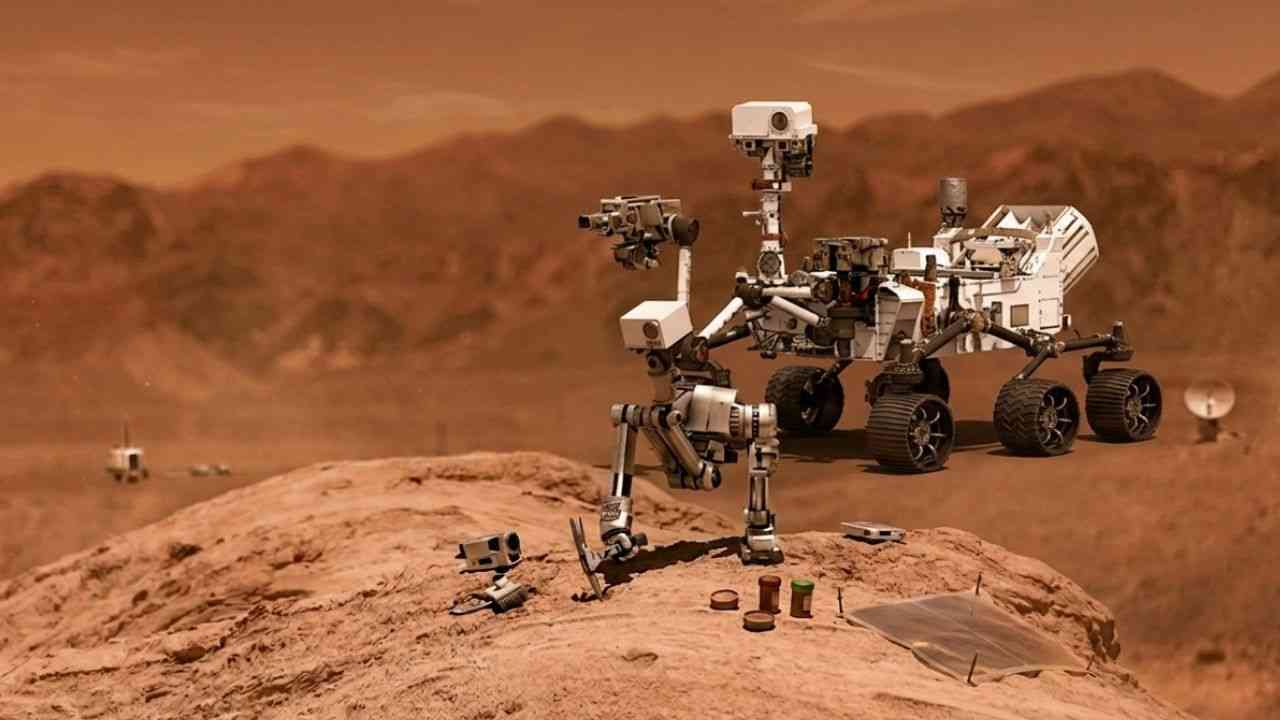
Researchers have spent years searching for evidence of ancient life on Mars. Now NASA’s Curiosity rover has detected complex organic molecules in an ancient rock on the Red Planet, a finding that may help scientists look for possible traces of the past.
Today, Mars remains an extremely hostile place for life. The latest research on the Red Planet suggests, however, that although no traces of life have been found there today, conditions in the past may have favoured its emergence. The mystery may lie hidden in Martian rocks, which could have preserved complex chemistry for about 3.5 billion years despite the planet’s radiation, cold and dryness.
Did life ever exist on Mars? Recently, scientists came a little closer to solving that puzzle. NASA’s Curiosity rover examined a sample from the Mary Anning area in the Glen Torridon region. It was there that an experiment revealed the presence of various organic molecules, including compounds important to the chemistry of life.
The results, published in Nature Communications, confirmed that these molecules do not prove ancient life. They may, however, help scientists better understand whether Mars once had conditions favourable to its emergence.
One of these compounds contains nitrogen. Its structure resembles those involved in building DNA. That sounds intriguing, but it requires caution: the robot did not find DNA or the remains of organisms. NASA’s Curiosity rover also detected benzothiophene, an organic compound containing sulphur and fused rings.
These discoveries on Mars do not allow scientists to determine clearly whether the newly identified compounds may be connected with ancient life on the planet. They may have formed through natural geological processes, or they may have been delivered by meteorites that struck the planet.
Further research is needed, preferably on Earth, to determine the origin of these compounds more precisely. Professor Amy Williams, one of the authors of the study, dampens the excitement. In her view, similar organic compounds may have reached Mars with meteorites, just as they reached the young Earth, where they may have delivered elements needed for the development of life.
The same things that were raining down on Mars by way of meteorites were also raining down on Earth and probably delivered the building blocks of life as we know it on our planet,
said Dr Amy J. Williams, one of the study’s authors, quoted by ScienceDaily.
This does not mean, then, that traces of life on Mars were brought from space. It means rather that the Red Planet may have received organic compounds similar to those that, on Earth, became part of the history of life. This still does not confirm that life on Mars ever existed, but it shows that further research makes sense.
The way the Red Planet was studied also matters. Scientists used TMAH, a chemical compound that helps break larger organic molecules into smaller fragments. The sample was then examined with SAM, the suite of chemical instruments aboard the Curiosity rover. This method may prove valuable in future searches for potential traces of life on Mars.
We now know that large, complex organic molecules are preserved in the shallow subsurface of Mars, which gives us a tremendous hope of finding those that may be characteristic of life,
Dr Williams concluded.
Mars still has not answered the question of whether ancient life on Mars ever existed. But it leaves us with an even larger question: whether somewhere in the universe, beyond Earth, life could have existed — or may still exist today.
Read this article in Polish: Czy na Marsie było życie? NASA znalazła ważny ślad


A graduate of journalism and social communication at the University of Rzeszów. She has been working in the media since 2019. She has collaborated with newsrooms and copywriting agencies. She has a strong background in psychology, especially cognitive psychology. She is also interested in social issues. She specializes in scientific discoveries and research that have a direct impact on human life.



Zmień tryb na ciemny