Science
Time Without a Clock, and the Tiny Universe That Learned Before and After
06 July 2026






A century ago, war maintained a grim but recognizable choreography. The sequence was codified: an antagonist emerged, mobilization ensued, and an ultimatum or formal declaration followed. The state informed its populace that a state of belligerence existed as of a specific hour. In the lexicon of jurisprudence, diplomacy, and statecraft, this act constituted the crossing of a political Rubicon. Today, that river is still crossed routinely. Yet, no sovereign entity wishes to concede that it is already standing on the opposite bank.
We have entered the epoch of the “as-if war.” These conflicts rage without formal declarations. Instead, states prosecute them through drones, cyber-attacks, targeted missiles, economic sanctions, sabotage, and deniable mercenaries. Governments strike yet claim they are merely avoiding escalation. They bombard while insisting their actions remain proportional. They deploy troops under the guise of stability, strike infrastructure while disclaiming responsibility, and bankroll armed proxies while pretending to remain neutral observers.
Here lies the critical fault line of contemporary conflict. It no longer runs between the vanguard and the rear, but rather between agency and accountability. Formally, war does not exist. Materially, tens of thousands of human lives bear its tragic consequences.
There is an old, wry Soviet-era jest from Radio Yerevan: “There will be no war, but a struggle for peace will rage so fiercely that not a single stone will be left standing.” The contemporary manifestation of this irony is stark. Russia’s full-scale invasion of Ukraine was officially christened a “special military operation.” When Vladimir Putin announced military actions, he spoke of demilitarization and urged Ukrainian soldiers to capitulate. Consequently, he intentionally withheld a formal declaration of war against the sovereign state he was actively invading.
This is not a mere philological game. It represents a paradigm where vocabulary becomes a weapon. Terms like operation, proportional response, denazification, mission, preemptive strike, and stabilization action dilute the moral and political gravity of violence. The objective is not to abstain from war, but to wage it while deferring the geopolitical costs that come with naming it.
The historical architecture designed to constrain this impulse remains on paper. The Hague Convention of 1907 stipulated that hostilities must not commence without a clear, prior warning. This had to be a reasoned declaration or an ultimatum. Furthermore, following the Second World War, the United Nations Charter sought to outlaw international aggression entirely. It obliged member states to refrain from the threat or use of force against the territorial integrity or political independence of any state.
In theory, law domesticated war. In practice, nations simply rebranded it. Believing that a parchment charter could permanently halt the tides of human conflict was perhaps always an exercise in naive optimism.
The contemporary Middle East functions as an advanced laboratory for this ambiguous landscape. Regional violence can no longer be compressed into tidy binaries, such as Israel versus Hamas, the United States versus Iran, or the state versus the terrorist network. Instead, it operates as a multi-layered matrix. In this system, Lebanon, Syria, Iraq, Yemen, and global maritime corridors form a single, interconnected vascular system.
For decades, Tehran has cultivated a sophisticated network of proxies, including Hezbollah in Lebanon, assorted militias in Iraq, and the Houthi movement in Yemen. This network allows it to exert strategic pressure without technically appearing as a formal belligerent. Meanwhile, Israel counterattacks through precision strikes, targeted assassinations, and infrastructure sabotage. Every actor maintains the fiction that they are managing the escalation. Every player dances on the precipice of a conflagration.
This architecture of deniable aggression crystallized in April 2024. Iran launched an unprecedented barrage of roughly 170 drones, 30 cruise missiles, and 120 ballistic missiles toward Israel. These weapons originated from Iranian soil and launch sites in Iraq, Lebanon, and Yemen. Tehran framed the strike as a procedural, defensive retaliation for an attack on its diplomatic premises in Damascus.
This is the quintessential “as-if war.” A state enacts direct kinetic violence against another sovereign power, yet packages the assault as a closed, almost bureaucratic countermeasure. The strike must be massive enough to signal capability, yet calibrated precisely to avoid triggering an outright declaration of total war. It is an exchange of geopolitical communiqués executed via ballistic means.
The cost of this strategic ambiguity is acutely visible in the Red Sea. Late in 2023, the Houthi movement began targeting commercial shipping vessels. They cloaked their maritime campaign in the rhetoric of solidarity with Gaza. The ramifications quickly spilled over regional borders. Global shipping routes through the Red Sea and the Gulf of Aden choked. As a result, maritime carriers routinely bypassed the Suez Canal, and international commerce absorbed the steep tax of persistent political instability.
The International Chamber of Shipping noted that these maritime disruptions fundamentally altered global trade flows. These crises compounded existing disruptions in the Black Sea and the Panama Canal. In this theater, victory does not require the capture of a capital city or the shattering of a conventional front line. A single low-cost drone, a loitering munition, or the mere credible threat of an anti-ship missile is sufficient to disrupt the fragile metabolism of global supply chains.

The drone has become the definitive emblem of our era: inexpensive, accessible, and remarkably difficult to definitively attribute. It democratizes violence while systematically erasing state accountability. A missile launched by a conventional state army carries a clear return address. Conversely, a drone deployed by a local militia enjoys a form of political homelessness. This remains true even if its underlying technology, financing, and instruction come from a foreign capital.
Poland experienced the friction of this anonymity firsthand when it had to identify stray missiles and unmanned aerial vehicles crossing into its airspace. This includes the tragic incident in Przewodów, which claimed the lives of two citizens. No external power was willing to claim ultimate ownership for this loss. In this light, modern warfare operates much like a limited liability corporation. The state claims the strategic dividends, while keeping the moral and legal liabilities entirely off the balance sheet.
This evasion of nomenclature is not entirely without historical precedent. The Cold War was largely an overarching system of shadow engagements fought out in Korea, Vietnam, Afghanistan, Angola, and Nicaragua. The superpowers rarely clashed directly, knowing that transparency risked planetary annihilation. Even the Korean War was famously designated by the administration of Harry Truman as a “police action” under United Nations auspices, rather than a war declared by the United States Congress.
The distinction today lies in velocity, scale, and systemic diffusion. Historically, a proxy conflict was geographically bound and politically legible. Today, the local is instantaneously global. A missile detonates in the Donbas, and the shockwaves register immediately in European natural gas prices, Western defense budgets, and global food inflation. Similarly, a Houthi strike near the Bab-el-Mandeb recalculates transport overheads in Rotterdam. A cyber-attack on Ukrainian civic infrastructure serves as a live stress test for the entire Western alliance.
The war in Ukraine demonstrates this dual reality clearly. Russia is prosecuting a classical, territorial war of conquest—seizing land, destroying cities, and terrorizing civilian populations. Yet, it continues to shroud this brute kinetic reality in the vocabulary of defensive revisionism. By avoiding the word war, the aggressor avoids the immediate psychological burden of total mobilization at home. The state frames the conflict instead as a specialized, technical chore for the state apparatus.
In this environment, psychological attrition is as critical as kinetic destruction. The objective is not merely to degrade the adversary’s physical infrastructure. Analysts note the goal is to exhaust their domestic populace, fracture their alliances, and induce a sense of historic inevitability. Therefore, information, imagery, and manufactured dread are the primary munitions.
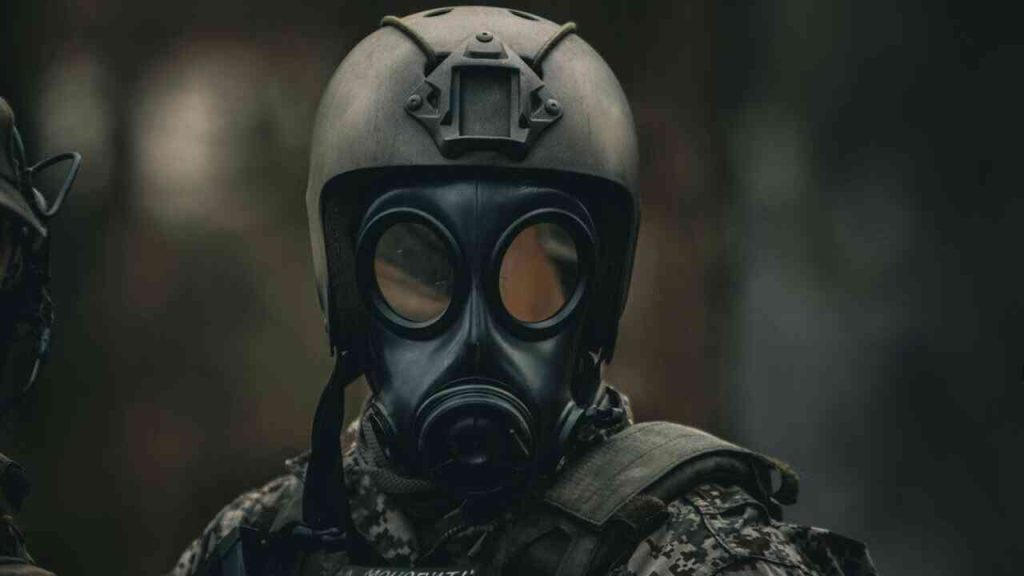
Has the traditional code of war vanished? In a formal sense, yes. This is not to indulge in a sentimental mythology of historical warfare; conflict has always been brutal, cynical, and dishonest. However, historical actors recognized a structural threshold. A clear line separated peace from war, marked by mobilization, declarations, and eventually, peace treaties or formal capitulations.
Today, that threshold has dissolved into a permanent gray zone. We are left in an intermediate state characterized by calibrated escalation, energy blackmail, engineered migratory pressures, and retaliatory sanctions.
This reflects a wider cultural malaise: a contemporary aversion to accountability and a profound reluctance to call things by their true names. In modern political discourse, crises are softened into challenges. Failures are managed as course corrections, and overt attacks are minimized as isolated incidents.
In diplomacy, this lexicon is dangerous. When an act of violence becomes a mere incident, nothing constitutes aggression. Masking a campaign as an operation ensures that nothing qualifies as war. Furthermore, when layers of proxies shield every perpetrator, guilt belongs to no one. The undeclared war offers the aggressor three distinct strategic advantages:
The greatest risk of this permanent ambiguity is the high probability of a miscalculation. All parties engage in a competitive game of chicken. They operate on the assumption that the adversary will always blink to avoid total war. Under these conditions, a single stray missile or a misdirected cyber-attack can trigger a cascading failure of deterrence. July 1914 was precisely such a catastrophe of erroneous assumptions and interlocking alliances that no one knew how to halt.
Our world is faster, more interconnected, and far more volatile. A crisis that once took weeks to mature can now reach a boiling point in hours.
The ultimate destination of this trajectory is a world of permanent half-war. In this state, divisions of armor do not breach borders daily, but societies remain under constant systemic pressure. The traditional distinction between the home front and the battlefield disappears entirely. Sea cables, satellites, banking networks, power grids, server farms, and the personal devices of individual citizens become active elements of the theater of war.
Modern states increasingly favor strategic elasticity over legal clarity. The urgent question for contemporary democracies is not whether formal declarations of war will return. Instead, we must ask whether free societies can build the capacity to recognize and confront aggression before the aggressor deems it politically convenient to name it. If the answer is negative, the future will belong to those who have perfected the art of violence without a signature. In that world, the aggressor’s primary victory is convincing everyone that nothing extraordinary has occurred, locking global society into a state of permanent half-war.
Read this article in Polish: Czas półwojny. Konflikty bez frontów, początku i końca


Television and press journalist, publicist. He published reports, investigative materials, and interviews in outlets such as Gazeta Wyborcza, Tygodnik DoRzeczy, Tygodnik Przegląd, and on the Onet portal. He collaborates with the Warsaw Enterprise Institute. Author of two editions of "Black Book" – a publication dedicated to the waste of public money, and the book "Myths and Spells of the 21st Century." Laureate of the Polish Chamber of Electronic Communication's Crystal Screen award for his report titled "Monsters," focusing on the issue of violence against children.



Zmień tryb na ciemny