Education
What Children Learn When They Count on an Abacus
25 September 2026





Water wars are moving from climate warnings to strategy. From the Gulf to the Nile and South Asia, water now shapes fear, leverage, and power in a drying world.
Look at a map of the Arabian Peninsula and one astonishing fact stands out. On the world’s largest peninsula, an area roughly 66 percent the size of the European Union, there is not a single permanent river.
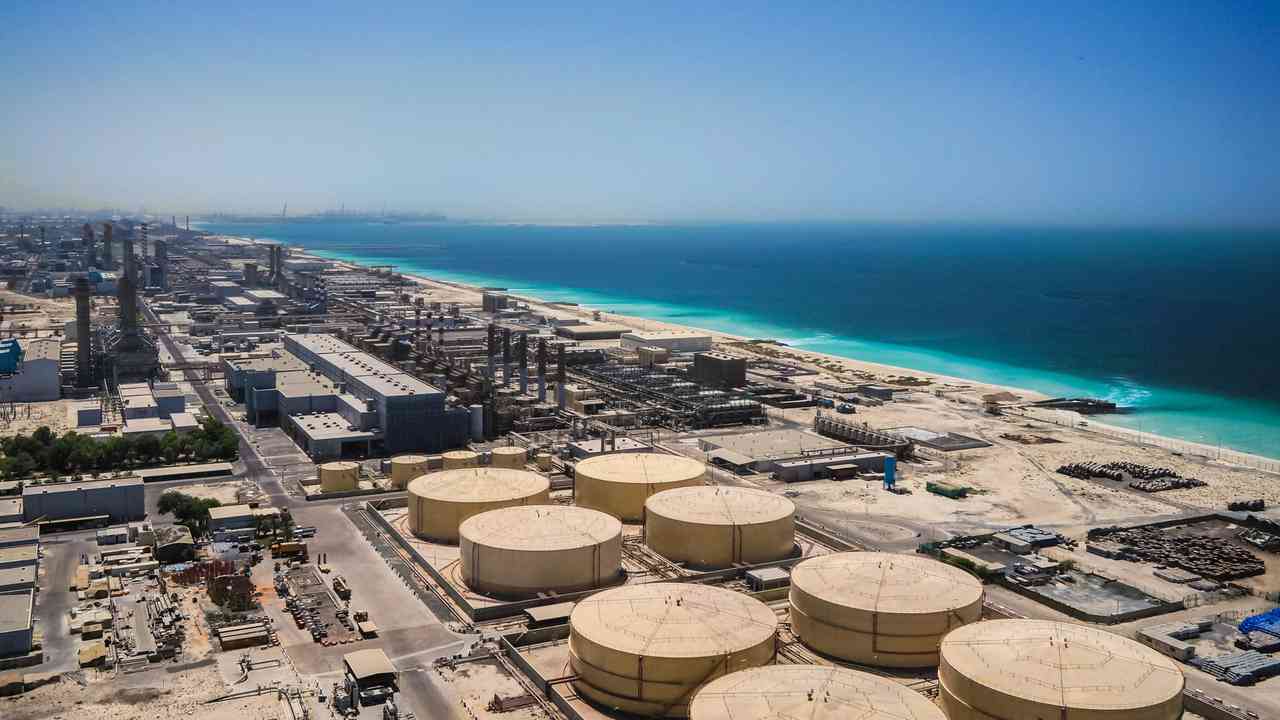
Because the region’s population keeps growing, and because its underground reserves of drinking water have already been heavily depleted, the fabulously wealthy Arab states of the Persian Gulf turned to a solution that for years looked like a blueprint for a bright future. It was supposed to provide not only drinking water, but also the water needed for agriculture and industry, including processes linked to fuel production.
That solution was seawater desalination. For 50 years, the coasts of Kuwait, Saudi Arabia, Bahrain, Qatar, the United Arab Emirates, and Oman have filled with such facilities. These states have made their everyday functioning dependent on them. Without working desalination plants, life on the Arabian Peninsula would very quickly turn into a nightmare.
Qatar is the most exposed. Desalination provides 99 percent of its drinking water. Saudi Arabia, the most populous state in this group, obtains 70 percent of its drinking water this way. Even the United Arab Emirates, the least dependent on this technology, draws more than 40 percent of the drinking water it uses from desalination.
These figures show what a powerful weapon a swarm of cheap drones aimed at desalination plants could become in Iranian hands. This is especially true because these facilities sit in Persian Gulf states that are allies of the United States and host American bases.
Tehran has already threatened the region’s states with the “irreversible destruction” of water installations if Donald Trump carries out his threats to obliterate Iran’s energy infrastructure. Fear of a sudden lack of water in the Persian Gulf states is one of the main reasons the American president has refrained from ordering the destruction of Iranian oil fields and refineries.
At the very beginning of this conflict, desalination facilities in Kuwait, at Doha West, and in the United Arab Emirates, at Fujairah F1, were damaged during Iranian attacks. These were only “scratches.” Nor is it entirely clear whether the plants were deliberately targeted, or whether the damage occurred while drones flying nearby were being intercepted.
A few days later, Tehran claimed that America had attacked its own desalination plant on Qeshm Island. Iran does not depend on desalination as heavily as other states in the region, but the message was unmistakable. Iran’s foreign minister, Abbas Araghchi, warned: “It was the United States that set this precedent, not Iran.” Those words must have chilled the leaders of the Arab states along the Persian Gulf.
Desalination plants now rank among the most urgently protected sites from Oman to Kuwait. The states of the region have built enormous financial reserves, so damage to oil facilities, however painful, may prove less dangerous for them than the elimination of plants that produce drinking water.
Without oil extraction and sales, these states can survive for quite some time. Without drinking water, their societies cannot function. The astonishing population growth seen in the Middle East for about 50 years has also resulted from the “artificial” production of drinking water from the sea. The natural reserves of this essential liquid on the Arabian Peninsula would never have allowed such a huge demographic boom.
In this way, Iran can quite easily “dry out” a region inhabited by more than 60 million people and turn their lives into hell. Even if the Strait of Hormuz is unblocked soon, this water terror will hang over the Persian Gulf for many years, shaping the political calculations of the most important players.
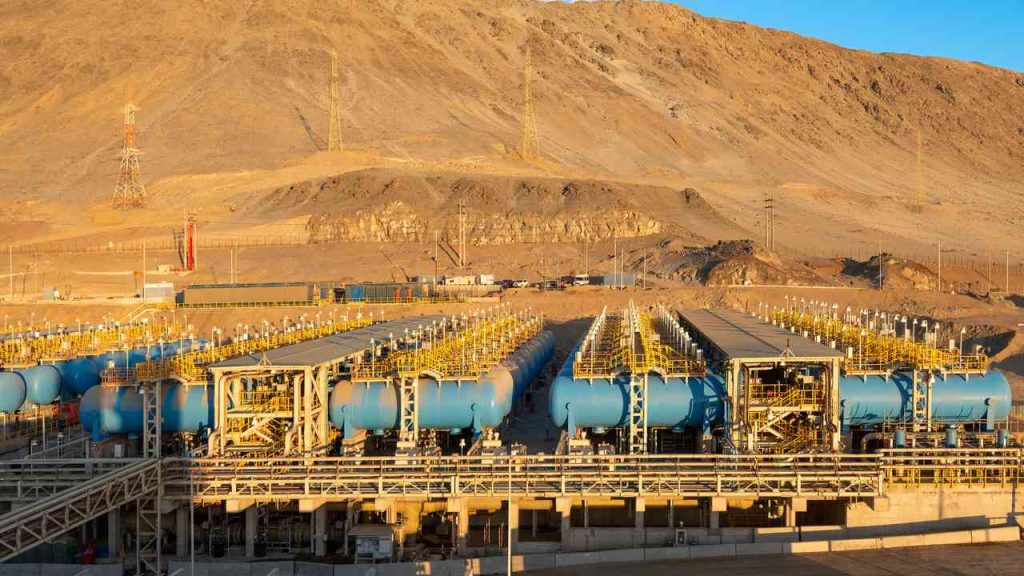
Donald Trump made no secret of whose side he took in this dispute. “They will end up blowing up that dam,” he said in October 2020, speaking unequivocally about the Egyptian-Ethiopian conflict over Africa’s largest hydroelectric power plant, built on the Blue Nile.
When he opened this megaproject in September 2025, Ethiopian Prime Minister Abiy Ahmed Ali called it “the greatest achievement in the history of the Black race.” From Ethiopia’s point of view, the opening of GERD, the Grand Ethiopian Renaissance Dam, is an epoch-making event. Thanks to this single hydroelectric plant, Ethiopia’s electricity production has more than tripled, and the authorities hope to quickly make up for enormous delays in development. Today, about 50 percent of Ethiopians still have no access to electricity. The plan assumes that by 2030, 90 percent of the population will have power at home.
2 thousand kilometres to the north, however, GERD provokes very different emotions. “I would like to reassure the Egyptian people that we will not allow the water of 105 million citizens (…) to be threatened,” said Egyptian President Abdel Fattah el-Sisi shortly before the megadam opened. The authorities in Cairo have openly declared that Ethiopia’s megadam poses an “existential threat” to Egypt.
The greatest problem is drought. How will Ethiopia’s authorities behave if the Blue Nile carries less water than usual? Egypt fears that, in order to maintain the proper depth of the artificial lake by the dam, Ethiopia will restrict the outflow of water. After all, everyone learns at school that Egypt lives thanks to the Nile. Its highly developed agriculture depends on access to water from that river.
“About 93 percent of Egypt is desert, where almost no one lives. Almost all of us, 107 million people, live along the Nile,” Professor Abbas Sharaky, a geologist at Cairo University, told the BBC. “Egyptian civilisation was built thanks to the Nile. The Nile is our life.”
Ethiopia began its epochal project at the ideal moment, when Egypt was plunged into the chaos of the Arab Spring. For the following years, the 2 states wrestled on the international stage. Egypt did everything it could to cut Ethiopia off from Western money that might support the investment. But the Ethiopian authorities were too determined. From time to time, they announced new national fundraising campaigns. In this way, they managed to finance the 5 billion dollar project almost entirely on their own.
Egypt is trying to adapt to the new conditions and prepare for a time when the Nile may indeed turn out to be much shallower. One method is to reduce the area used for rice cultivation, which requires especially large amounts of water. Egypt is also developing its own seawater desalination facilities.
The military option would be highly problematic today. As experts point out, now that the reservoir at GERD is full, a strike on the dam could lead to total catastrophe downstream on the Nile. Ethiopia nevertheless takes that possibility into account and has secured its megaproject. This is visible even on Google Maps. The American corporation has not blurred the clearly visible Ethiopian anti-aircraft launchers deployed on a hill near GERD.
Sudan, which lies between Ethiopia and Egypt, also has an interest in unrestricted access to Nile water, but for 3 years the country has been mired in civil war. Another matter is that Ethiopia supplies Sudan with cheap electricity from GERD, which partly, at least for now, softens that state’s grievances.
Ethiopia is not ready to yield to Egyptian pressure, although Egypt has already brought the matter before the UN Security Council 2 times, without achieving any legal effect there. On the other hand, Egypt will not abandon the issue either, because its leadership in the region is under threat, and the country’s authorities fear restrictions on access to water,
– the think tank ESCP International Politics Society argues in its analysis.
In May 2025, another brief exchange of blows broke out between India and Pakistan. Missiles and bombs flew in both directions for 4 days. Alongside the conflict, India announced a move that chilled the authorities in Islamabad: the suspension of the agreement regulating the use of rivers flowing from Indian territory into Pakistan. Any restrictions on access to water from these rivers would create problems for tens of millions of Pakistani farmers.
A year has now passed since the suspension of the Indus Waters Treaty, an agreement signed by the 2 governments back in 1960. In the view of Pakistan’s authorities at the time, powerful mountain rivers could be used by India to trigger drought in the neighbouring country, or, on the contrary, flooding. Pakistan therefore pushed for an agreement that would impose serious limits on India’s management of the rivers.
For a long time, both sides have issued low warnings about access to water. In the 1990s, Pakistan accused India of deliberately and suddenly releasing water from reservoirs during an exceptionally heavy monsoon season. India, meanwhile, has several times over the past decade, in connection with attacks in Kashmir, announced restrictions on the amount of water flowing into Pakistan. India also plans to build more dams on mountain rivers, which will become easier if the Indus Waters Treaty remains suspended. In this context, the struggle over access to life-giving water is more dangerous than Egyptian-Ethiopian friction, because both Asian states possess substantial nuclear arsenals.
Conflicts over water are also playing out in other flashpoints around the world. Consider the situation in the West Bank, where Israeli authorities have for years restricted Palestinian access to water sources located in their own land. The result is the so-called black forests in Palestinian cities and towns.
These are usually black plastic rainwater tanks mounted on the roofs of Palestinian homes, a way to bypass Israeli restrictions. Israeli settlers, however, do not have problems accessing water. With the approval of their authorities, they seize further fragments of the West Bank. Their settlements, illegal under international law, are of course connected to water mains, and their animals and plants can use this priceless resource freely, to the bitterness of their Palestinian neighbours.
ISIS terrorists approached access to water with extreme brutality, treating it quite openly as a weapon. In 2016, media reported that ISIS deliberately cut off water to residents of territories it controlled in Iraq when those residents resisted the Islamist terrorists. Jihad, in this regard, knows no restraint. Islamist fighters grant themselves the right not only to cut off water, but also to poison its sources.
In the age of water wars, fear no longer begins only with drought. It begins when a river, a dam, a desalination plant, or a rooftop tank becomes a lever of power over entire societies.
Read this article in Polish: Kto kontroluje wodę, kontroluje strach


Journalist with a degree in American studies, writing mainly about foreign policy and history. Author of numerous reports on international issues and interviews with leading experts in the field of economy, geopolitics and history. Since March 2023, editor-in-chief of the monthly "Historia Do Rzeczy".


Zmień tryb na ciemny