Education
What Children Learn When They Count on an Abacus
25 September 2026






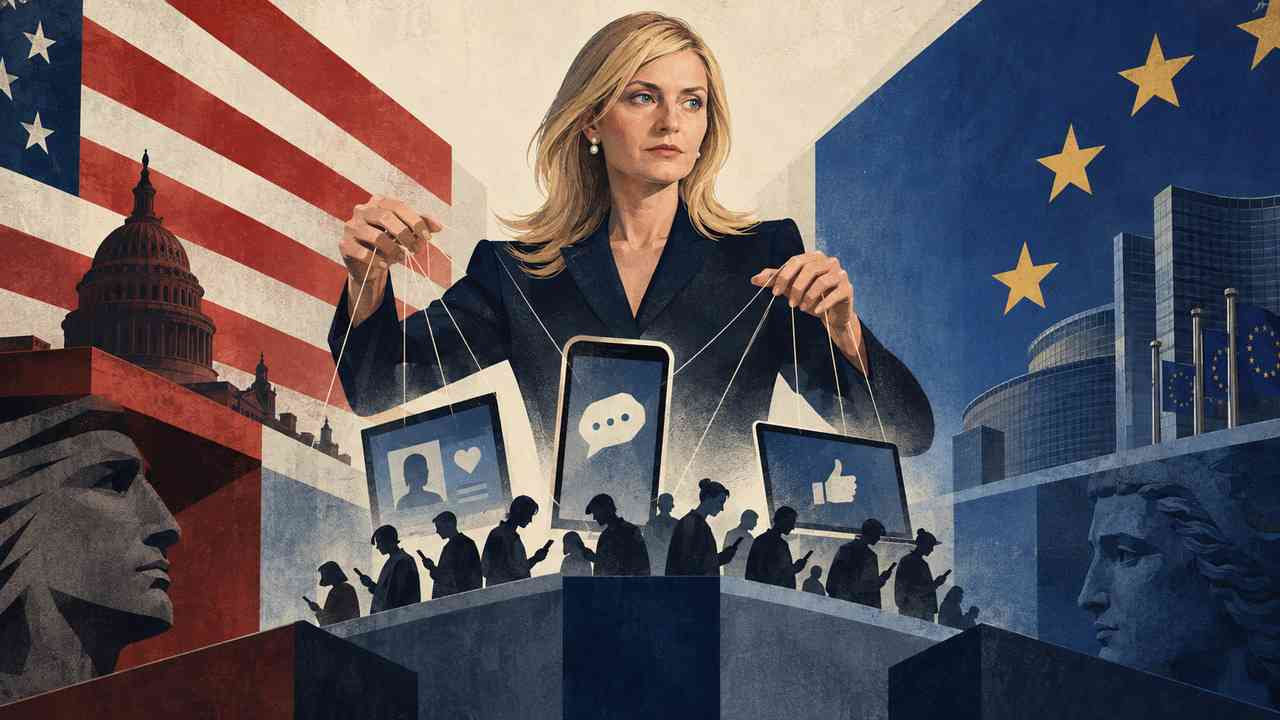
AI in politics can manipulate elections not only through fake videos or deceitful posts. Researchers now warn of a new threat: AI bots that can impersonate real people, hold conversations, and create the illusion of a social majority.
In 2026, the new political propaganda does not need a face, a name, or a team of people sitting at computers. All it needs is a network of accounts that look like ordinary users. They comment on elections, respond to posts, argue, amplify emotions, and create the impression that a particular opinion has suddenly begun to dominate. Increasingly often, those voices may not belong to people at all, but to artificial intelligence systems.
AI bots in social media no longer have to simply repeat a propaganda message. They can hold a conversation, shift tone, respond to arguments, and adapt their message to a particular community. That is why researchers speak of a new risk: not only disinformation online, but the production of a false sense of social consensus.
This digital identity may soon come to dominate the internet. It can not only impersonate real users, but also shape opinions by seemingly speaking through the comments of thousands of internet users. Each voice sounds slightly different, yet each pushes the recipient toward the same message. Before our eyes, a new form of political propaganda is emerging, and it is one of the forms of online manipulation.
This is exactly the danger highlighted by the authors of an article published in Science. As the article explains, AI bots in social media are far more dangerous than the bots that have long been present online. They stand out because of their extraordinary speed in responding to feedback. They can coordinate instantly and maintain a coherent narrative, creating what researchers call a synthetic crowd and spreading disinformation online.
All of this will become possible because of the development of large language models and multi-agent systems capable of managing vast networks of AI “voices.” Although algorithms create them, they can resemble real people with uncanny precision. They can imitate tone and local language, and they can also interact naturally with real users. This makes an AI bot so human-like that exposing it becomes difficult. And that is not all.
An AI bot in social media can refine its conversation strategy with people in real time and create a substitute for broad social agreement. In reality, artificial intelligence activity can be designed specifically to influence political conversations.
Although the full potential of AI personas still belongs partly to the future, the real threat posed by artificial intelligence is already affecting the world. Deepfake materials and fake news sites created by language models offer one example. They have influenced election discussions in countries including India, the United States, Indonesia, and Taiwan.
The problem has also appeared in Europe. According to organizations that monitor the internet, pro-Russian networks have emerged and are spreading enormous volumes of content. Such activity may influence the data used to train AI models deployed in politics, and in turn affect the way these systems prioritize information.
According to specialists, artificial intelligence may threaten the balance of power in democratic countries such as Poland. AI bots may change the way people trust information they find online.
We should not assume that society will remain unchanged when these systems appear. A likely consequence will be a decline in trust toward unfamiliar voices on social media, which may strengthen the position of celebrities and make it harder for grassroots initiatives to break through,
– said Dr. Leyton-Brown, one of the study’s authors, quoted by the University of British Columbia.
Researchers argue that we may soon discover how AI bots will affect politics, and how deeply. The key challenge will be to recognize harmful content and counter its influence before it becomes too widespread to control.
The real danger of AI in politics may not lie in a single lie, one forged image, or one viral slogan. It may lie in something quieter and harder to expose: a crowd that sounds real, reacts instantly, agrees convincingly, and yet was never there.
Read this article in Polish: AI w polityce nie musi wygrać kłótni. Wystarczy, że stworzy tłum


A graduate of journalism and social communication at the University of Rzeszów. She has been working in the media since 2019. She has collaborated with newsrooms and copywriting agencies. She has a strong background in psychology, especially cognitive psychology. She is also interested in social issues. She specializes in scientific discoveries and research that have a direct impact on human life.

Zmień tryb na ciemny