Education
What Children Learn When They Count on an Abacus
25 September 2026





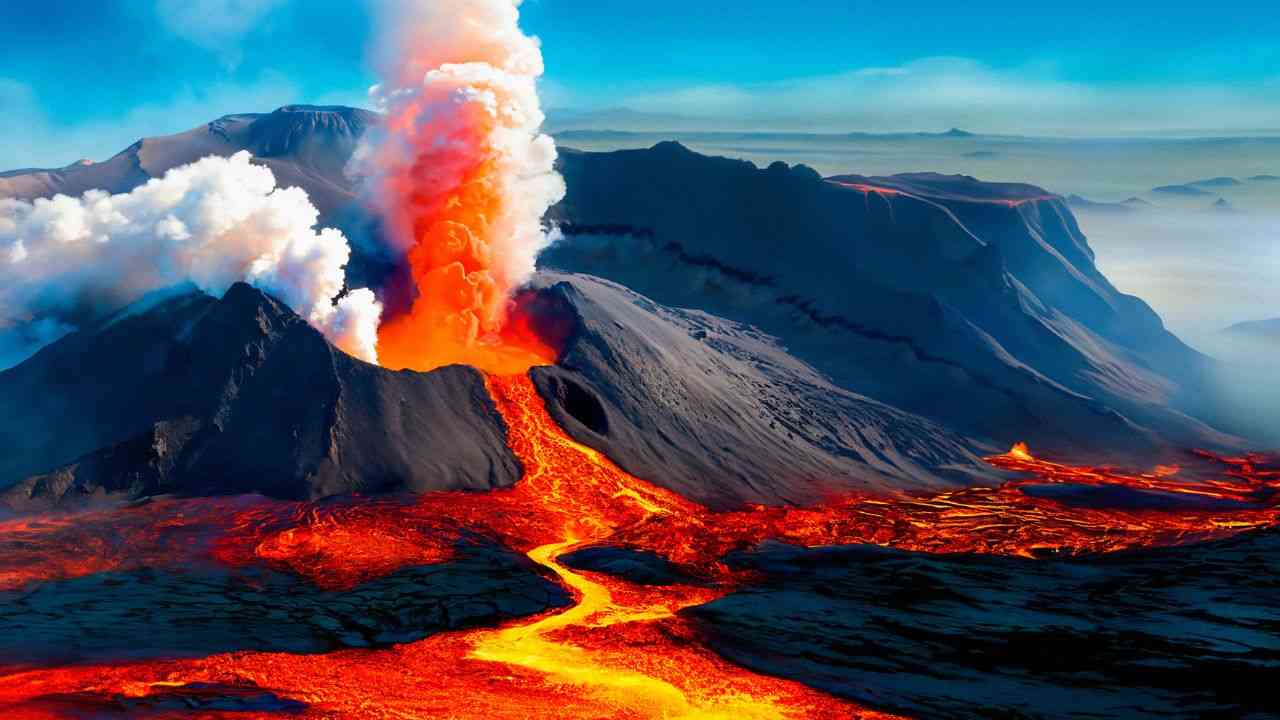
For millions of years, Earth has suffered catastrophes that permanently changed its face. Until recently, we tended to see such events as random. One of the latest hypotheses, however, points to geological cycles that may repeat every 27.5 million years.
Since its earliest ages, Earth has endured countless violent transformations: gigantic volcanic eruptions, mass extinctions, and periods when the oceans lost nearly all their oxygen. The pages of geological history contain records of events that changed the course of our planet forever.
Where do such cataclysms come from? Until now, many scientists tended to treat major natural disasters as largely irregular events. They seemed to arrive without warning, and their causes often remained unclear. Now, however, a pattern of destructive events may point to something more rhythmic.
But let us begin at the beginning. Professor Michael R. Rampino of New York University looked deep into Earth’s geological history. He examined records covering about 260 million years and closely analyzed 89 major events that transformed the face of our planet. The study considered, among other things, sharp changes in sea level, mass extinctions of land animals, and powerful episodes of intraplate volcanism.
During this painstaking work, he identified two geological cycles on Earth. The first and strongest corresponds to a period of about 27.5 million years. The second appears much weaker but more frequent, returning roughly every 8.9 million years.
This does not mean that catastrophes on Earth arrive as regularly as entries in a calendar. The idea suggests something subtler and more unsettling: some great geological events — mass extinctions, vast outpourings of lava, sudden changes in sea level — may not have been pure accidents, as many geologists long assumed.
Professor Rampino’s analysis found that these events cluster at fairly regular intervals of about 27.5 million years. That is the strongest cycle. Scientists still do not know where it comes from. No hypothesis has received definitive confirmation, but one of the most interesting trails leads straight into the interior of our planet, toward the slow, deep processes taking place in Earth’s mantle.
Slow convective movements constantly occur in the mantle. Hot rock rises, cooler rock sinks, and differences in temperature and density drive the whole process. These movements help shift tectonic plates and awaken volcanoes.
If systematic, rhythmic changes in mantle convection occur over tens of millions of years, they could influence many processes at the surface: the pace of plate movement, the intensity of volcanism, changes in sea level, and indirectly the climate and conditions for life on Earth.
In an article published in Evolving Earth, the geologist puts forward a striking idea: the cycle of recurring catastrophes may result from the interaction between the surface of our planet and its cosmic environment. Scientists have long known about Milankovitch cycles: regular, slow changes in the way Earth orbits the Sun and in the tilt of its axis. These cycles help drive climate changes over tens and hundreds of thousands of years. Among other things, they help explain ice ages.
Yet those same cycles do not explain catastrophes that seem to recur about every 27.5 million years. The difference in scale is enormous: orbital cycles work over far shorter timescales. Some scientists see faint traces in longer variations that resemble cycles of about 27 to 33 million years, but we still lack hard evidence that they cause major geological cataclysms.
Another hypothesis, however, receives serious attention. It does not lead toward the Sun, but deep into the structure of our galaxy: the Milky Way.
The Solar System does not stand still. Together with Earth, it orbits the center of our galaxy, the Milky Way, in a vast, slow loop that lasts about 250 million years. At the same time, it moves up and down relative to the galactic plane, crossing the galaxy’s denser central band roughly every 30 to 35 million years.
Some researchers have noticed something surprising: the moments when the Solar System passes through the middle plane of the Milky Way roughly coincide with cycles of major catastrophes visible in Earth’s geological record. The hypothesis suggests that disturbances may intensify in these denser regions of the galaxy, perhaps through stronger galactic tidal forces or concentrations of dark matter.
That, in turn, could disturb comets in the distant Oort Cloud and increase the risk of impacts on Earth. Other versions of the idea suggest that such processes might gently heat the interior of our planet, triggering greater volcanic and tectonic activity.
Although we still do not know exactly where these cataclysms come from, Professor Rampino’s research points to a clear possibility: some major catastrophes seem to return in a fairly even rhythm, roughly every 27.5 million years. Earth’s geological history may prove far more rhythmic than we once assumed. If geological cycles truly shape that history, then our planet is not only a scene of chaos, but also a world with a deep and still mysterious pulse.
Read this article in Polish: W historii kataklizmów powtarza się jedna liczba. Geolodzy nie wiedzą dlaczego


A graduate of journalism and social communication at the University of Rzeszów. She has been working in the media since 2019. She has collaborated with newsrooms and copywriting agencies. She has a strong background in psychology, especially cognitive psychology. She is also interested in social issues. She specializes in scientific discoveries and research that have a direct impact on human life.


Zmień tryb na ciemny